
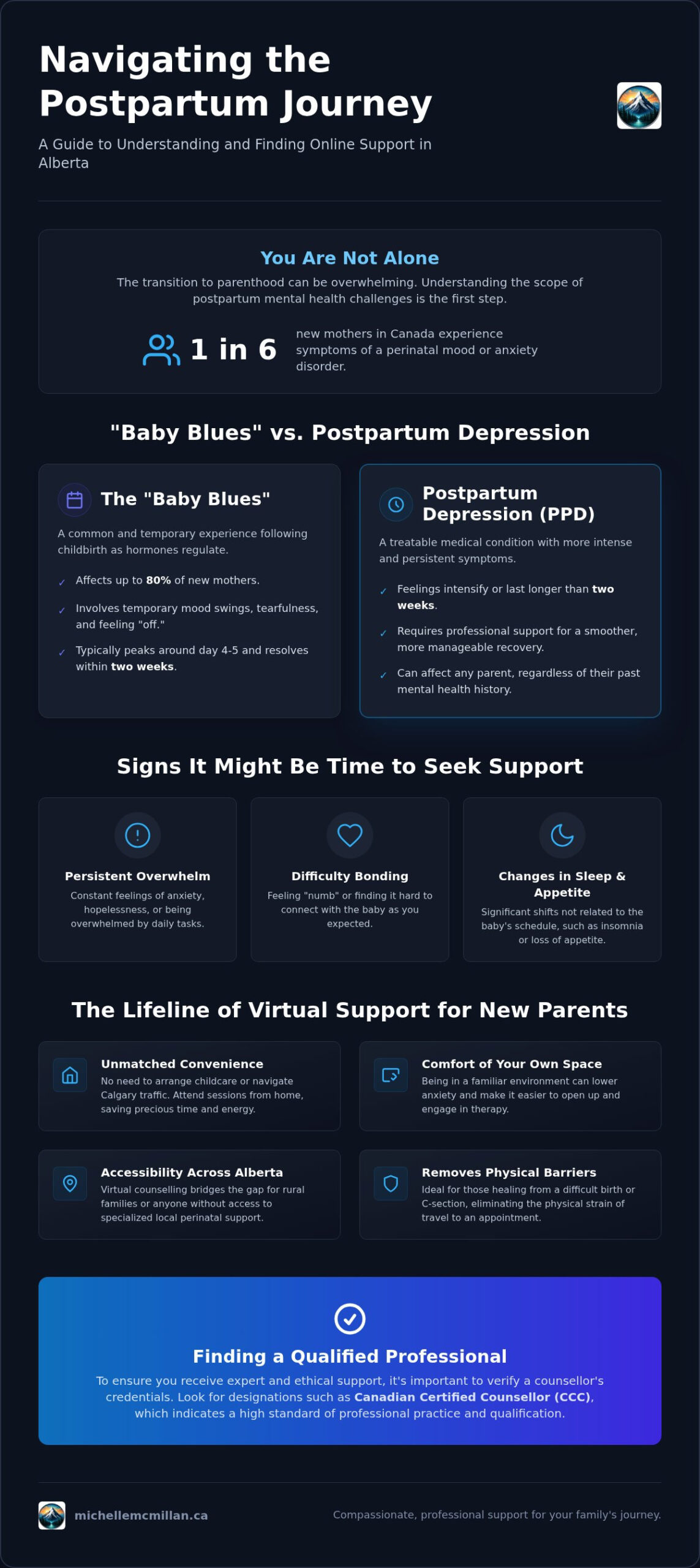
Did you know that approximately one in six new mothers in Canada experience symptoms of a perinatal mood or anxiety disorder? If you’re feeling overwhelmed, you aren’t alone, and searching for online therapy for postpartum depression is a brave first step toward feeling like yourself again. It’s often difficult to distinguish between the common baby blues and clinical depression, especially when you’re exhausted. You might feel like a bad parent for struggling, or perhaps you’re simply stuck at home in Calgary without the childcare or time needed to attend an in-person appointment.
It’s okay to admit that you need a supportive partner to walk alongside you. You deserve to find a compassionate professional who validates your experience without judgement. This guide will help you discover how to evaluate and choose the right virtual counsellor to help you navigate the challenges of postpartum depression from the comfort of your own home. We’ll look at the specific benefits of virtual support in Alberta, discuss practical strategies for emotional regulation, and outline a clear path toward reclaiming your sense of self.
Key Takeaways
- Distinguish between the common “baby blues” and clinical depression to better understand when it is time to reach out for professional support.
- Discover how online therapy for postpartum depression offers a flexible way to prioritize your mental health without the stress of childcare or a Calgary commute.
- Learn how to verify professional credentials, such as the Canadian Certified Counsellor (CCC) designation, to ensure you are working with a qualified clinical professional.
- Gain practical advice for your first virtual session, including tips for creating a private space and managing the needs of your baby during the call.
- Identify the steps toward feeling like yourself again through a collaborative partnership with a therapist who understands the unique challenges facing Alberta families.
Understanding Postpartum Depression vs. the Baby Blues
The first few weeks of parenthood are often a blur of joy, exhaustion, and unexpected tears. It’s incredibly common to feel “off” during this time. In fact, research indicates that up to 80% of new mothers experience what is known as the baby blues. These temporary mood swings usually peak around the fourth or fifth day and typically resolve within two weeks as hormones begin to settle. If you find your feelings are intensifying or lasting longer than those first fourteen days, it may be time to explore online therapy for postpartum depression. Postpartum depression is a treatable medical condition requiring professional support.
It’s vital to recognize that this condition doesn’t discriminate. It can affect any parent, regardless of their past mental health history or how much they looked forward to the birth. You don’t have to wait for a crisis to seek help; reaching out early can make the path to recovery much smoother and more manageable.
Common Signs You Might Benefit from Counselling
Distinguishing between normal exhaustion and something more serious is difficult when you’re in the thick of it. Many parents find that their symptoms don’t look like traditional sadness but rather a constant, buzzing anxiety. You might notice:
- Persistent feelings of anxiety, hopelessness, or a heavy sense of being overwhelmed by simple daily tasks.
- Difficulty bonding with the baby or feeling “numb” to the milestones that you expected would bring joy.
- Significant changes in sleep and appetite that are not related to the baby’s actual waking schedule.
The Role of Professional Validation in Recovery
There is a heavy cultural stigma around not enjoying every minute of early parenthood. This pressure often leads to deep feelings of guilt or the belief that you’re a “bad parent” for struggling. A qualified counsellor provides a compassionate, non-judgmental space where you can share these difficult thoughts without fear of being misunderstood. This validation is often the first step in lowering your defenses and starting the healing process.
Choosing online therapy for postpartum depression is a proactive step for your entire family’s health. When you prioritize your emotional regulation, you’re better equipped to care for your child and navigate relationship shifts with your partner. Professional support helps you move from just surviving to truly feeling like yourself again. It’s about finding a steady partner to walk with you through this transition at a pace that feels safe for you.
The Benefits of Online Therapy for New Parents in Alberta
Getting out of the house with a newborn can feel like a monumental task. Between packing the diaper bag and timing feedings, the thought of navigating a Calgary commute to an office in the city centre is often enough to make anyone cancel an appointment. This is where online therapy for postpartum depression provides a vital lifeline. By choosing virtual sessions, you save precious energy that is better spent on your recovery and your family.
Being in your own environment naturally lowers the therapy anxiety many people feel when entering a clinical setting. You can sit on your own sofa, have your favourite tea, and stay in your most comfortable clothes. This level of comfort makes it easier to open up and share honestly. According to the Centre for Addiction and Mental Health (CAMH) on Postpartum Depression, having a strong support system and professional care is essential for managing symptoms effectively.
Virtual platforms also allow for a consistency of care that in-person visits can’t match. If the baby is napping or needs to be fed during your session, you don’t have to worry. Your therapist is a steady partner who understands the realities of early parenthood. For those living outside major cities, virtual mental health therapy in Alberta bridges the gap for rural residents who might otherwise lack access to specialized perinatal support.
Accessibility for Calgary and Rural Families
This format is a game-changer for families in both urban and rural areas. If you’re healing from a difficult birth or a C-section, the physical effort of driving and walking into a clinic can be painful and exhausting. Online sessions remove these physical barriers. You also gain an extra layer of privacy; there’s no chance of running into a neighbour in a waiting room when your session happens in your own living room.
Is Virtual Therapy as Effective as In-Person?
You might wonder if a screen-to-screen connection can truly offer the same depth as sitting in the same room. Research, including studies from institutions like McMaster University, suggests that online talk therapy is just as effective as traditional face-to-face sessions for many mental health concerns. The key isn’t the physical proximity, but the “therapeutic alliance”—the bond of trust and safety you build with your counsellor. A professional holding space can be created just as effectively through a secure video link, making online therapy for postpartum depression a reliable choice for modern parents.
If you’re feeling ready to explore how this flexible approach could work for you, viewing available virtual anxiety therapy Calgary services can be a helpful next step.
Choosing the Right Online Therapist for Depression
Finding the right support is a deeply personal task. In Alberta, where the counselling profession is still transitioning toward full regulation as of late 2026, it’s essential to know exactly who is on the other side of the screen. When you’re looking for online therapy for postpartum depression, you aren’t just looking for a listener. You’re looking for a qualified professional who understands the specific clinical needs of new parents and the unique pressures of the postpartum period.
Local relevance matters more than you might think. A therapist based in Calgary or elsewhere in the province will be familiar with the Alberta Health Services guide to PPD and other local community resources. This shared context creates a smoother experience, as your counsellor understands the specific healthcare landscape you’re navigating. Beyond location, the “fit” between you and your therapist is the strongest predictor of success. You should feel a sense of safety and ease with their style from the very first interaction.
Key Questions to Ask a Potential Counsellor
Before you begin your journey, it’s okay to ask questions to ensure you’re comfortable. A professional counsellor will welcome your curiosity. Consider asking:
- “What is your experience helping parents with postpartum challenges?”
- “How do you handle interruptions if my baby wakes up or needs a feeding during our session?”
- “What is your philosophy on supporting families through major life transitions?”
These questions help you gauge if the therapist’s approach aligns with your needs. You want someone who views themselves as a steady partner, walking alongside you through the transition into parenthood.
Why Credentials (CCC) Protect You
It’s important to distinguish between professional counselling and “wellness coaching.” Because anyone can currently use the title “therapist” in Alberta, looking for specific designations is your best way to ensure safety. A Canadian Certified Counsellor (CCC) has met rigorous national standards for education and clinical practice. This designation, held by professionals like Michelle McMillan, requires a Master-level education, such as a Master of Arts in Counselling Psychology (MACP).
These credentials mean your therapist is accountable to the ethical standards of the Canadian Counselling and Psychotherapy Association (CCPA). They’re trained to provide clinical support for complex issues rather than just general life advice. When you choose a therapist with these qualifications for online therapy for postpartum depression, you’re choosing a practitioner who is committed to evidence-based care and professional accountability. This foundation of expertise allows you to focus on your healing, knowing you’re in capable, professional hands.
Practical Tips for Your First Virtual Counselling Session
Preparing for your first session shouldn’t add to your stress. You’re already carrying a lot. When you’re starting online therapy for postpartum depression, the goal is to create a space that feels safe and manageable. Find a quiet corner where you feel most comfortable. If your home is busy or you’re worried about being overheard, using headphones can help maintain a sense of privacy and focus. It’s also helpful to check your internet connection and camera a few minutes before your start time. This small step prevents last-minute technical hurdles from increasing your anxiety.
Mental preparation is just as vital as the physical logistics. Try to take five minutes before the session begins to just breathe and sit in silence. You don’t need to have a perfect script or a list of clinical symptoms ready. A professional counsellor is there to help you untangle your thoughts at your own pace. They provide the emotional holding you need while you find your footing in this new season of life.
Logistics with a Newborn
Timing a session with a newborn requires a blend of planning and flexibility. Some parents prefer the “nap-time strategy,” hoping for a quiet window of uninterrupted talk. Others choose the “feeding strategy,” where they plan to nurse or bottle-feed during the conversation. Both are perfectly valid. Your counsellor understands that babies don’t follow schedules. If you need to change a diaper or soothe a crying infant mid-session, it isn’t an interruption; it’s just part of your current reality. This flexibility is a core benefit of online therapy for postpartum depression. Professional support is meant to fit into your world, not the other way around. Even when your “to-do” list feels miles long, giving yourself this hour is a necessary act of care for your entire family.
Goal Setting in Early Recovery
In the early stages of recovery, goal setting is about small, sustainable shifts rather than massive overhauls. You might focus on one or two immediate areas where you need support, such as managing intrusive thoughts or finding ways to regulate your nervous system during a crying spell. Honesty is much more valuable than performance. You don’t need to pretend you’re “fine” or that you’re “enjoying every minute” of parenthood. Calgary counselling focuses on collaborative goal-setting, ensuring the path forward feels attainable and supportive.
If you’re ready to start this collaborative process, you can book a virtual session to connect with a professional who understands your journey and is ready to walk alongside you.
Michelle McMillan Counselling: Virtual Support for Your Journey
Finding a therapist who truly understands the delicate balance of new parenthood is essential. Michelle McMillan is a Canadian Certified Counsellor (CCC) who provides a steady, supportive presence for families navigating the complexities of life transitions. Based in Calgary, she offers online therapy for postpartum depression to residents across Alberta, British Columbia, Saskatchewan, and Manitoba. This virtual format ensures that professional clinical support is accessible even when the logistical hurdles of childcare or travel feel insurmountable.
The approach is deeply human and person-focused. It prioritizes emotional resonance and professional validation, helping you move past the guilt or shame that often accompanies the struggle. By focusing on practical coping strategies and emotional regulation, the goal is to help you navigate parenting challenges with a sense of calm and confidence. You aren’t just another case; you’re an individual deserving of a non-judgmental space where your experiences are seen and understood.
A Compassionate Approach to Healing
Healing often begins with the simple act of being heard without the fear of being “bad” or “unfit.” Michelle walks alongside individuals as they process the profound shifts that come with a new baby. This collaborative partnership focuses on building a steady foundation for your family’s future by addressing your needs today. When you feel supported, you’re better equipped to foster healthy family dynamics and manage the daily stresses of early parenthood. It’s about moving toward a place where you feel like yourself again, supported by professional expertise and genuine empathy. Taking this time for yourself isn’t a distraction from your parenting; it’s a vital part of being the parent you want to be.
How to Get Started
Taking the first step toward support should feel low-pressure and safe. The process of reaching out for a consultation is simple, allowing you to explore if virtual sessions are the right fit for your current needs. There is no expectation to have everything figured out before you call. You can find more information about the various support options available by visiting Michelle’s services page. Whether you’re in a busy urban centre or a quiet rural community, online therapy for postpartum depression offers a clear, accessible path toward recovery and emotional well-being. You don’t have to navigate this transition alone; a compassionate guide is ready to walk with you at a pace that feels comfortable.
Moving Toward Healing with Confidence
You’ve explored how to distinguish between the common baby blues and the more persistent challenges of clinical depression. You also know that virtual support isn’t just a convenient alternative; it’s an effective, professional way to prioritize your mental health without the stress of a Calgary commute, with virtual sessions available throughout Alberta. By choosing a qualified professional like Michelle McMillan, who holds a Master of Arts in Counselling Psychology (MACP) and the Canadian Certified Counsellor (CCC) designation, you ensure your care is grounded in high clinical standards.
Navigating this transition is easier when you have a steady partner walking alongside you through online therapy for postpartum depression. It’s a brave choice to reach out, and it’s one that benefits your entire family. If you’re ready to take that next step from the comfort of your own home, you can connect with Michelle McMillan for a virtual consultation today. You deserve to feel seen, understood, and supported as you find your way back to yourself.
Frequently Asked Questions
Is online therapy as effective as in-person for postpartum depression?
Yes, research indicates that virtual sessions are a reliable and effective way to access mental health support. Online therapy for postpartum depression allows you to build a strong therapeutic alliance from the comfort of your own home. This format eliminates the stress of travel and childcare, which are often major barriers to recovery. For many parents in Calgary and across Alberta, the screen-to-screen connection provides a safe, professional holding space that is just as impactful as sitting in a traditional office.
What is the difference between a Canadian Certified Counsellor and a life coach?
The primary difference lies in education, regulation, and professional accountability. A Canadian Certified Counsellor (CCC) must hold a Master-level degree, such as a Master of Arts in Counselling Psychology (MACP), and adhere to strict ethical standards. Life coaching is an unregulated field that does not require clinical training or Master-level education. Choosing a CCC ensures you are working with a qualified professional who is equipped to handle complex mental health challenges with clinical expertise and professional integrity.
Can I have my baby with me during a virtual therapy session?
Yes, your baby is always welcome to be present during your session. Professional counsellors understand the unpredictable nature of life with a newborn and the logistical challenges parents face. Whether you need to nurse, bottle-feed, or change a diaper, your therapist will work with you at a pace that feels comfortable. This flexibility is a significant benefit of online therapy for postpartum depression, as it removes the pressure of finding childcare just to attend an appointment.
How long does postpartum depression usually last without treatment?
While the baby blues typically resolve within two weeks, postpartum depression can last for many months or even years if left unsupported. Every individual’s journey is unique, but the condition is unlikely to simply disappear on its own without intervention. Seeking professional help is a proactive way to navigate these challenges. A counsellor acts as a steady partner, helping you develop practical strategies to regulate your emotions and find a clear path toward feeling like yourself again.
What should I do if I think my partner is experiencing postpartum depression?
Approaching your partner with empathy and warmth is the most helpful first step. Acknowledge that you see they are struggling and remind them that they aren’t a “bad parent” for feeling this way. Suggesting a virtual consultation can be a low-pressure way to explore support. Because online counselling is accessible from home, it often feels less intimidating for a partner who is already feeling overwhelmed by the demands of a new baby and the transition into parenthood.
Does insurance in Alberta typically cover sessions with a CCC?
Many extended health insurance providers in Alberta recognize the Canadian Certified Counsellor (CCC) designation. Coverage varies significantly between different plans and companies, so it’s always best to verify your specific benefits with your insurance provider before your first session. When you speak with them, you can mention that your therapist holds a Master of Arts in Counselling Psychology and is a member of the Canadian Counselling and Psychotherapy Association (CCPA) to help confirm your eligibility for reimbursement.
How do I know if I have PPD or just normal new-parent exhaustion?
Exhaustion is a universal part of early parenthood, but PPD often involves persistent feelings of sadness, anxiety, or a sense of being “numb.” If your mood doesn’t improve after the first two weeks, or if you find it difficult to bond with your baby, it may be more than just lack of sleep. A professional counsellor can provide the validation you need to understand your experience and help you determine if clinical support is appropriate for your specific situation.
What happens during the first virtual counselling session?
The initial session is a gentle, low-pressure conversation designed to help you feel seen and understood. You’ll have the opportunity to share your current challenges and what you hope to gain from the process. Your therapist will walk alongside you as you identify one or two small, manageable goals for your recovery. There is no need to have everything figured out; the first session is simply about creating a safe, non-judgmental space to begin your journey toward healing.

Article by
Michelle McMillan, MACP, CCC
Michelle McMillan is a Canadian Certified Counsellor (CCC) with a Master of Arts in Counselling Psychology (MACP). She has extensive experience working with children and supporting clients with ADHD, neurodivergence, anxiety, emotional regulation, relationships and family challenges. Michelle provides virtual counselling for adults throughout Alberta, British Columbia, Saskatchewan and Manitoba and primarily in-person counselling for children and families in Calgary.
Important Information
This article is provided for general educational and informational purposes only and is not a substitute for professional counselling, psychological, medical or emergency services. Information shared here should not be considered a diagnosis or individualized treatment advice. If you are experiencing a mental health emergency or are in immediate danger, please contact appropriate emergency services in your area.