
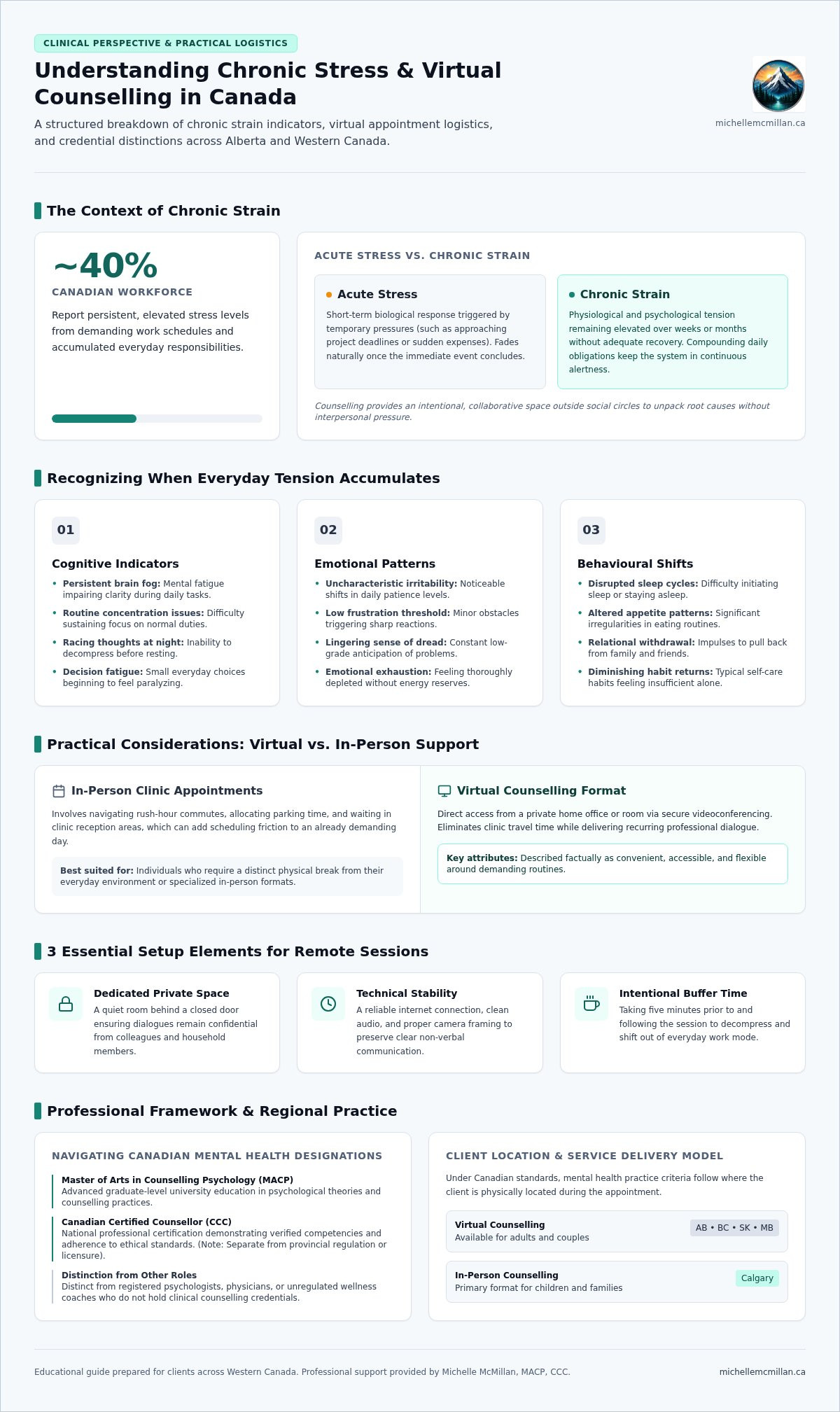
With roughly 40 percent of Canadian workers reporting persistent, high stress levels, feeling perpetually overwhelmed has become an exhausting daily reality. When you are already stretched thin by demanding workdays and personal responsibilities, spending an hour in rush-hour traffic just to sit in a clinic waiting room can feel counterproductive. Turning to online therapy for stress offers a flexible, accessible alternative, giving you a dedicated space to address chronic strain directly from your home or private office.
It is completely natural to wonder whether virtual appointments provide genuine focus, or how to distinguish between credentialed counsellors, psychologists, and unregulated wellness coaches. In this guide, you will learn how virtual counselling helps you unpack ongoing workplace and personal pressures, what to expect during remote sessions, and how to identify a Canadian Certified Counsellor in Alberta and Western Canada. You will also gain clear, practical insight into setting up professional care that works seamlessly around your real-world schedule.
Key Takeaways
- Understand how chronic stress impacts long-term well-being, and recognize the common signs that indicate it is time to seek professional support.
- Discover how online therapy for stress provides a flexible, confidential format to address demanding schedules without the friction of a clinic commute.
- Compare the practical logistics of virtual and in-person appointments to determine which setting aligns best with your personal routine.
- Learn what to expect during remote sessions, from the collaborative intake conversation to examining workplace and interpersonal triggers.
- Clarify the credentials that matter in Alberta and Western Canada, helping you distinguish between unregulated coaches and a Canadian Certified Counsellor.
Understanding Chronic Stress and When Professional Support Can Help
Stress is a natural biological response to short-term demands. A looming project deadline or an unexpected expense triggers acute stress, which usually fades once the event passes. Chronic stress, however, develops when physiological and psychological tension remains elevated over weeks or months without a period of recovery. Daily obligations across work, caregiving, relationship shifts, and personal transitions can quietly accumulate, leaving you in a state of perpetual alertness. Seeking professional counselling provides an objective, grounded setting to unpack these compounding pressures. Through online therapy for stress, you can step back from the daily rush and examine root causes in a confidential, reflective space.
Common Signs That Stress Is Becoming Overwhelming
Recognizing when everyday tension has shifted into chronic strain is an essential step toward finding balance. This strain rarely stays isolated; it shapes how you think, feel, and interact with the world:
- Cognitive indicators: Persistent brain fog, trouble concentrating on routine tasks, racing thoughts at night, and decision fatigue that makes small choices feel paralyzing.
- Emotional patterns: Uncharacteristic irritability, a low threshold for frustration, constant dread, and a lingering sense of emotional exhaustion.
- Behavioural shifts: Disrupted sleep schedules, altered appetite, and a subtle impulse to withdraw from personal relationships.
Why Independent Coping Strategies Sometimes Feel Insufficient
General self-care strategies, such as exercise, mindfulness apps, or getting an extra hour of rest, are helpful habits. Even so, they often fall short when dealing with chronic, systemic stress. Prolonged strain alters your perspective, making it difficult to step back and evaluate problems clearly. Confiding in friends or family is valuable, yet personal relationships often carry emotional dynamics or unintentional advice that adds pressure.
Professional counselling provides an intentional, collaborative conversation outside your social circle. Engaging with telehealth and telemental health services allows you to work with a qualified counsellor to identify environmental triggers, examine recurring behavioural loops, and develop tailored strategies for daily life. Reviewing specific areas of focus can help you decide whether professional support aligns with your current needs.
How Virtual Counselling for Stress Operates in Canada
Virtual care has transformed how Canadians access mental health support. Rather than spending valuable time driving through city traffic or sitting in waiting rooms, clients can connect directly with a qualified practitioner through secure video platforms. Unlike automated wellness apps or episodic telemedicine platforms designed for five-minute prescription consults, online therapy for stress offers dedicated, recurring conversations focused on real life challenges. Through professional virtual therapy services, adults and couples across Alberta, British Columbia, Saskatchewan, and Manitoba can integrate meaningful care into demanding routines.
In Canada, mental health practice standards follow where the client is physically located during an appointment. Practitioners offering cross-provincial services must hold recognized credentials that satisfy regional practice criteria, ensuring high ethical standards regardless of physical distance.
Essential Components of a Virtual Counselling Session
A productive remote appointment relies on thoughtful preparation on both sides of the screen. Creating an environment that supports focused dialogue involves a few practical steps:
- A dedicated, private space: Choosing a quiet room behind a closed door where you can speak honestly without worrying about being overheard by colleagues or family members.
- Reliable technical stability: Using a stable internet connection, clear audio, and positioned camera framing so non-verbal communication remains intact.
- Intentional transition time: Taking five minutes before and after the call to settle in, allowing you to transition out of work mode before beginning.
Research published by the American Psychological Association on teletherapy outcomes compared to in-person care highlights that videoconferencing provides a structured clinical environment that supports genuine therapeutic engagement.
Professional Credentials: CCC Designation Versus Unregulated Coaching
Searching for remote support often reveals a confusing mix of titles. While the title “coach” remains unregulated in Canada, credentialed counsellors complete rigorous academic and clinical training. A qualified practitioner often holds a Master of Arts in Counselling Psychology (MACP), representing extensive graduate-level coursework in human behaviour and therapeutic ethics.
In addition, many practitioners hold the Canadian Certified Counsellor (CCC) designation from the Canadian Counselling and Psychotherapy Association (CCPA). This national certification requires verified graduate training, hundreds of hours of supervised clinical experience, and adherence to an enforceable code of ethics. Unlike life or mindset coaching, which requires no standardized training, working with a certified counsellor ensures your stress is addressed with professional competence and accountability.
Online Therapy Versus In-Person Counselling: Practical Considerations
Choosing between virtual appointments and traditional in-person office visits comes down to practical logistics and personal preference. Neither format is universally superior. Instead, both delivery models offer distinct structural advantages depending on your daily routine, family obligations, and location. For many working adults and couples throughout Western Canada, choosing online therapy for stress eliminates geographic barriers, offering convenient access to credentialed practitioners without adding extra travel demands to an already packed day.
Evaluating Flexibility and Routine for Busy Adults
Attending in-person appointments often requires carving out substantial blocks of time. Navigating rush-hour traffic across Calgary, securing downtown parking, and waiting in an office reception area can easily add an extra hour or two to a fifty-minute session. When work demands or caregiving responsibilities are already pushing your schedule to its limit, that additional travel time can create friction.
Virtual appointments provide practical flexibility by fitting directly into an open window in your day, such as a lunch break or between meetings. That convenience helps maintain consistent attendance over time, which is essential when working through persistent stressors. For individuals residing outside major metropolitan centres in Alberta or rural communities across neighbouring provinces, remote care offers direct access to specialized support that might not be available locally.
Selecting the Format That Matches Your Needs
Determining the right environment depends on your home layout and the type of counselling you are seeking:
- Adult individual and couples counselling: Remote sessions function effectively when you have a private space where conversations remain confidential. If you have a closed-door office or a quiet room, virtual sessions provide focused dialogue without travel logistics.
- Child and family counselling: In-person sessions are often preferred for younger children and family dynamics. Direct physical presence allows for interactive communication and hands-on therapeutic engagement that can be harder to replicate through a screen.
- Home privacy factors: If your living arrangements lack private rooms, or if household interruptions are frequent, an in-office setting can offer an essential boundary away from home pressures.
Weighing these environmental realities helps ensure your chosen format provides the privacy and stability needed for thoughtful therapeutic work.
What to Expect in Virtual Therapy Sessions Focused on Stress
Virtual counselling is a structured, collaborative dialogue rather than an open-ended lecture. If you are starting online therapy for stress, understanding how appointments unfold can help demystify remote care. Rather than adhering to a rigid template, the therapeutic process generally moves through four collaborative stages:
- Step 1: The initial intake. Discussing your current living situation, work responsibilities, and the acute stressors that prompted you to reach out.
- Step 2: Identifying specific triggers. Mapping out environmental pressures, workplace expectations, and relationship dynamics that contribute to ongoing strain.
- Step 3: Examining response patterns. Exploring how your body and thoughts respond to prolonged pressure, including physical tension or avoidance habits.
- Step 4: Practising practical tools. Developing personalized boundary management strategies and regulation practices tailored to your daily routine.
Unpacking the Sources of Ongoing Tension
Workplace demands, perfectionist tendencies, and the silent weight of caregiving often sit at the core of chronic strain. Exploring these pressures in an objective setting allows you to step back from urgent demands and organize complicated feelings into clear insights. Rather than looking for clinical diagnoses, sessions focus on how everyday interpersonal dynamics and professional expectations interact. You can review how these challenges are addressed across various life circumstances by exploring specialized areas of focus.
Developing Sustainable Coping and Regulation Practices
Counselling does not promise effortless habit changes or instant relief from life’s responsibilities. It does, however, provide a reliable space to test practical strategies. You can work with your counsellor to establish firm boundaries between work hours and personal downtime, reducing the tendency to check emails during family dinners.
Sessions also introduce straightforward emotional regulation techniques to help you navigate moments of acute frustration. Developing sustainable routines requires steady practice and thoughtful reflection over time. If you have questions about how remote appointments work, you can reach out directly to discuss your options.
Finding the Right Virtual Counsellor in Alberta and Canada
Finding an experienced practitioner makes all the difference when you decide to invest in your well-being. While search engines display countless options, choosing online therapy for stress requires looking closely at professional qualifications and provincial eligibility. Because mental health practice standards in Canada depend on where the client resides, you will want to confirm that your counsellor holds recognized credentials to support clients in your home province. You can learn more about clinical background, qualifications, and values by reading about Michelle McMillan.
Questions to Ask Before Starting Virtual Counselling
Reaching out to a prospective counsellor is an opportunity to evaluate whether their background matches your individual circumstances. Before booking an initial consultation, consider asking practical questions such as:
- Focus areas: What experience do you have supporting clients through workplace burnout, relationship strain, or major life transitions?
- Platform logistics: What secure video platform do you use, and how are unexpected technical disruptions handled during an appointment?
- Professional oversight: Do you hold credentials with a recognized national association, such as the Canadian Counselling and Psychotherapy Association (CCPA)?
Connecting with Michelle McMillan, MACP, CCC
Based in Calgary, Alberta, Michelle McMillan Counselling provides professional support tailored to the complex pressures of daily life. Michelle holds a Master of Arts in Counselling Psychology (MACP) and is recognized nationally as a Canadian Certified Counsellor (CCC). Her practice focuses on working with adults and couples addressing chronic stress, anxiety, emotional regulation, and neurodivergence-related challenges.
Michelle offers virtual appointments for adult individuals and couples residing in Alberta, British Columbia, Saskatchewan, and Manitoba. In-person sessions for children and families are hosted primarily in Calgary. If you have questions about scheduling or want to learn more about how online therapy for stress can fit into your routine, reach out directly through the practice contact page to begin the conversation.
Moving Toward Everyday Balance with Professional Support
Living under constant pressure often feels isolating, but you don’t have to carry chronic workplace, relationship, and personal demands on your own. Choosing online therapy for stress offers a practical, flexible way to examine compounding pressures while protecting your valuable time. Working alongside a qualified counsellor provides an intentional, reflective space to identify recurring triggers, establish clearer boundaries, and develop grounded coping practices that fit your real-world routine.
Michelle McMillan holds a Master of Arts in Counselling Psychology (MACP) and is a Canadian Certified Counsellor (CCC). She provides dedicated virtual counselling for adults and couples across Alberta, British Columbia, Saskatchewan, and Manitoba, alongside in-person sessions for children and families in Calgary. When you are ready to discuss your personal circumstances and take a proactive step toward everyday balance, explore rates and book a session with Michelle McMillan.
Frequently Asked Questions
Is online therapy for stress as effective as in-person counselling?
Clinical literature demonstrates that videoconferencing provides a structured, viable medium for therapeutic care. When considering online therapy for stress, individual preference and practical needs matter most. Virtual sessions offer convenience, flexibility, and eliminate travel time across Calgary or rural communities. However, some individuals prefer the physical separation of an office, and hands-on work with young children is often best suited to an in-person environment.
What credentials should I look for when choosing an online therapist in Canada?
Look for a practitioner holding a relevant graduate degree, such as a Master of Arts in Counselling Psychology (MACP). In Canada, verifying that a counsellor holds the Canadian Certified Counsellor (CCC) designation from the CCPA ensures they meet rigorous national standards and follow an ethical code. Unlike unregulated life or mindset coaches, credentialed counsellors possess formal clinical training and professional accountability.
What technical equipment or setup do I need for virtual counselling sessions?
You only need a reliable internet connection and a private device equipped with a camera and microphone, such as a laptop, tablet, or smartphone. Using headphones helps keep the audio private and reduces background noise. Position your device at eye level in a quiet room with a closed door. Testing your setup before your appointment begins ensures a smooth, uninterrupted conversation.
Can online therapy help with workplace burnout and career-related pressure?
Virtual appointments offer a practical space to address demanding professional schedules and workplace exhaustion. Engaging in online therapy for stress allows you to examine compounding pressures, perfectionist standards, and communication challenges with colleagues. Because sessions fit directly into a work break without requiring travel across town, you can focus on building sustainable boundary practices while preserving valuable time during hectic work weeks.
How do I ensure my privacy during virtual counselling appointments at home?
Choosing a dedicated room with a closed door is the easiest way to protect your privacy. Using wired or wireless headphones ensures the counsellor’s voice cannot be overheard by family members or roommates. Some clients find running a white-noise machine or an app outside their door helpful. You can also coordinate session times when your household is empty or family members are occupied elsewhere.
Does a Canadian Certified Counsellor provide diagnoses or medical prescriptions?
Canadian Certified Counsellors do not diagnose mental health disorders or prescribe medical treatments. Medical diagnoses and pharmaceutical prescriptions remain within the scope of physicians, psychiatrists, and specialized psychologists. Instead, a certified counsellor provides non-judgmental professional support, collaborative exploration of life challenges, and practical tools to navigate emotional stress, relationship dynamics, and everyday balance without a medicalized focus.
Which Canadian provinces can Michelle McMillan support through virtual therapy?
Michelle McMillan provides virtual counselling for adults and couples residing in Alberta, British Columbia, Saskatchewan, and Manitoba. Under Canadian practice guidelines, counsellors must meet professional standards for the province where the client physically resides during the appointment. For children and families, Michelle primarily offers in-person services located in Calgary, ensuring each client group receives the appropriate delivery model for their needs.

Article by
Michelle McMillan, MACP, CCC
Michelle McMillan is a Canadian Certified Counsellor (CCC) with a Master of Arts in Counselling Psychology (MACP). She has extensive experience working with children and supporting clients with ADHD, neurodivergence, anxiety, emotional regulation, relationships and family challenges. Michelle offers both virtual and in-person counselling, with virtual counselling available throughout Alberta, British Columbia, Saskatchewan and Manitoba and in-person appointments available in Calgary.
Important Information
This article is provided for general educational and informational purposes only and is not a substitute for professional counselling, psychological, medical or emergency services. Information shared here should not be considered a diagnosis or individualized treatment advice. If you are experiencing a mental health emergency or are in immediate danger, please contact appropriate emergency services in your area.