
Finding meaningful mental health support shouldn’t depend on whether you can carve out two hours to commute across the city. When searching for online therapy Calgary residents often look for the practical convenience of speaking with a professional from home, yet taking that first step can bring valid hesitations. It is natural to wonder whether a video conversation will feel comfortable and focused, how private-sector privacy laws like Alberta’s PIPA protect your personal information, or how to tell the difference between credentials such as a Canadian Certified Counsellor (CCC) and a registered psychologist.
Taking care of your mental well-being shouldn’t feel like another confusing chore on your to-do list. In this guide, you will discover exactly how virtual counselling operates in Alberta, learn how voluntary professional designations uphold high training standards, and explore whether remote support fits your personal needs as an individual adult or couple. Here is a clear, practical overview to help you evaluate your options and arrange a professional consultation with confidence.
Key Takeaways
- Learn how online therapy Calgary services operate, offering flexible and structured support from home without the stress of clinic commutes.
- Understand professional credentials in Alberta, including the graduate training behind a Master of Arts in Counselling Psychology (MACP) and national Canadian Certified Counsellor (CCC) certification.
- Gain practical strategies to protect your digital privacy under Alberta standards and establish a quiet, distraction-free space for remote sessions.
- Explore whether virtual individual or couples counselling suits your needs, along with essential questions to help you choose the right practitioner.
Understanding Online Therapy in Calgary: How Virtual Counselling Operates
Virtual counselling provides structured, professional mental health support delivered directly through secure video platforms. Rather than sitting in a physical clinic, you connect face-to-face with a practitioner using your computer, tablet, or smartphone. As an established format within modern healthcare, online mental health counseling allows you to engage in real-time, interactive dialogue from the setting of your choice. To participate, you simply need a reliable internet connection, a private space free from interruptions, and a compatible device with a camera and microphone. For many busy working professionals and households, this arrangement introduces helpful scheduling flexibility into their weekly routines.
The Mechanics of Virtual Mental Health Sessions
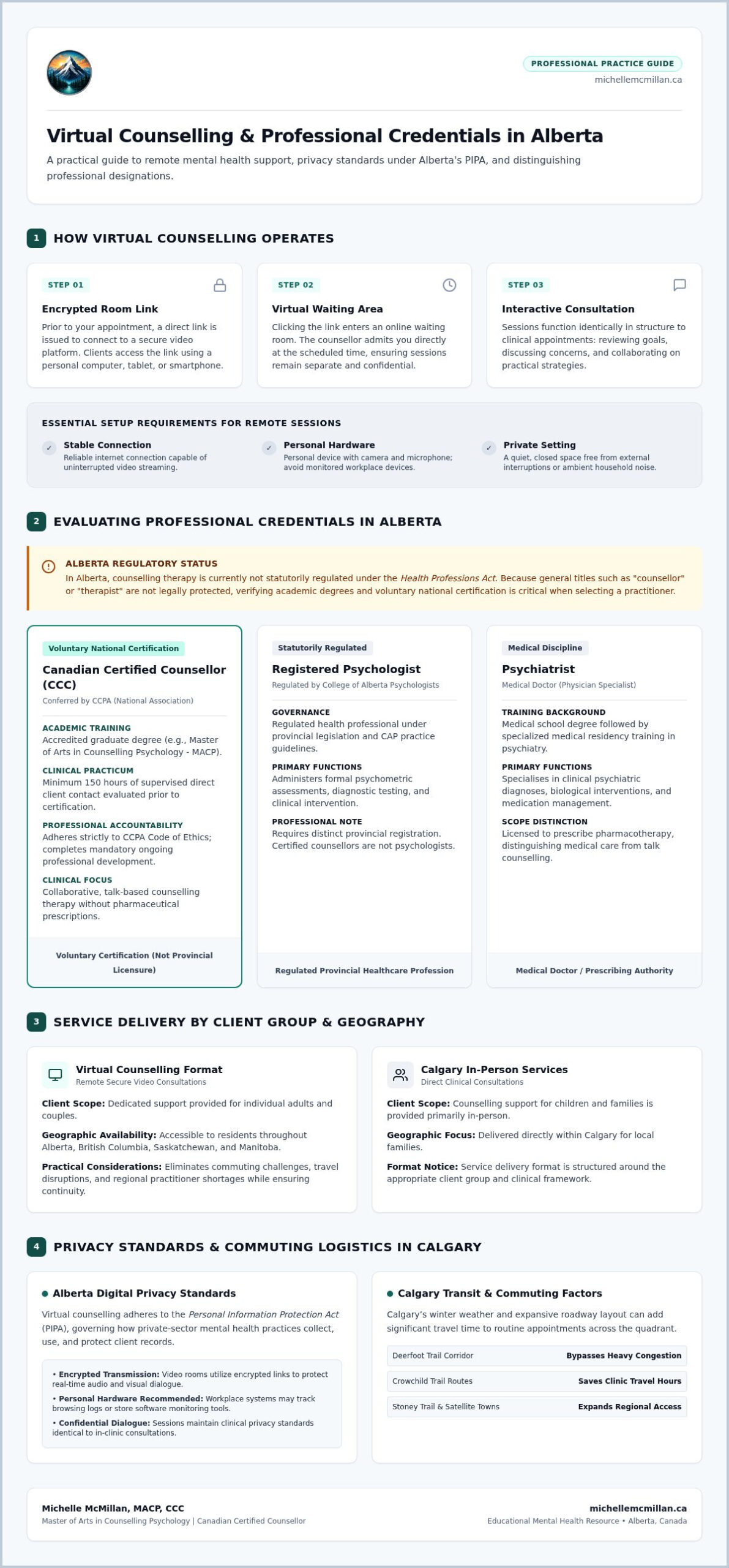
Beginning a session is straightforward. Prior to your appointment, you receive a direct link to an encrypted video meeting room. When your session time arrives, clicking the link places you into a virtual waiting area before your counsellor admits you. From there, the appointment unfolds much like a traditional consultation: you review goals, explore concerns, and collaborate on coping strategies before agreeing on next steps. To safeguard your confidentiality, it is best to join from a personal device rather than shared workplace computers, which may log browser histories or monitoring software.
Accessibility Benefits for Calgary Residents
Calgary’s geography and weather can make routine travel unpredictable. Opting for online therapy Calgary services removes the pressure of navigating heavy winter rush hours on Deerfoot Trail, Crowchild Trail, or Stoney Trail. Eliminating long clinic commutes gives you back valuable personal time and reduces logistical stress.
This accessibility also serves residents living in outlying Calgary communities, satellite towns, or rural areas where specialized practitioners may be limited. If work or family obligations require occasional travel across the province, virtual care maintains continuity so appointments do not fall by the wayside. You can explore flexible adult and couples support options through Michelle McMillan Counselling Services to see how remote consultations fit into your everyday life.
Evaluating Professional Credentials: CCCs and Counsellors in Alberta
When searching for online therapy Calgary services, reviewing professional designations can feel confusing. In Alberta, counselling therapy is currently not statutorily regulated under the Health Professions Act, meaning titles like “counsellor” or “therapist” are not legally protected. Because of this, verifying a practitioner’s education and voluntary national credentials is an essential step. A Master of Arts in Counselling Psychology (MACP), for instance, establishes an advanced academic foundation in human development, clinical ethics, and evidence-informed therapeutic approaches.
Understanding the Canadian Certified Counsellor Designation
The Canadian Certified Counsellor (CCC) designation is a respected national credential granted by the Canadian Counselling and Psychotherapy Association (CCPA). It is a voluntary professional certification rather than a provincial licence. To earn this credential, a counsellor must hold an accredited master’s degree in counselling or a related field, complete at least 150 hours of supervised direct client contact, and pass comprehensive evaluations. Certified members commit to ongoing professional development and must strictly adhere to the CCPA Code of Ethics, giving clients clarity regarding professional training standards.
Navigating Terminology: Counsellors, Therapists, and Psychologists
Understanding distinct mental health roles allows you to find support aligned with your goals. In Alberta, registered psychologists are regulated health professionals who frequently administer formal psychological assessments and diagnostic testing, adhering to the College of Alberta Psychologists practice guidelines. Psychiatrists are medical doctors who specialize in clinical diagnoses and medication management.
Certified counsellors focus primarily on talk-based counselling therapy. They offer a collaborative setting to explore personal concerns, manage stress, process life changes, or strengthen relational dynamics without medical prescriptions. When evaluating online therapy Calgary practitioners, taking time to review clinical education builds confidence in your care. You can learn more about academic backgrounds and professional standards by reading About Michelle McMillan before booking your first consultation.
Practical Considerations: Privacy, Technology, and Preparing Your Space
Confidentiality in virtual care is an intentional collaboration between you and your practitioner. While professional therapists implement data safeguards aligned with established guidelines for the practice of telepsychology, setting up your personal physical surroundings matters just as much. Taking a few sensible steps before logging in keeps your conversation private, comfortable, and focused.
Creating a Confidential Environment at Home
Selecting an appropriate space allows you to speak openly without worrying about being overheard. Choose a private room with a door you can close securely. If you share your home with family, partners, or roommates, let them know in advance that you will be unavailable for an hour and need uninterrupted quiet.
Simple practical adjustments can significantly improve room discretion:
- Turn on a white noise machine, small fan, or ambient sound app just outside the doorway to muffle outgoing voices.
- Place a draft stopper or rolled towel along the bottom of the door crack to reduce sound transmission into hallways.
- Use wired or Bluetooth headphones, which prevent your counsellor’s voice from echoing into the room and provide crisp audio clarity.
- Close workplace email tabs, messaging apps, and phone notifications before joining so secondary screen alerts don’t pull your focus away.
Managing Connectivity and Technical Setup
When preparing for online therapy Calgary appointments, a quick technical check prevents unnecessary stress. Take two minutes ahead of time to verify your camera, test your microphone, and confirm your internet connection is stable. Joining from a quiet room close to your home Wi-Fi router often provides the most consistent video stream.
Technical hiccups occasionally occur, even with modern broadband. Before your first session, your counsellor will outline a straightforward backup plan, such as switching immediately to a direct phone call if a video connection drops. Knowing a backup plan exists lets you relax. Engaging constructively in remote sessions doesn’t require complex equipment; it simply asks for clear communication, reliable sound, and a dedicated hour reserved entirely for yourself.
Common Focus Areas for Virtual Counselling Support
When considering online therapy Calgary adults and couples often focus on specific life challenges that benefit from dedicated reflection. Engaging in counselling remotely provides an approachable way to untangle complex stressors without adding travel time to an already full weekly calendar. While virtual counselling serves adult individuals and couples across Alberta and neighbouring provinces, counselling work with children and families is primarily provided in-person in Calgary to support interactive and developmental needs.
Individual Support for Stress, Anxiety, and Life Transitions
Demanding work environments, unexpected transitions, and chronic stress frequently leave people feeling stretched thin. Individual sessions create a confidential environment to unpack professional burnout, explore healthy personal boundaries, and examine patterns in emotional regulation. Rather than offering quick fixes, talk therapy provides an intentional space to evaluate self-worth, process shifting priorities, and develop personal awareness. You can explore these topics in depth through the Counselling Areas of Focus page.
Virtual Couples Counselling and Relationship Communication
For partners managing heavy work schedules or family commitments, travelling together across town to a clinic can prove difficult. Virtual couples counselling allows partners to connect from the same living room sofa or log in from separate screens during the workday. This remote dialogue provides guided structure to discuss recurring friction, financial planning, or evolving parenting decisions. Counselling does not guarantee specific relational outcomes or predictable resolutions; instead, it offers a balanced, neutral framework where both individuals can articulate their experiences constructively.
Support for Neurodivergent Adults and Families
Navigating executive functioning hurdles, sensory overwhelm, and daily routines can feel isolating. Virtual counselling for neurodivergent adults, including those navigating ADHD, offers a collaborative setting to explore personal strengths and develop practical strategies for daily living. Because neurodivergent experiences differ substantially from person to person, discussions remain tailored to individual lived realities rather than broad assumptions. If you want to explore whether remote sessions fit your current situation, you can contact Michelle McMillan to discuss your specific support needs.
Selecting the Right Virtual Counsellor in Calgary
Choosing a mental health professional is a personal decision that centres on mutual fit, clear communication, and trust. While automated quizzes and clinic directories can suggest names, taking an active role in evaluating a practitioner’s background ensures their experience aligns with your specific goals. A thoughtful search allows you to assess both clinical qualifications and conversational rapport before committing your time and energy.
Essential Questions to Ask a Prospective Counsellor
Connecting with a potential counsellor gives you an opportunity to understand their professional background and session format. Preparing a few direct questions can help you determine whether their practice matches what you need:
- Academic and Professional Standing: What master-level education do you hold, and which professional associations govern your practice?
- Clinical Experience: What background do you have in working with my specific areas of concern, such as workplace burnout, relationship communication, or neurodivergence?
- Format and Logistics: How are virtual appointments conducted, and what are your scheduling and cancellation policies?
- Financial Transparency: How are session receipts issued for insurance reimbursement, and what are your standard consultation procedures?
Initiating Virtual Professional Support
Exploring online therapy Calgary options typically begins with an introductory discussion. This initial contact provides an informal space to gauge conversational flow, ask logistical questions, and get a clear sense of how the practitioner works. A solid therapeutic partnership doesn’t require immediate perfection, but it should consistently offer a professional, respectful, and non-judgmental atmosphere.
Counselling moves at your pace, relying on your active participation and collaborative dialogue. Taking the time to verify that a practitioner’s policies, communication style, and credentials meet your standards ensures you can engage in the process with clarity and reassurance. If you have specific questions about virtual adult or couples support, reaching out directly via Michelle McMillan Counselling Contact can help you decide on the right next step for your circumstances.
Taking the Next Step in Your Virtual Care
Choosing to prioritize your mental well-being is an important decision, and finding accessible support shouldn’t add unnecessary friction to your day. When you explore online therapy Calgary services, you gain a practical way to connect with a dedicated professional while balancing work obligations, family commitments, and personal time. Knowing how voluntary designations like the Canadian Certified Counsellor (CCC) credential reflect rigorous graduate-level training gives you confidence as you evaluate your care.
If you’re ready to explore virtual counselling from home, professional support is within reach. Holding a Master of Arts in Counselling Psychology (MACP) alongside the CCC designation, Michelle McMillan provides dedicated virtual counselling for adults and couples across Alberta. Taking time to consider what kind of support aligns with your goals ensures you can move forward at a comfortable pace. You can View Rates and Schedule a Session with Michelle McMillan, MACP, CCC to arrange your virtual consultation.
Frequently Asked Questions
Is online therapy as effective as meeting a counsellor in person?
Virtual counselling provides structured professional support, offering practical accessibility and scheduling convenience without requiring transit to a clinic. Rather than positioning one format as superior or equivalent to another, the choice depends on your personal preferences, schedule, and comfort with technology. Many adults find remote video discussions fit seamlessly into full work weeks, while others prefer face-to-face appointments in a traditional office setting.
Can I use private health insurance for online counselling in Alberta?
Many extended health benefit plans in Alberta cover services provided by a Canadian Certified Counsellor (CCC), but coverage details vary depending on your specific policy provider. Because insurance plans establish distinct criteria for mental health claims, it is best to check directly with your insurer beforehand. Ask whether your policy covers virtual sessions conducted by a practitioner holding the CCC designation and a Master of Arts in Counselling Psychology.
What equipment or technology do I need for virtual therapy sessions?
Participating in online therapy Calgary appointments requires only everyday personal technology. You need a stable internet connection, a computer, tablet, or smartphone equipped with a working camera and microphone, and an up-to-date web browser. Using personal headphones improves audio clarity and keeps the conversation private. You will receive an encrypted meeting link via email before your appointment, allowing you to connect without complex technical setup.
How do you protect privacy and confidentiality during online appointments?
Digital privacy relies on careful technical standards and deliberate physical preparation. Practitioners conduct sessions over encrypted video channels adhering to Alberta’s Personal Information Protection Act (PIPA). On your end, privacy is supported by joining from a private, enclosed room, letting household members know you cannot be disturbed, using headphones, and closing workplace email and messaging applications during your consultation.
What is the difference between a Canadian Certified Counsellor and a psychologist?
In Alberta, registered psychologists are regulated under provincial legislation and frequently conduct formal diagnostic assessments and psychological testing. A Canadian Certified Counsellor (CCC) holds a voluntary national certification through the Canadian Counselling and Psychotherapy Association. Certification requires an accredited master’s degree in counselling, supervised clinical practicum hours, and adherence to formal ethical codes. CCC practitioners focus primarily on collaborative talk therapy rather than medical or formal diagnostic evaluations.
Can couples attend virtual therapy sessions from two different locations?
Yes, partners can log into their online therapy Calgary appointments from different locations when personal or work obligations prevent them from sharing a room. Video conferencing platforms allow three-way connections so you, your partner, and your counsellor can interact simultaneously in real time. This setup allows couples to maintain consistent relationship support even during demanding travel schedules or separate workdays across Alberta.
Are child and adolescent counselling sessions offered online or in person?
At Michelle McMillan Counselling, services for children and families are primarily provided in person in Calgary. In-person meetings support developmental engagement and interactive communication that work best within a physical clinic space. Virtual counselling services are primarily dedicated to adult individuals and couples across Alberta, British Columbia, Saskatchewan, and Manitoba seeking flexible remote appointments.

Article by
Michelle McMillan, MACP, CCC
Michelle McMillan is a Canadian Certified Counsellor (CCC) with a Master of Arts in Counselling Psychology (MACP). She has extensive experience working with children and supporting clients with ADHD, neurodivergence, anxiety, emotional regulation, relationships and family challenges. Michelle offers both virtual and in-person counselling, with virtual counselling available throughout Alberta, British Columbia, Saskatchewan and Manitoba and in-person appointments available in Calgary.
Important Information
This article is provided for general educational and informational purposes only and is not a substitute for professional counselling, psychological, medical or emergency services. Information shared here should not be considered a diagnosis or individualized treatment advice. If you are experiencing a mental health emergency or are in immediate danger, please contact appropriate emergency services in your area.