
You don’t have to wait until after your baby is born to seek support. Therapy for overwhelmed moms can begin during pregnancy or after birth, giving you space to talk through stress, worries, and the changes you’re facing. It’s okay to reach out before things feel unmanageable.
Motherhood can bring a constant stream of decisions and responsibilities, from preparing for a new baby to managing daily care while running on little rest. Feeling stretched thin doesn’t mean you’re failing or should be able to handle everything alone. This article explains how counselling may support you during pregnancy and postpartum, what the mental load can look like, and how to identify the stressors you’d like help with. You’ll also learn what to consider when seeking a counsellor, so you can shape support around your circumstances, priorities, and family life.
Key Takeaways
- You can seek counselling during pregnancy or after birth; you don’t have to wait until overwhelm feels unmanageable.
- Notice how ongoing exhaustion, lost interest, or frequent night waking may be affecting your wellbeing.
- The mental load can include planning, remembering, and coordinating family needs, not just completing visible tasks.
- Identifying the situations that intensify stress can help you clarify what you want support with.
- A therapist who understands motherhood can help you explore your concerns and consider support that fits your circumstances.
Motherhood’s effects on maternal wellbeing
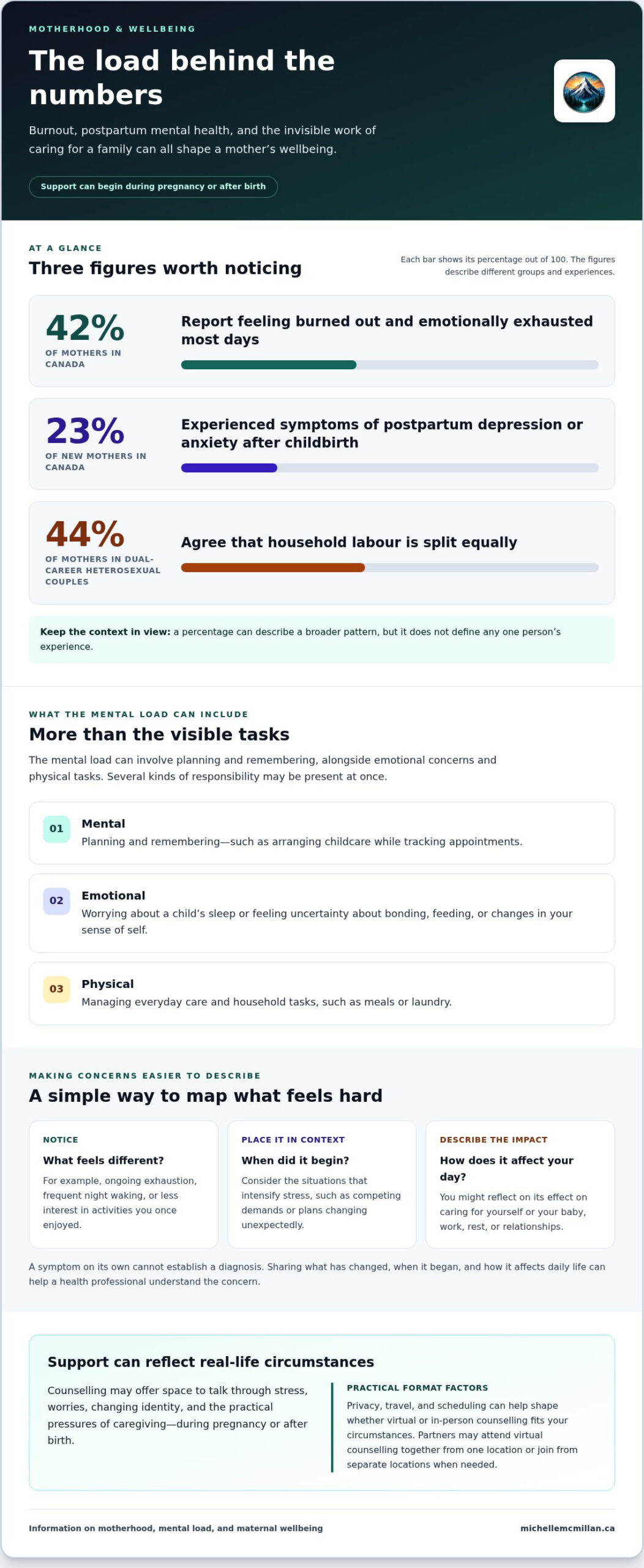
Motherhood can affect mental health, emotions, and physical wellbeing during pregnancy and after birth. In Canada, 42% of mothers report feeling burned out and emotionally exhausted most days.
Emotional Support During Motherhood
Maternal and postpartum support gives you room to describe changes without reducing your experience to a checklist. You might discuss uncertainty about bonding, worries about feeding, or feeling unlike yourself after a new baby arrives. You can also talk about practical details, such as how a demanding feeding schedule affects your concentration or mood. Exploring both emotional and everyday concerns can clarify what you want understood.
Anger and Emotional Outbursts
Irritability or an outburst can feel unsettling, particularly if it clashes with how you hoped to parent. Think about a specific moment, such as feeling angry when plans change unexpectedly or several people need your attention at once. The reaction matters, but so do the pressures around it. Exploring what happened beforehand, what you felt, and what followed can help you describe the experience without defining yourself by one difficult moment.
Maternal Identity and Personal Needs
Becoming a mother can reshape how you see yourself beyond caregiving. You might notice that conversations with friends now centre on children, or that an interest you once valued has slipped out of your week. Naming what you miss, value, or want to keep can bring your identity into view alongside family responsibilities. Your personal needs may change over time, so it can help to discuss what matters to you now.
Overcoming Guilt and Shame
Guilt may arise when you feel impatient, want time alone, or make a choice that doesn’t match your expectations of motherhood. Shame can turn one specific experience into a sweeping judgment about your worth as a parent. Therapy for overwhelmed moms can offer space to examine the difference, such as separating regret about a sharp response from the belief that you’re a bad mother. The context matters.
Postpartum distress can affect mood, sleep, interest, and daily functioning. In Canada, 23% of new mothers experienced symptoms of postpartum depression or anxiety after childbirth. This figure doesn’t define an individual experience, but it underlines that postpartum mental health concerns are worth discussing. You might describe what feels different, when the change began, and how it affects your day. Those details can help a health professional understand what support you’re seeking.
Finding a therapist who understands motherhood
Look for a counsellor who can discuss pregnancy, postpartum changes, caregiving, and your priorities without judgment. Start by naming what you want help exploring, such as anxiety, stress, work pressure, or relationship changes.
Support for Stress and Emotional Overwhelm
Counselling gives you space to describe what feels hardest and how it affects daily life. For example, you might explain that constant planning leaves little attention for work, rest, or conversations with your partner. In an initial session, you can discuss what brings you to counselling, your concerns, and what you hope to explore. The conversation will reflect your circumstances and the counsellor’s process.
There’s no single Canadian average cost that represents every counselling service; fees vary by provider and location. Some communities have lower-cost counselling options. Extended health plans may reimburse some or all counselling costs, depending on the plan and provider eligibility.
Working-Mom Guilt and Motherhood Identity
Work and caregiving can pull you in both directions: you may feel distracted at work, then guilty for missing a school event or bedtime. A counsellor can help you describe these competing expectations and their effect on your sense of identity. Consider whether you can discuss practical realities, such as shift work, childcare gaps, or returning from parental leave.
Personal Goals Alongside Motherhood
Motherhood doesn’t erase personal goals, but limited time and changing responsibilities can make them harder to pursue. Bring a concrete goal to counselling, such as completing a course, reconnecting with friends, or considering a career change. You can explore what balance means in your current circumstances, which responsibilities are fixed, and where your own priorities might fit.
Virtual counselling can be convenient when childcare or unpredictable schedules make travel difficult. Partners can attend virtual counselling together from the same location or join from separate locations when needed. You can also consider whether virtual or in-person counselling better fits practical factors such as privacy, travel, and scheduling.
Signs of Burnout, Anxiety, or Postpartum Depression
Ongoing exhaustion, frequent night waking, or losing interest in activities you once enjoyed may be signs that your wellbeing needs attention. Anxiety can involve persistent worry that interferes with daily life; depression may involve lasting low mood or reduced interest. These experiences can overlap, and a symptom alone cannot establish a diagnosis. Tell a health professional what has changed, how long it has been happening, and how it affects caring for yourself or your baby.
What is the mental load of motherhood?
The mental load includes planning and remembering, as well as completing visible tasks. For example, arranging childcare while tracking appointments can occupy your thoughts long after the workday ends.
Mental, Emotional, and Physical Loads
The load can be mental, emotional, and physical at once. You might remember a school form, worry about your child’s sleep, and still manage meals or laundry. In dual-career heterosexual couples, only 44% of mothers agree that household labour is split equally. Mothers are also 1.5 times more likely than fathers to spend an additional three or more hours per day on housework and childcare.
These figures describe patterns, not every family. To understand your own load, notice what you’re responsible for anticipating, organizing, and following up on. For instance, “getting ready for daycare” may include checking supplies, preparing food, and remembering drop-off details. A perinatal counsellor’s experience with pregnancy and postpartum concerns may help you discuss how those responsibilities intersect with your mental health.
Postpartum mental health support can include a family doctor, midwife, public health nurse, or counsellor. Describe specific changes, such as persistent worry, low mood, or difficulty managing daily responsibilities, and ask what support is available. Counselling offers a setting to explore your thoughts and concerns; it isn’t a substitute for urgent crisis support.
If you need crisis support in Canada, call or text 988 any time for the Suicide Crisis Helpline. In British Columbia, the BC Mental Health Line at 310-6789 provides crisis support.
Tips for Lightening the Mental Load
Start by making the invisible work visible. A short list of recurring tasks might include booking appointments, tracking school messages, planning meals, or replacing outgrown clothing. Then consider which responsibilities could be shared or supported by someone you trust. A clear example, such as asking a partner to manage appointment reminders from booking through follow-up, shows the full task rather than one isolated step.
Support can also mean telling a friend or family member what feels difficult instead of trying to carry every concern alone. If rest is hard to find, identify a practical barrier, such as having no childcare during a daytime appointment. These details can help you discuss realistic support with the people involved in your care and family life.
In counselling, bring a snapshot of a demanding week: what you handled, what stayed on your mind, and where you needed help. This gives the conversation a focus beyond the general feeling of being overwhelmed. You can also name what matters most to you, so any discussion of shared responsibilities reflects your family’s circumstances and priorities.
Parenting rage, overstimulation, and exhaustion
Noise, interruptions, and repeated requests can test your patience, especially after a demanding day. Counselling gives you space to discuss how these moments affect you and your family relationships.
Picture a child asking for help while dinner cooks, messages arrive, and another child needs attention. You might feel anger rise, then feel unsettled by your response. Looking at the pressures in that moment can help you explain what was happening, rather than treating one reaction as your whole identity as a parent. Consider what was asked of you, what else was happening, and what support was available.
Therapeutic Approaches for Parenting Challenges
Counselling gives you room to discuss parenting strain, emotional reactions, and disagreements about how to respond to children. For example, you could describe a recurring conflict over screen time or bedtime and explore its effect on your family. When considering counselling, look for space to discuss your wellbeing alongside the practical situation, rather than reducing the concern to one difficult moment.
Finding time for support can be challenging when care responsibilities change throughout the day. Virtual counselling may fit around childcare or an unpredictable routine; in-person counselling is available in Calgary. Travel, privacy, work hours, and childcare can all shape which format works for your schedule.
Societal Expectations and Parenting Pressure
Expectations to stay patient, organized, and available can make ordinary limits feel like personal shortcomings. Work pressure may add another layer. Eleven percent of fathers said they worried caregiving responsibilities could cause their work performance to be judged negatively. Naming a specific pressure, such as feeling pulled between a deadline and a school pickup, can clarify what’s weighing on you.
Partners may not experience the division of family work in the same way. More than 70% of heterosexual fathers in dual-career couples think they split household labour equally with their partner. A discussion about one recurring responsibility, such as who tracks children’s school notices and follows up, can reveal different assumptions. Couples counselling can provide a place to discuss how those disagreements affect the relationship and shared parenting.
If making time for counselling feels difficult, identify the main obstacle first, such as travel, work hours, or childcare. That detail can help you consider a workable format and schedule. You can begin by describing a recent moment when parenting pressure felt especially intense.
Identifying stressors and creating a therapy plan
A counselling plan can begin by clarifying what you want help with and what feels most pressing. Pregnancy, changes after birth, and family responsibilities may shape those priorities in different ways.
Emotional Regulation and Stress Reduction
Emotional regulation support can focus on how feelings build, what affects their intensity, and how they influence your responses. Rather than describing stress as one constant feeling, notice whether it rises around transitions, difficult conversations, or particular demands. Recognizing a pattern can help you explain what you want to understand. A counsellor can discuss these experiences with you and consider what support fits your circumstances.
It can help to distinguish immediate pressures from ongoing ones. A single disrupted plan may feel different from a recurring conflict over responsibilities or a lasting worry about pregnancy. Describing the timing, context, and effect of each concern gives the conversation more shape. You don’t need a complete explanation; even a few observations can help you identify where you’d like to begin.
Therapy for Emotional Strain
Emotional strain can affect several areas at once, including sleep, relationships, concentration, and how connected you feel to yourself. You might want to discuss one concern first, then consider how it relates to other struggles. For instance, worry about a major family change may be affecting conversations with your partner. Counselling gives you space to explore these connections without assuming a single cause or explanation.
A plan can reflect what matters most to you now, rather than follow a preset sequence. You might prioritize a change in your relationship, uncertainty about parenting, or anxiety that has become difficult to set aside. Naming what you hope to explore helps clarify the purpose of counselling. You can revisit priorities as circumstances shift, including during pregnancy or after a baby arrives.
Stress Management and Self-Care
Self-care is easier to discuss when it reflects actual constraints, not an ideal routine. You might explain that family expectations leave little room for personal decisions, or that demands change from one day to the next. Those details help show what feels possible and what feels out of reach. A practical conversation can include boundaries, support from others, and the responsibilities you’re carrying.
Before counselling, you could note which concerns feel urgent, which keep returning, and what you’d like to change in your daily experience. These are prompts for reflection, not a requirement or prescribed exercise. Sharing them can help connect emotional concerns with practical priorities and decide what to focus on together.
If you’re considering counselling for anxiety and stress, think about which part of your experience you most want to discuss.
Michelle McMillan: Individual Therapy
Michelle McMillan’s individual therapy offers space to discuss the pressures of motherhood, emotional strain, and changes during pregnancy or after birth. Bring the concerns affecting your daily life and explore what support may fit your circumstances.
Michelle holds a Master of Arts in Counselling Psychology (MACP) and is a Canadian Certified Counsellor (CCC), a national professional certification through the Canadian Counselling and Psychotherapy Association (CCPA). She offers virtual and in-person counselling, and prefers to provide much of her counselling virtually. Virtual counselling is available throughout Alberta, British Columbia, Saskatchewan, and Manitoba; in-person appointments are available in Calgary.
If you’d like to discuss individual counselling, contact Michelle McMillan.
Make room for support that fits your life
You don’t need to have everything figured out before asking for support. A useful next step is naming what feels hardest right now, even if the answer changes from day to day. You may want space to discuss feeling stretched between caregiving and your own needs, or to explore how stress affects family relationships. Therapy for overwhelmed moms can begin with the concern that feels most present, not a perfect explanation of every part of motherhood.
Consider what you’d want a counsellor to understand about your current life: the responsibilities you’re carrying, the support you have, and what you’d like to make room for. Those details can help you begin a conversation at your own pace. If you’re ready to take that step, contact Michelle McMillan to explore counselling support. You deserve to take your own wellbeing seriously, too.
Frequently Asked Questions
Can I start therapy during pregnancy, or should I wait until after the baby is born?
You can begin therapy during pregnancy; you don’t need to wait until after birth. You might want space to discuss concerns about becoming a parent, changes in your relationship, or how pregnancy affects daily life. Starting with one concern can make the first conversation more manageable. Counselling can continue after birth as your circumstances and questions change.
Not sure where to start?
Start with the concern taking up the most space today, even if you can’t explain it neatly. You might say you’re dreading evenings, feeling disconnected from your partner, or unsure why small tasks feel difficult. A counsellor can learn what brings you to counselling and what you hope to discuss. You don’t need a complete plan before beginning.
What if I’m not a “new” mom but still struggling?
You can seek support at any stage of motherhood. Stress may surface around returning to work, a child starting school, changes in family relationships, or your own shifting priorities. A transition that once felt manageable may become harder when responsibilities overlap. Counselling gives you room to explore what’s happening now, whatever your children’s ages.
What types of maternal mental health issues do you help address?
Counselling may address anxiety and stress, low mood, emotional strain, parenting challenges, relationship concerns, and life transitions. You can discuss specific experiences, such as persistent worry about daily responsibilities or feeling overwhelmed by family conflict. Counselling provides a setting to explore these concerns; it doesn’t provide a medical diagnosis. If you’re concerned about your mental health, share what you’re experiencing with a qualified health professional.
What types of therapy help overwhelmed moms?
The kind of support depends on what you want to discuss. Individual therapy can focus on your concerns, while couples or family counselling can address shared relationship or family experiences. Michelle McMillan offers Emotion-Focused Therapy, Cognitive Behavioural Therapy, Strengths-Based Therapy, Person-Centred Therapy, and Attachment-Based approaches. These are different counselling frameworks, not guaranteed solutions; your goals should fit the concerns you bring.
How can mothers find a therapist in Canada who specializes in postpartum or maternal mental health?
Look for a counsellor whose experience and stated areas of focus include pregnancy, postpartum adjustment, or parenting concerns. You can describe the situation you want help with, such as anxiety after birth or difficulty adjusting to new family responsibilities. Michelle McMillan holds a Master of Arts in Counselling Psychology and is a Canadian Certified Counsellor, a national professional certification through the Canadian Counselling and Psychotherapy Association.
How do individual therapy, group therapy, and online therapy compare for mothers?
Individual therapy focuses on your concerns with a counsellor; group therapy brings multiple participants together to discuss shared themes. Online therapy describes how counselling is delivered, not whether it’s individual or group-based. Consider what matters practically: one-to-one discussion, a group setting, or avoiding travel. Your schedule, comfort, and the topic you want to discuss can guide your choice.
How can an overwhelmed mother find time and childcare to attend therapy?
Begin by identifying the main barrier, such as work hours, travel, childcare, or an unpredictable family routine. Consider whether a trusted friend or relative can help with childcare, or whether an appointment can fit around an existing commitment. If travel is difficult, virtual counselling may remove the trip. These practical details can help you decide which format and timing are workable.

Article by
Michelle McMillan, MACP, CCC
Michelle McMillan is a Canadian Certified Counsellor (CCC) with a Master of Arts in Counselling Psychology (MACP). She has extensive experience working with children and supporting clients with ADHD, neurodivergence, anxiety, emotional regulation, relationships and family challenges. Michelle offers both virtual and in-person counselling, with virtual counselling available throughout Alberta, British Columbia, Saskatchewan and Manitoba and in-person appointments available in Calgary.
Important Information
This article is provided for general educational and informational purposes only and is not a substitute for professional counselling, psychological, medical or emergency services. Information shared here should not be considered a diagnosis or individualized treatment advice. If you are experiencing a mental health emergency or are in immediate danger, please contact appropriate emergency services in your area.