
Modern mental health care has adapted significantly in recent years, offering individuals, couples, and families greater flexibility in how they access professional guidance. In Alberta, the shift toward virtual care allows people to connect with qualified practitioners without the need to travel across town or arrange complex logistics. Whether you are navigating communication difficulties in a partnership, exploring options for relationship counselling online, or researching whether an online child therapist Calgary search aligns with the developmental needs of your child, understanding how virtual therapy operates is an important first step.
Choosing a counselling format involves evaluating your specific circumstances, the nature of your concerns, and the practical demands of your daily schedule. This guide provides a comprehensive overview of online counselling in Calgary and across Alberta, detailing how virtual appointments work, the specific considerations for couples and individuals, and why certain clinical services—such as counselling for younger children and family dynamics—remain primarily centered in physical office environments.
Understanding Online Counselling: How Virtual Therapy Works in Calgary and Alberta
Online counselling—frequently referred to as virtual therapy, teletherapy, or distance counselling—is the delivery of professional mental health services through secure digital channels. Rather than attending an appointment at a physical clinic, clients meet with a professional counsellor using real-time video conferencing or telephone calls. In Canada, virtual therapy is recognized as a legitimate, structured delivery method governed by ethical guidelines, professional scopes of practice, and provincial jurisdictional standards.
Engaging in virtual therapy involves the same professional boundaries, ethical considerations, and clinical care as traditional face-to-face appointments. The primary difference lies in the setting: you participate from your private living space, workplace office, or another confidential location while your counsellor connects from a private, professional office space.
The Format and Delivery of Virtual Sessions
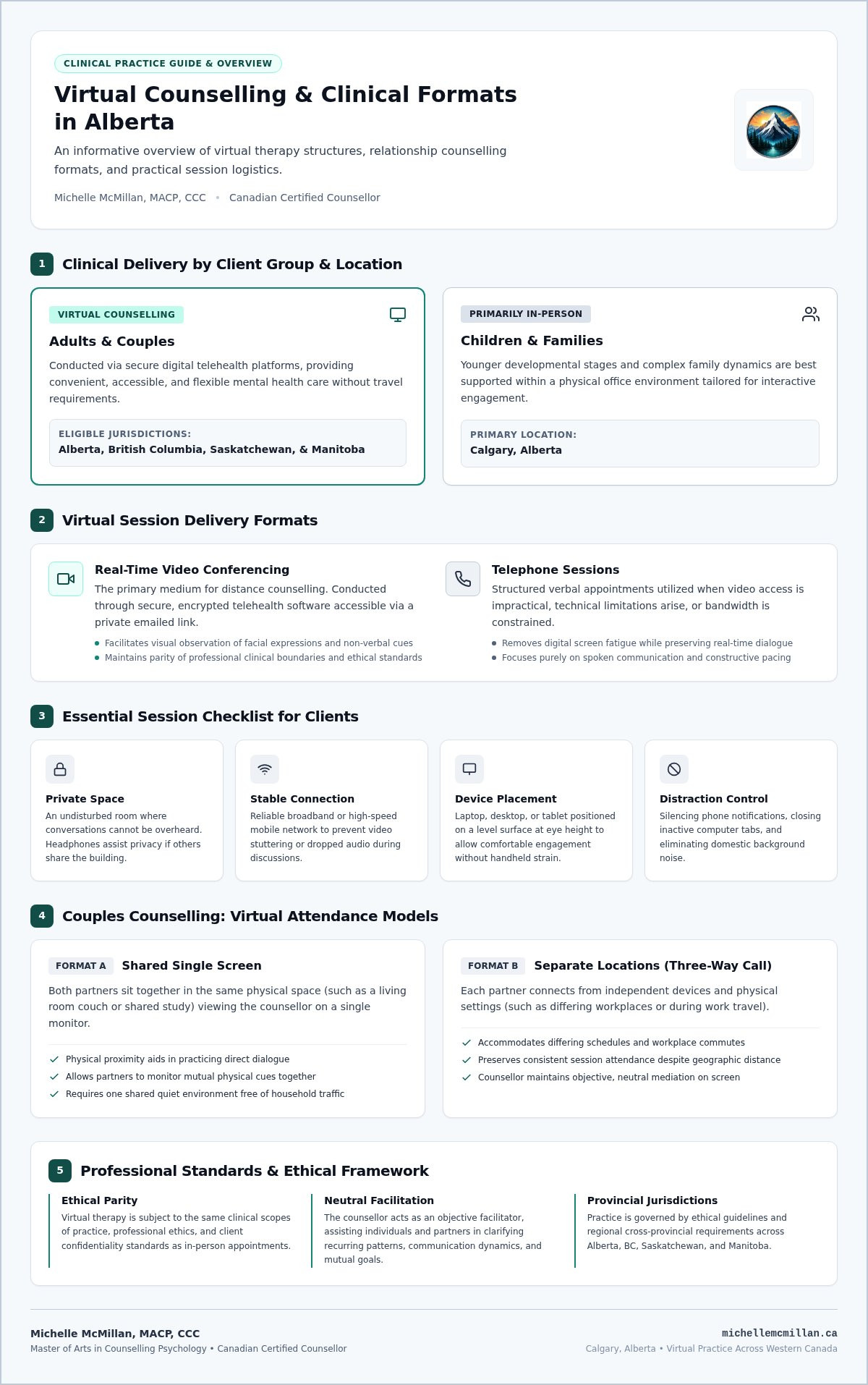
Virtual appointments typically occur over secure, video-based telehealth software designed specifically for clinical practice. Prior to an appointment, clients generally receive a private link via email. At the scheduled time, clicking this link opens a private, encrypted digital room where the client and practitioner interact in real time.
While video remains the most common medium because it allows both parties to observe facial expressions and non-verbal cues, phone sessions can also be arranged when video access is impractical or when internet bandwidth is limited. In both formats, the counsellor focuses on facilitating constructive dialogue, exploring concerns, and working collaboratively with the client on mutually agreed-upon goals.
Practical Considerations for Video and Phone Appointments
For virtual counselling to remain effective and confidential, both the practitioner and the client must pay attention to practical details regarding their environment:
- A Private, Undisturbed Space: Sessions require a room where conversations cannot be overheard by roommates, children, or colleagues. Using headphones can help maintain privacy if other people are present in the wider building.
- Stable Internet Connection: A reliable broadband or high-speed mobile connection helps prevent video lag or dropped audio, allowing the conversation to flow without technical interruptions.
- Comfortable Device Setup: Positioning a laptop, tablet, or desktop computer on a stable surface at eye level allows you to sit comfortably throughout the appointment without needing to hold a mobile phone.
- Minimizing Distractions: Turning off notifications, closing background tabs, and silencing household devices helps you dedicate your attention to the therapeutic discussion.
Relationship Counselling Online: Practical Support for Couples and Partnerships
Relationships face ongoing pressures from work stress, life transitions, parenting demands, financial changes, and neurodivergent differences. When communication breaks down or recurring patterns of conflict cause distress, seeking professional support can provide an objective perspective. Today, many couples turn to relationship counselling online as a realistic, convenient way to engage in therapeutic work together.
Virtual relationship therapy allows partners to address relational friction, clarify emotional needs, and examine patterns of interaction without adding the logistical burden of commuting to a shared clinic appointment. For couples balancing demanding professional obligations or family responsibilities, the virtual format removes significant barriers to attendance.
How Couples Participate in Virtual Therapy
One of the primary advantages of relationship counselling online is the flexibility it offers for session logistics. Partners can attend appointments through two primary arrangements:
- Sharing a Single Screen: Both individuals sit together in the same room, viewing the counsellor on a single monitor or laptop. This setup enables partners to remain in physical proximity, which can be useful when practicing direct verbal communication and observing each other’s body language.
- Connecting from Separate Locations: When partners have differing work locations, travel commitments, or daily routines, virtual therapy platforms allow each person to log in from separate devices and physical locations. Both partners appear on screen alongside the counsellor in a three-way video interface. This flexibility ensures that relationship support can continue consistently even when geographic distance or professional obligations keep partners apart.
Regardless of whether partners connect from the same couch or from separate offices, the counsellor acts as an objective, neutral facilitator. The focus remains on identifying cyclical arguments, understanding how each person experiences conflict, and learning deliberate strategies to discuss sensitive matters constructively. To learn more about relational dynamics and support structures, explore our guide on couples therapy in Calgary.
Navigating Relationship Transitions, Stress, and Neurodivergence
Every relationship experiences periods of heightened strain. Life changes—such as moving cities, changing careers, welcoming a child, or managing health concerns—can disrupt familiar routines and create tension between partners. In an online setting, couples have the opportunity to discuss these transitions thoughtfully, examining how external stressors influence their day-to-day interactions.
Additionally, many couples seek support when one or both partners navigate neurodivergence, including Attention-Deficit/Hyperactivity Disorder (ADHD). In relationships where ADHD is present, differences in executive functioning, memory, attention regulation, and organization can sometimes be misinterpreted as a lack of caring or responsibility. Virtual relationship counselling provides a neutral forum where partners can explore how neurodivergent characteristics influence household roles, communication styles, and emotional regulation, helping both individuals replace frustration with clarity and objective understanding.
Comparing Online and In-Person Therapy Formats
While virtual care provides high accessibility, it is not a one-size-fits-all solution for every demographic or therapeutic need. Choosing between online and in-person counselling requires evaluating clinical appropriateness, the age of the client, the complexity of the issues, and personal preferences.
| Consideration | Virtual Counselling | In-Person Counselling |
|---|---|---|
| Best Suited For | Adults, individual therapy, couples counselling, and select older adolescents. | Young children, comprehensive family conflict, and hands-on play-based work. |
| Logistics & Commute | No travel required; access sessions from home, office, or remote locations across Alberta. | Requires travel to a Calgary office; requires planning around traffic, parking, and transit. |
| Interaction Style | Dialogue-centered video or audio interaction using screen-based technology. | Physical shared presence, interactive physical activities, and non-verbal observation. |
| Environment | Dependent on client ensuring personal privacy and an undisturbed space. | Dedicated, private clinical setting managed entirely by the practitioner. |
Why In-Person Support is the Focus for Children and Families
Parents researching an online child therapist Calgary often wonder whether virtual therapy is appropriate for younger kids. While digital appointments are commonplace for adults, clinical practice shows that child and family counselling is primarily suited to a dedicated, physical office environment.
Young children communicate, process experiences, and express emotions through play, movement, and behavioral cues rather than structured verbal conversation. In an in-person Calgary counselling setting, a therapist can observe spontaneous behaviors, engage with interactive tools (such as art, games, and sensory materials), and create an environment free from home-based interruptions. Attempting to engage a young child in front of a screen for an extended period often leads to digital fatigue, distraction, or disengagement.
Similarly, family counselling involving parents and multiple children frequently benefits from physical presence. Complex family dynamics, non-verbal tensions, and behavioral interactions are far easier to observe and manage safely when all participants share the same physical space. If you are seeking care for your child or household, reading about child counselling options for Calgary parents can help you understand how in-person therapy supports younger demographics.
Clarifying Inquiries for an Online Child Therapist in Calgary
When caregivers search for an online child therapist in Calgary, their goal is often to find manageable, high-quality care that fits around school hours and family commitments. However, it is essential to distinguish between direct child therapy and parental guidance:
- Direct Therapy for Children: Because young children require interactive, sensory, and relational engagement, clinical interventions are most effectively delivered in-person at a Calgary clinic.
- Parenting Consultation and Support: While young children thrive in face-to-face settings, parents themselves can effectively utilize virtual counselling to discuss parenting strategies, behavioral support plans, emotional regulation techniques, and home routines. Virtual parent consultations allow caregivers to gain professional insight without disrupting their child’s schedule.
- Adolescent Support: Older teenagers may, depending on their maturity level, personal comfort with technology, and the nature of their concerns, utilize virtual counselling effectively. However, the decision between online and in-person support for a teen must be evaluated on an individual, case-by-case basis.
When Virtual Sessions Suit Individual and Relationship Counselling
While youth and multi-generational family therapy are primarily centered in-person, virtual sessions represent an excellent modality for adult individual therapy and relationship counselling online. Adults generally possess the cognitive maturity, self-reflective capacity, and verbal focus required to engage deeply through a screen.
Virtual appointments allow adults to discuss a wide range of life challenges, including chronic stress, generalized anxiety, professional burnout, life transitions, and self-esteem. For couples, it provides a consistent, weekly or bi-weekly touchpoint to address relationship patterns without the added stress of coordinating two schedules to commute across town during peak Calgary traffic hours.
The Benefits and Logistics of Choosing Virtual Counselling in Alberta
The growth of teletherapy has introduced tangible logistical conveniences for residents throughout Calgary and the wider province of Alberta. Rather than replacing the clinical substance of therapy, virtual delivery alters the context surrounding appointments, making it easier for people to integrate mental health care into their weekly routines.
Flexibility for Busy Schedules and Working Professionals
One of the primary hurdles individuals face when starting counselling is finding the time to attend appointments. A standard in-person appointment often requires taking significant time off work, accounting for travel across Calgary, finding parking, and commuting back.
With virtual sessions, clients only need to set aside the specific duration of the consultation, plus a few minutes before and after to prepare and transition. This efficiency makes it feasible for working professionals to schedule sessions during lunch breaks, early morning hours, or between shifts. It also allows parents to attend individual or couples sessions while their children are at school or participating in extracurricular activities, reducing the necessity of finding external childcare.
Accessibility Across Calgary and Surrounding Communities
Calgary is a geographically expansive city, and winter weather conditions can make commuting difficult or unpredictable. Virtual counselling ensures continuity of care throughout the year, regardless of road conditions, snowfall, or transit delays.
Furthermore, virtual practice extends access beyond city limits. Individuals residing in rural areas of Alberta, smaller towns, or surrounding municipalities—such as Airdrie, Cochrane, Okotoks, or Chestermere—can consult with qualified practitioners based in Calgary without having to make long, recurring road trips. This provincial reach ensures that high-quality, specialized support is accessible regardless of geographic proximity to major clinical centres.
What to Consider When Choosing an Online Counsellor in Alberta
Selecting a mental health professional is an important, personal decision. Because the therapeutic connection between client and counsellor forms the foundation of constructive work, taking the time to evaluate a practitioner’s credentials, experience, and professional standards is vital.
Understanding Professional Designations: MACP and CCC
When looking for professional counselling in Alberta, you will encounter various designations and academic credentials. Understanding what these mean helps ensure you are receiving care from an educated and accountable practitioner.
Master of Arts in Counselling Psychology (MACP): This graduate-level degree represents rigorous academic training in psychological theory, counselling ethics, human development, and clinical intervention techniques. Practitioners holding an MACP have completed formal graduate coursework and supervised clinical practicum placements.
Canadian Certified Counsellor (CCC): The CCC is a national professional credential granted by the Canadian Counselling and Psychotherapy Association (CCPA). It certifies that a counsellor has met established educational standards, holds an approved master’s degree in counselling, complies with a professional code of ethics, and maintains ongoing continuing education. It is important to note that the CCC designation is a national professional certification rather than a provincial regulatory license, and holding this credential does not mean the practitioner is a registered psychologist or psychiatrist.
Many private health insurance plans and workplace extended health benefits in Alberta provide coverage for services delivered by a Canadian Certified Counsellor. Because insurance policies vary substantially between employers and insurance underwriters, clients should always review their specific benefits booklet or contact their provider directly to confirm reimbursement eligibility for the CCC designation.
Evaluating Experience with Communication, Conflict, and ADHD
Different counsellors bring different areas of professional focus to their work. When choosing a counsellor for individual growth or relationship counselling online, consider whether the practitioner has substantive experience addressing your specific concerns:
- Relationship Dynamics: Look for a practitioner who understands systemic patterns, communication styles, and conflict de-escalation strategies.
- ADHD and Neurodivergence: ADHD affects executive functioning, task completion, emotional regulation, and daily organization. A counsellor experienced in neurodivergence can discuss practical strategies tailored to how neurodivergent minds operate, avoiding generalized advice that fails to consider these realities.
- Stress, Anxiety, and Transitions: If you are experiencing major life shifts or chronic workplace stress, an experienced counsellor can help you identify sources of overwhelm, examine coping strategies, and develop personal boundaries.
Finding a Therapeutic Fit That Supports Your Goals
Beyond formal qualifications, the interpersonal match between you and your counsellor is a crucial factor in the effectiveness of your sessions. A constructive counselling relationship is grounded in professional respect, empathy, and transparent communication.
During an initial appointment or consultation, notice how you feel when speaking with the practitioner. Do they listen carefully without making assumptions? Do they communicate clearly and answer your questions regarding their credentials, background, and practice boundaries openly? Feeling respected and understood allows you to explore personal and relational challenges with confidence.
Virtual Counselling Services with Michelle McMillan
Michelle McMillan is a Canadian Certified Counsellor (CCC) who holds a Master of Arts in Counselling Psychology (MACP). Based in Calgary, Alberta, Michelle provides professional mental health counselling designed to assist clients in understanding their emotional patterns, developing effective communication, and managing life’s complexities.
Her practice is characterized by a warm, grounded, and collaborative environment that respects each client’s autonomy and unique circumstances. Rather than offering one-size-fits-all advice, Michelle works with individuals and couples to examine their experiences objectively and develop practical, personalized paths forward. Learn more about her background, credentials, and practice philosophy by visiting the about Michelle McMillan page.
Virtual Therapy for Adults and Couples Across Alberta
Michelle offers virtual counselling services for adult individuals and couples residing throughout Alberta. Additionally, she is eligible to provide virtual care to clients located in British Columbia, Saskatchewan, and Manitoba in accordance with applicable provincial guidelines.
Her virtual practice supports clients across several key areas of focus:
- Relationship Difficulties and Couples Counselling: Assisting partners in exploring relational conflict, addressing communication barriers, navigating major life adjustments, and understanding neurodivergent dynamics within a relationship.
- ADHD and Neurodivergence: Supporting neurodivergent adults and teens navigating organization, emotional regulation, executive functioning, and relationship challenges.
- Stress and Anxiety: Helping individuals explore chronic worry, nervous system strain, and professional burnout.
- Life Transitions and Personal Growth: Providing a structured, reflective space to process career shifts, family changes, identity exploration, and self-esteem.
To explore the full scope of available practice areas, visit the comprehensive counselling services directory.
In-Person Counselling for Calgary Children and Families
While adult individual therapy and relationship counselling online are conducted virtually, Michelle’s counselling work with young children and multi-member families is primarily delivered in-person within Calgary.
This deliberate distinction ensures that children and families receive care in a setting best suited to their developmental and clinical needs. In-person Calgary sessions provide younger children with the physical presence, interactive activities, and sensory focus necessary to explore difficult situations, build emotional regulation, and process behavioral challenges safely. For parents seeking support for their children, in-person Calgary appointments offer a structured, dedicated space away from the distractions of the home.
Frequently Asked Questions About Online Counselling and Relationship Support
How does relationship counselling online compare to meeting in person?
Virtual relationship counselling provides the same clinical structure, focus, and professional guidance as an in-person office visit. While in-person sessions involve sharing a physical room with the counsellor, virtual sessions allow partners to participate from the comfort of their home or from two separate locations if their work schedules require it. Clinical effectiveness relies on the active commitment of both partners and the quality of the therapeutic alliance, rather than the physical setting of the room.
Can my partner and I join an online relationship session from two different places?
Yes. Secure telehealth software allows multiple participants to log in to the same virtual session from distinct locations and devices. This is particularly beneficial for couples with demanding work schedules, those who travel frequently for business, or those who work on opposite sides of Calgary. Both partners can see and hear each other and the counsellor clearly throughout the meeting.
Why is child therapy primarily offered in person rather than online?
Young children process emotions and learn coping strategies primarily through physical interaction, play, and observation, rather than structured verbal conversation over video. Attempting to engage a young child in front of a computer screen often leads to distraction and disengagement. In-person therapy in Calgary allows the counsellor to observe behavioral subtleties, use sensory materials, and manage the therapeutic setting directly, creating a more suitable environment for childhood development.
What qualifications should I verify when looking for an online counsellor in Alberta?
It is important to verify that a practitioner holds a relevant graduate degree from an accredited institution, such as a Master of Arts in Counselling Psychology (MACP). Additionally, check their professional credentials, such as the Canadian Certified Counsellor (CCC) designation issued by the Canadian Counselling and Psychotherapy Association (CCPA), or registration with a relevant provincial regulatory college. These designations indicate that the professional adheres to strict ethical codes, formal education requirements, and professional conduct standards.
What technology do I need to attend a virtual therapy session?
To participate in virtual counselling, you need a desktop computer, laptop, tablet, or smartphone equipped with a functioning webcam, microphone, and speakers. You also need a reliable, high-speed internet connection. In most cases, you do not need to download specialized software; you will simply click a secure link provided by your counsellor that opens the encrypted meeting room in your web browser.
Is online counselling covered by Alberta health insurance or workplace benefits?
Virtual counselling is widely recognized by extended health benefits and workplace insurance plans across Canada. However, coverage depends on the specific policy negotiated by your employer or insurance provider. Some plans cover services provided by a Canadian Certified Counsellor (CCC), while others may specify provincial registration. It is always recommended to review your insurance policy documentation or contact your insurer directly prior to your first appointment to clarify your coverage details.
What steps should I take to maintain privacy during a virtual appointment at home?
Ensuring privacy requires choosing a room with a closed door where conversations cannot be easily overheard. Using headphones can prevent family members or roommates from hearing the counsellor’s voice. Some clients choose to run a white noise machine or fan outside their closed door to obscure conversation sounds, or schedule appointments during times when other household members are away at work or school.
Can teens participate in online therapy?
Older adolescents can often participate effectively in virtual counselling, provided they have a private room where they feel safe speaking openly and have the maturity to engage through video. However, the decision to use virtual therapy versus in-person counselling for a teenager must be evaluated individually, taking into account the teen’s comfort, developmental needs, and the specific concerns being addressed.
Taking the Next Step in Your Mental Health Support
Whether you are seeking to untangle communication challenges through relationship counselling online, looking for individual guidance to manage stress or ADHD, or exploring in-person support for your child in Calgary, choosing professional counselling is a constructive step toward clarity and personal well-being. A thoughtful, collaborative counselling environment offers the objective space needed to explore challenges, understand emotional responses, and establish healthier relational patterns.
If you are considering professional mental health support and would like to learn more about session details, eligibility across Canadian provinces, or current appointment availability, I invite you to explore the rates and booking information with Michelle McMillan, MACP, CCC.

Article by
Michelle McMillan, MACP, CCC
Michelle McMillan is a Canadian Certified Counsellor (CCC) with a Master of Arts in Counselling Psychology (MACP). She has extensive experience working with children and supporting clients with ADHD, neurodivergence, anxiety, emotional regulation, relationships and family challenges. Michelle offers both virtual and in-person counselling, with virtual counselling available throughout Alberta, British Columbia, Saskatchewan and Manitoba and in-person appointments available in Calgary.
Important Information
This article is provided for general educational and informational purposes only and is not a substitute for professional counselling, psychological, medical or emergency services. Information shared here should not be considered a diagnosis or individualized treatment advice. If you are experiencing a mental health emergency or are in immediate danger, please contact appropriate emergency services in your area.