
What if the most draining part of addressing depression isn’t the decision to seek care, but trying to figure out who is genuinely qualified to provide it? When your energy is already low, searching for an online therapist for depression can quickly feel like an overwhelming administrative burden. You might find yourself staring at dozens of unfamiliar profiles, puzzled by Canadian titles and provincial boundaries, and wondering if speaking through a screen can offer genuine connection. That hesitation and fatigue make complete sense.
You shouldn’t have to spend your remaining reserves sorting through confusing professional jargon. In this guide, you will learn how to evaluate Canadian counselling credentials, assess different virtual formats, and select a qualified counsellor tailored to your personal needs. We will examine provincial practice standards, outline practical questions to ask prospective practitioners, and provide straightforward criteria to help you schedule an initial session with confidence.
Key Takeaways
- Recognize how virtual counselling offers a flexible, accessible option for receiving care directly from home when managing low energy.
- Clarify Canadian credentials and provincial standards so you can choose a qualified online therapist for depression with graduate-level training.
- Identify the core elements of therapeutic fit and focus areas that align with your individual circumstances.
- Learn practical preparation steps to establish a private, quiet setting and verify your technology before your first session begins.
Understanding Virtual Counselling for Depression in Canada
Finding personalized care shouldn’t mean settling for five-minute prescription check-ins or automated mobile apps. Virtual depression counselling connects adults directly with credentialed professionals across secure video platforms. This format creates a dedicated, confidential setting to discuss emotional heaviness, persistent stress, and everyday challenges. As online counseling has grown across Canada, working with an online therapist for depression allows you to integrate consistent mental health support into your weekly routine without unnecessary friction.
Remote appointments often serve as a practical foundation within an ongoing personal care plan by providing:
- Consistent scheduling that integrates around work and household commitments;
- Direct, focused dialogue tailored to your individual experiences;
- Reduced logistical hurdles, making regular attendance much easier to maintain.
The Accessibility of Online Therapy for Low Energy
Depression frequently drains physical energy. When everyday tasks feel taxing, the prospect of getting dressed, commuting through heavy traffic, and sitting in a public waiting room can become a genuine barrier to seeking support. Attending appointments from your own home removes those travel demands. This allows you to conserve your energy for the session itself. For adults living in rural or underserved Canadian communities, virtual appointments also deliver reliable continuity of care that might not otherwise exist nearby.
How Remote Sessions Compare to Traditional Formats
A virtual appointment maintains the same professional dialogue and clinical focus as an in-person office consultation. You meet face-to-face with your practitioner via video to discuss your circumstances, process difficult emotions, and explore practical coping strategies. The primary difference is the setting: you participate from your chosen private room rather than a clinical office.
Virtual care is not presented as superior to in-person therapy, but it is factually convenient, accessible, and flexible. It removes transportation barriers and accommodates demanding routines. Reviewing dedicated virtual counselling services can help you determine whether this format aligns with your personal preferences and support needs.
Evaluating Professional Credentials: CCC, Social Workers, and Psychologists
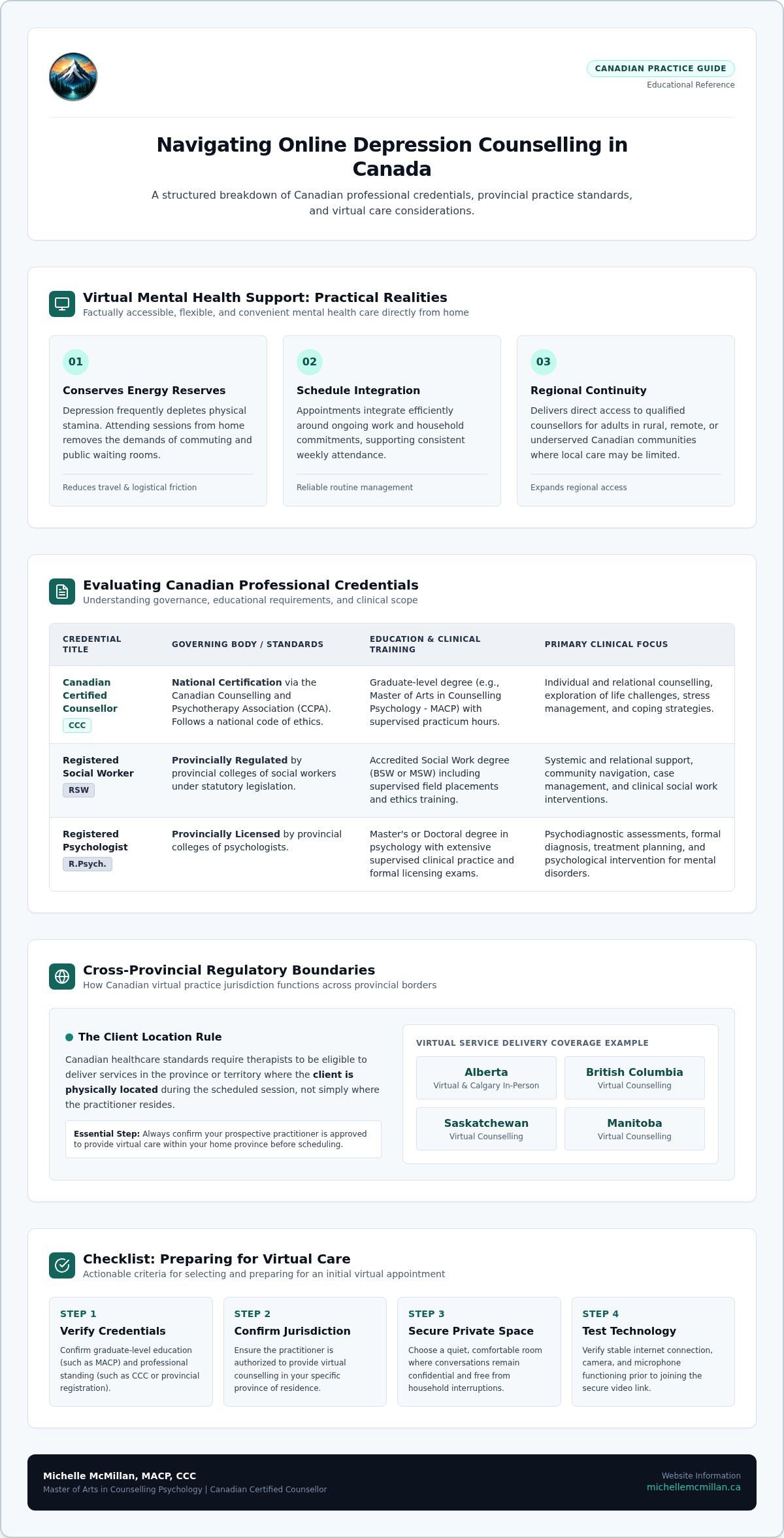
Understanding practitioner titles helps ensure you receive ethical care from a qualified professional. In Canada, mental health regulation functions at the provincial level rather than through a single federal body. While many individuals seek an online therapist for depression, titles like “counsellor,” “psychologist,” and “social worker” represent distinct forms of training, governance, and therapeutic scope.
Here is how Canadian credentials generally break down:
- Canadian Certified Counsellor (CCC): Nationally certified practitioners with graduate-level education;
- Registered Social Worker (RSW): Provincially regulated professionals trained in relational and social systems;
- Registered Psychologist (R.Psych.): Provincially licensed clinicians who assess, formally diagnose, and treat mental health disorders.
Understanding the Canadian Certified Counsellor (CCC) Designation
The CCC credential is a national certification granted by the Canadian Counselling and Psychotherapy Association (CCPA). It confirms a practitioner has earned a recognized graduate degree, such as a Master of Arts in Counselling Psychology (MACP), completed supervised clinical practicum hours, and agreed to follow a national code of ethics. Unlike provincial statutory licensure, the CCC establishes a recognized benchmark of educational and clinical preparation across regions where title protection remains in progress.
Provincial Eligibility and Virtual Practice Boundaries
Canadian healthcare regulations require therapists to be eligible to practice in the jurisdiction where the client is physically sitting during the session. As the Centre for Addiction and Mental Health notes, virtual mental health care must adhere to rigorous regulatory frameworks to maintain client safety. For example, practitioners often secure eligibility to deliver virtual services across multiple provinces, including Alberta, British Columbia, Saskatchewan, and Manitoba. Always verify that a prospective counsellor is approved to serve clients living in your province before booking an intake.
Psychologists vs Professional Counsellors: Understanding the Difference
Choosing between a psychologist and a certified counsellor depends largely on your goals. Psychologists conduct psychodiagnostic evaluations, provide formal psychological diagnoses, and administer standardized assessments. In contrast, professional counsellors focus on talk therapy, emotional regulation, and working through depressive periods without prioritizing psychiatric diagnoses. If you do not require a formal medical assessment, working with a certified counsellor offers a collaborative, focused option for individual care.
Taking time to understand these professional boundaries helps you select an online therapist for depression who fits your situation. If you would like to explore professional credentials further, you can read more about Michelle McMillan and her background as a Canadian Certified Counsellor.
Key Factors to Consider When Choosing an Online Depression Counsellor
Therapeutic fit forms the foundation of constructive depression counselling. While automated subscription apps match you randomly with whoever happens to be on call, meaningful personal change relies on genuine human rapport. When choosing an online therapist for depression, you want someone whose expertise aligns with your lived realities. Exploring a practitioner’s dedicated areas of focus helps clarify whether their background matches what you are experiencing day to day.
Consider these core criteria when evaluating potential counsellors:
- Relevant practice background: Familiarity with your specific combination of concerns, such as low mood paired with career burnout;
- Format alignment: Clear focus on individual adult support rather than high-turnover crisis texting;
- Scheduling consistency: Appointment openings that realistically fit your daily commitments without causing added strain.
Assessing Therapeutic Rapport and Communication Style
An attentive, grounded presence creates the safety needed to discuss vulnerable emotions. Notice how a practitioner responds during introductory messages or initial meetings. Do they listen patiently, or do they jump directly into rigid prescriptions? Effective counselling provides open room to unpack complex feelings at your own pace, without judgment or pressure to perform.
Matching Practice Focus with Your Life Context
Depressive symptoms rarely exist in isolation. They frequently connect with chronic anxiety, neurodivergence, parenting demands, or major life changes. Seeking a counsellor experienced in emotional regulation and daily stress can help you address underlying patterns rather than just surface symptoms. You can review specific counselling options on Michelle McMillan’s services page to see how tailored individual support is organized.
Questions to Ask During an Initial Consultation
Treating an initial inquiry as an evaluation helps ensure you feel comfortable before committing to ongoing appointments. Asking practical questions upfront prevents administrative frustration later on.
Useful inquiries to bring to a prospective online therapist for depression include:
- What are your formal credentials and provincial practice eligibility?
- What is your experience supporting adults navigating persistent depression and low energy?
- How do you facilitate remote video sessions for adult clients?
- What are your documentation procedures for extended health insurance reimbursement?
Preparing for Online Depression Sessions: Practical Setup and Expectations
Getting ready for a remote session involves more than simply clicking a video link. While app-based models treat therapy like an instant messaging queue, a thoughtful setup helps you transition into a reflective mindset. Taking several practical steps beforehand minimizes technical distractions and protects your personal privacy so you can engage candidly with an online therapist for depression.
A quick checklist can help ensure your virtual appointments run smoothly:
- Device readiness: Check your camera, microphone, and internet connection ten minutes early;
- Comfort elements: Keep a glass of water, tissues, and a notebook within reach;
- Digital quiet: Close unrelated browser tabs and silence phone notifications to maintain focus.
Creating a Private and Comfortable Environment at Home
Privacy is essential when discussing vulnerable topics. Choose a room with a closing door where household members cannot overhear your conversation. If sound travels easily through your living space, wearing headphones improves audio clarity and prevents your counsellor’s voice from carrying into adjacent rooms. Positioning your screen at eye level with soft lighting in front of you helps prevent eye fatigue during the call.
What to Expect During Your Initial Virtual Appointment
An intake session moves at a manageable pace. Your counsellor will begin by reviewing administrative essentials, including informed consent, limits of confidentiality, and emergency contact details for your local area. Afterwards, they will invite you to describe what led you to book the session. You do not need to deliver a perfectly organized history. There is no expectation to uncover deep-seated issues immediately; the initial dialogue focuses on understanding your current reality and answering any procedural questions you have.
Approaching virtual care as an ongoing collaboration allows you to explore concerns without pressure. If you have questions about scheduling logistics or platform setup before getting started, you can contact Michelle McMillan directly to clarify your initial appointment details.
Virtual Depression Counselling with Michelle McMillan, MACP, CCC
Working through depressive periods requires steady, professional accountability rather than revolving triage queues. Large digital aggregators frequently assign clients to whichever provider happens to log in next, disrupting conversational continuity. In contrast, Michelle McMillan provides virtual individual counselling tailored specifically for adults seeking consistent, one-on-one therapeutic engagement. As a qualified online therapist for depression, Michelle offers a dedicated space where you work directly with the same practitioner each session.
Her clinical background rests on two distinct professional credentials:
- Academic Foundation: Michelle holds a Master of Arts in Counselling Psychology (MACP), ensuring rigorous academic preparation in psychological theory and evidence-based counselling methods;
- National Professional Certification: She holds the Canadian Certified Counsellor (CCC) designation from the Canadian Counselling and Psychotherapy Association, upholding national standards for clinical competence and ethical conduct.
You can review detailed background credentials on the about Michelle McMillan page to understand her professional training.
Professional Qualifications and Practice Approach
Holding graduate training in counselling psychology provides a structured foundation for exploring difficult personal patterns. Rather than offering pre-packaged advice or acting as an impersonal sounding board, Michelle focuses on individual counselling addressing depression, persistent stress, emotional regulation, and significant life transitions. Sessions move at a measured, respectful pace that gives you room to examine personal concerns without pressure or rigid diagnostic labels.
Connecting from Calgary, Across Alberta, and Western Canada
While maintaining a strong local presence rooted in Calgary, Michelle provides virtual counselling services for adults and couples across four Western Canadian provinces. Clients physically located in Alberta, British Columbia, Saskatchewan, and Manitoba can connect remotely from home, avoiding long commutes and clinic parking while receiving regular support.
Whether you reside in a major city or an underserved rural community, remote video appointments ensure reliable continuity. If you have specific scheduling questions or wish to confirm regional eligibility before getting started, you can reach out directly through the practice contact page.
Taking the Next Step Toward Virtual Support
Selecting the right online therapist for depression comes down to clarifying your personal goals, verifying Canadian credentials, and confirming that your provider is eligible to practice in your home province. When fatigue makes commuting difficult, remote appointments provide a flexible, accessible way to engage in dedicated dialogue without placing extra demands on your daily routine. Taking time to evaluate professional qualifications ensures you don’t have to sort through confusing healthcare titles on your own.
Michelle McMillan, MACP, CCC, provides virtual individual counselling tailored for adults throughout Alberta, British Columbia, Saskatchewan, and Manitoba. Holding a Master of Arts in Counselling Psychology alongside her national Canadian Certified Counsellor professional designation, Michelle provides a thoughtful, non-judgmental setting to explore emotional regulation, persistent stress, and major life transitions. If you are seeking professional support for low mood or persistent stress, view rates and booking with Michelle McMillan to explore available virtual counselling.
Frequently Asked Questions
How effective is an online therapist for depression compared to in-person counselling?
Virtual appointments provide structured professional dialogue without the commute. Rather than framing virtual care as better or worse than office visits, working with an online therapist for depression offers a convenient, flexible, and accessible format. Meeting remotely allows you to connect consistently from home, which helps individuals who experience low energy maintain regular attendance while addressing personal challenges.
What qualifications should I look for in a Canadian online depression counsellor?
Look for a practitioner holding a recognized graduate degree, such as a Master of Arts in Counselling Psychology, alongside verified credentials. In Canada, valuable qualifications include the Canadian Certified Counsellor (CCC) designation from the CCPA or provincial registration as a psychologist or social worker. Always confirm the professional is ethically and legally eligible to practice in your province.
Can an online therapist prescribe medication for depression in Canada?
No, Canadian counsellors, therapists, and psychologists cannot prescribe medication. Prescriptions require medical licensing held by physicians, psychiatrists, or nurse practitioners. An online therapist for depression focuses instead on talk therapy, emotional regulation, and practical strategies. If you require medical management alongside counselling, your counsellor can collaborate with your family doctor or recommend consulting a local medical provider.
Do private health insurance plans in Canada cover virtual counselling sessions?
Many Canadian extended health benefit plans provide partial or full reimbursement for virtual counselling. Coverage depends entirely on your specific employer policy and the practitioner’s credentials. While some insurers reimburse Canadian Certified Counsellors, others require provincially registered social workers or psychologists. Review your benefits booklet or contact your insurance company beforehand to verify whether your plan covers remote appointments with a CCC.
What provinces can Michelle McMillan support with virtual individual counselling?
Michelle McMillan provides virtual individual counselling for adults residing in Alberta, British Columbia, Saskatchewan, and Manitoba. While her practice maintains strong local roots in Calgary, remote video sessions enable adults across Western Canada to access focused care from their own homes. Clients must physically remain within one of these four provinces during their scheduled video appointments to meet Canadian practice standards.
What is the difference between a Canadian Certified Counsellor and a psychologist?
The main difference lies in formal diagnosis and regulatory scope. Registered psychologists are provincially licensed professionals authorized to administer psychodiagnostic assessments and formally diagnose mental health conditions. A Canadian Certified Counsellor (CCC) holds a master’s degree in counselling psychology and national certification. CCCs focus on talk therapy, life transitions, and emotional support without emphasizing clinical pathology or psychiatric testing.
How should I prepare my home environment for a virtual counselling appointment?
Choose a quiet, private room with a closing door where family members or roommates cannot overhear you. Using headphones improves audio clarity and ensures the practitioner’s voice stays entirely private. Test your camera, microphone, and internet connection several minutes before your session begins. Keeping water, tissues, and a notepad nearby helps you settle into a comfortable, focused space without unnecessary disruptions.

Article by
Michelle McMillan, MACP, CCC
Michelle McMillan is a Canadian Certified Counsellor (CCC) with a Master of Arts in Counselling Psychology (MACP). She has extensive experience working with children and supporting clients with ADHD, neurodivergence, anxiety, emotional regulation, relationships and family challenges. Michelle offers both virtual and in-person counselling, with virtual counselling available throughout Alberta, British Columbia, Saskatchewan and Manitoba and in-person appointments available in Calgary.
Important Information
This article is provided for general educational and informational purposes only and is not a substitute for professional counselling, psychological, medical or emergency services. Information shared here should not be considered a diagnosis or individualized treatment advice. If you are experiencing a mental health emergency or are in immediate danger, please contact appropriate emergency services in your area.