
What if your child’s most challenging “big behaviours” are actually their only way of asking for help? It’s heart-wrenching to see your child in distress, whether they are struggling with school or withdrawing from friends. Seeking professional child counselling is often the first step toward understanding these changes. You want to be their steady anchor, yet it’s natural to feel overwhelmed when you don’t have the specific tools to navigate these emotional storms together.
It’s important to find a path toward lasting stability rather than just a temporary fix. Professional support serves as a collaborative bridge, helping to transform difficult moments into opportunities for growth. By engaging with a Canadian Certified Counsellor, families can gain a clearer understanding of how to manage intense emotions through a supportive, therapeutic lens.
This guide explores how child counselling in Calgary can help your child build essential resilience and emotional regulation skills. You’ll discover practical ways to support their development while strengthening the parent-child relationship, ensuring your home becomes a place of open communication and safety once again.
Key Takeaways
- Understand how a professional, supportive space helps your child explore complex feelings safely with a Canadian Certified Counsellor.
- Learn to recognize subtle shifts in behaviour, such as social withdrawal or school-related stress, that suggest your child might benefit from extra support.
- Discover how child counselling helps young people identify their emotions and build a personalized “toolbox” of practical coping strategies.
- Explore the unique advantages of virtual therapy in Alberta, which allows children to engage in meaningful work from the comfort and security of their own home.
- Gain clarity on how to find a Calgary professional who aligns with your family’s values and holds the necessary credentials for high-quality care.
What is Child Counselling? Supporting Your Child’s Emotional Growth
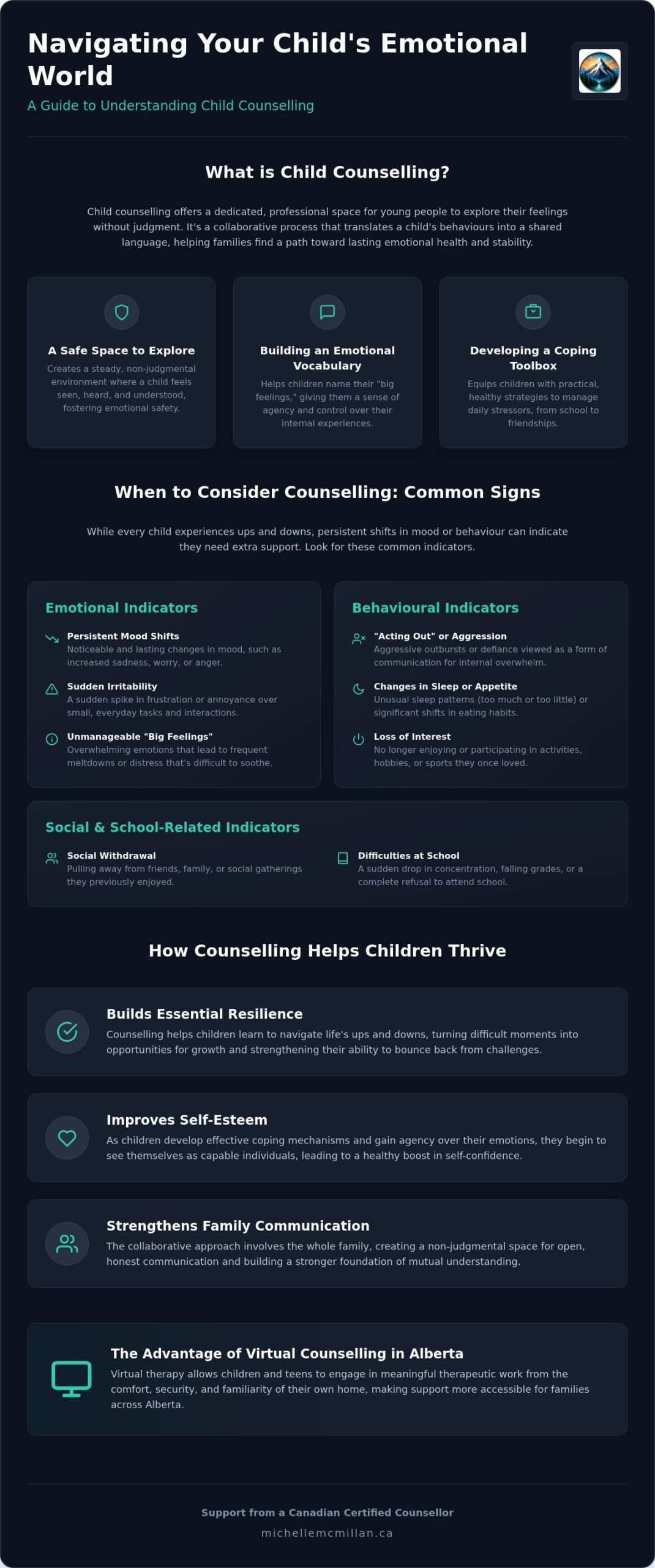
Child counselling provides a dedicated, professional space where young people can explore their feelings without fear of judgment. It’s a sanctuary designed specifically for their developmental needs. When parents begin exploring What is Child Counselling?, they often realize it’s a specialized form of support that differs significantly from general adult therapy. While adults typically use complex language to describe their internal world, children often communicate through their actions, play, and changes in mood. Professional intervention translates these behaviours into a shared language that families can understand.
Working with a Canadian Certified Counsellor (CCC) ensures that this process is grounded in high ethical standards and professional accountability. A CCC focuses on facilitating emotional safety, creating a steady environment where a child feels seen and understood. This professional therapeutic lens goes beyond the standard support found in social circles. It offers evidence-based strategies that help children process stress, which often looks different in younger years. Instead of verbalizing anxiety, a child might experience physical aches, social withdrawal, or sudden irritability. Counselling meets them exactly where they are.
The Goal of Therapeutic Support for Kids
The primary aim is to help children build a robust vocabulary for their emotions. Many “big behaviours” at home stem from a child’s inability to name what they’re feeling. By identifying these internal states, they gain a sense of agency over their experiences. This work involves developing a practical toolbox of healthy coping mechanisms. These tools help them manage daily stressors, school transitions, and friendship dynamics with more ease. As they learn to navigate these hurdles, their self-esteem grows. They begin to see themselves as capable individuals who can handle life’s ups and downs with resilience.
A Collaborative Approach for Calgary Families
Effective support is rarely a solitary journey for the child. It’s a collaborative partnership involving the counsellor, the child, and the parents. This team-based approach ensures that the progress made during sessions translates into the home environment. Creating a non-judgmental space for the whole family allows for more open, honest communication. Every child is unique, so the services provided are always tailored to their specific developmental stage and personality. This ensures the support feels relevant and accessible rather than clinical or intimidating. By working together, Calgary families can build a stronger foundation of mutual understanding and lasting emotional health.
When to Consider Counselling: Common Signs and Challenges
Parents often have a keen intuition when something feels “off” with their child. It might start with a subtle withdrawal from family dinners or a sudden spike in irritability over small tasks. While every child experiences growing pains, persistent shifts in mood or behaviour often signal that they are struggling to process their environment. Understanding the Common Signs and Challenges associated with youth mental health helps you decide when it’s time to seek extra support.
Significant life transitions frequently act as catalysts for these changes. A move to a new neighbourhood, a divorce, or the loss of a loved one can disrupt a child’s sense of security. At school, this might manifest as a sudden drop in concentration or a complete refusal to attend. When these patterns continue for several weeks, child counselling can provide the necessary space for them to unpack their experiences without feeling like they are “in trouble.” Many mothers navigating these family challenges while managing their own stress may also find value in exploring counselling for women in Calgary, which offers dedicated support for the unique pressures parents carry alongside their children.
Emotional and Behavioural Indicators
Recognizing when “big feelings” have become unmanageable is a vital step. You might notice your child is no longer interested in favourite activities or has developed unusual sleep patterns. Sometimes, distress isn’t quiet; it’s loud. It’s helpful to view “acting out” or aggressive outbursts as a form of communication rather than simple defiance. These behaviours are often the only tools a child has to express internal overwhelm. When a child’s appetite or energy levels shift significantly, it’s a clear indicator that their emotional load has become too heavy to carry alone.
Navigating ADHD and Neurodivergence
For neurodivergent children, the world can feel particularly intense. ADHD-related challenges often impact more than just schoolwork. They can deeply affect a child’s self-esteem and their ability to navigate social interactions with peers. Without the right support, these children may feel constantly misunderstood or “wrong.” Specialized ADHD support and counselling focuses on helping these kids develop emotional regulation skills in a way that respects their unique wiring. This isn’t about “fixing” who they are. Instead, it’s about providing a non-judgmental environment where they can learn to manage their energy and build confidence in their own strengths. Families looking for a comprehensive overview of available resources may also benefit from exploring ADHD support Calgary families can rely on, which covers practical strategies for reducing daily friction and improving emotional regulation at home.
How Counselling Helps Children Build Resilience
Resilience is often misunderstood as the absence of struggle. In reality, it is the quiet confidence a child develops when they realize they have the internal resources to face a challenge. Through child counselling, young people move beyond simply reacting to their environment and begin to understand the “why” behind their feelings. This journey starts with emotional literacy. It is the process of identifying and naming complex emotions that might otherwise feel like a tangled knot of distress. When a child can say “I feel overwhelmed” instead of throwing a toy, they have taken the first step toward self-mastery.
A counsellor acts as a steady partner in this process, helping the child build a personalized toolbox of strategies. These are not generic suggestions; they are practical responses tailored to the child’s specific world. By fostering a sense of agency, therapy empowers young people to see themselves as active participants in their own lives rather than victims of their circumstances. This shift in perspective is vital for navigating social difficulties and academic pressures with a sense of calm and purpose.
Developing Practical Coping Skills
Building resilience requires more than just talk. It involves learning techniques to manage anxiety and stress in real-world situations, such as during a difficult math test or a conflict on the playground. Children practice strategies for improving communication with peers and family members, ensuring their needs are met in healthy ways. Emotional regulation is the ability to monitor and manage emotional states. By mastering this skill, children learn to pause before reacting. This pause allows them to choose a response that aligns with their goals, whether that is staying focused in class or maintaining a friendship after a disagreement.
Fostering a Healthy Self-Image
Many children who struggle with academic or social hurdles begin to develop a negative narrative about themselves. They might feel “slow,” “difficult,” or “bad.” Counselling works to dismantle these labels by helping children recognize their inherent strengths and capabilities. For those navigating ADHD or neurodivergence, this support is particularly transformative. It provides a space where their unique way of thinking is understood and validated rather than corrected. By creating a narrative of resilience, children learn to view their challenges as parts of their story they can manage. This healthy self-image serves as a protective layer they carry forward into their adolescent years. Families seeking neurodivergent-informed professional support may also find it helpful to explore ADHD counselling Calgary offers through a specialized therapeutic lens, where practical strategies and emotional regulation tools are developed together.
The Benefits of Virtual Child Counselling in Alberta
Traditional clinic visits can sometimes feel intimidating or clinical for a young child. Virtual child counselling offers a gentle, modern alternative by bringing professional support directly into the safety of your own home. For families living in Calgary or remote parts of Alberta, this approach removes the logistical hurdles of traffic, parking, and long commutes. It ensures that quality care is accessible regardless of your postal code. When a child remains in a familiar environment, their nervous system often stays more regulated. This sense of security can make it easier for them to engage with the therapeutic process from the very first session.
Many parents wonder if a digital format is effective for child counselling compared to in-person visits. In practice, many children today are incredibly comfortable with technology, often finding it easier to open up through a screen than in a formal office setting. The digital format allows for creative engagement through shared screens or interactive digital tools. Privacy is a top priority, and sessions are conducted on secure platforms that meet high standards for confidentiality. This flexibility also extends to your family’s schedule. By eliminating travel time, sessions can be integrated into your week with minimal disruption to school or extracurricular activities.
Creating a Safe Space at Home
To get the most out of virtual sessions, it helps to set up a quiet, private area where your child won’t be interrupted. Using headphones can enhance the sense of privacy and help the child focus on the conversation. Many children feel more “at home” and empowered when they are in control of their physical space. It’s helpful to establish clear boundaries with other family members, ensuring the child knows their “virtual room” is just for them and their counsellor. This structure reinforces the same sense of confidentiality found in a physical office.
How to Prepare Your Child for Their First Virtual Session
Preparing for the first meeting doesn’t have to be complicated. Following a few simple steps can help your child feel ready and relaxed:
- Step 1: Explain the session simply. Use age-appropriate language to describe the counsellor as a “helper” who is there to talk about feelings and ideas.
- Step 2: Check your setup. Ensure you have a stable internet connection and a comfortable seat in a private area.
- Step 3: Encourage comfort. Allow your child to bring a favourite toy, a comfort blanket, or even a pet to the screen if it helps them feel more at ease.
- Step 4: Discuss privacy. Remind them that the “virtual room” is a private space where they can speak freely without being overheard.
If you’re ready to explore how this flexible approach can support your family, you can learn more about virtual child and adolescent therapy and how it fits into your daily life.
Finding the Right Support: Working with a Calgary Professional
Choosing a therapist for your child is one of the most personal decisions a parent can make. It requires a delicate balance of checking professional credentials and trusting your gut feeling. In Calgary, looking for the Canadian Certified Counsellor (CCC) designation provides an essential layer of professional accountability. This certification ensures that the professional holds a master’s level education and adheres to a strict code of ethics. When you choose someone with these qualifications, you’re ensuring your child is in the hands of a grounded professional who values safety and clinical integrity.
A therapist who aligns with your family’s values and needs will feel like a steady partner. You aren’t just looking for a clinical expert. You’re looking for someone who can build a genuine connection with your child. Trust your intuition during this selection process. If a counsellor’s style feels too detached or overly clinical, it might not be the right fit for your child’s unique personality. The goal is to find a compassionate guide who can walk alongside your family through these transitions.
What to Look for in a Child Counsellor
Beyond general qualifications, look for a specific educational background like a Master of Arts in Counselling Psychology (MACP). This advanced training provides the foundation for understanding complex developmental needs and family systems. It’s also beneficial to find a professional with a focus on relevant areas such as ADHD, anxiety, or family dynamics. A professional who understands neurodivergence can offer much more than generic advice. They provide a space where your child feels understood rather than corrected. Before you commit, it’s helpful to explore areas of focus to see if their experience matches your child’s current challenges.
Taking the First Step Toward Support
Acknowledging that your child needs extra help isn’t a failure of parenting. It is a profound act of strength and care. Reaching out for child counselling is the first step in creating a more communicative and resilient home environment. The pathway usually begins with a simple inquiry, followed by an initial conversation to ensure the fit is right before the first session starts. This low-pressure approach allows you to ask questions and feel comfortable with the process before your child even enters the “virtual room.” If you’re ready to move forward, you can view available services or contact Michelle McMillan to start the conversation. Your family doesn’t have to navigate these challenges alone.
Building a Brighter Path Forward for Your Child
Watching your child navigate emotional hurdles can be difficult, but you don’t have to manage these challenges on your own. Professional child counselling offers a collaborative bridge, helping young people translate complex behaviours into a shared language of resilience. By creating a safe, virtual environment, children can develop practical tools for emotional regulation and self-esteem from the comfort of their own home. This supportive lens is especially transformative for families navigating ADHD or other neurodivergent experiences.
Choosing a partner for your child’s care is a significant step toward a more communicative family dynamic. Working with a professional who holds a Master of Arts in Counselling Psychology (MACP) and the Canadian Certified Counsellor (CCC) designation ensures your family receives high-quality, ethical support. With a specialized focus on ADHD and neurodivergence, this therapeutic approach prioritizes understanding your child’s unique wiring while building lasting strengths.
If you’re ready to take that first step toward emotional stability and growth, help is available. You’re invited to book a virtual consultation with Michelle McMillan, CCC to discuss your family’s needs. There is immense hope in seeking support, and a brighter, more connected future for your child is within reach.
Frequently Asked Questions
What is the right age for a child to start counselling?
Professional support can begin at almost any age when a child is struggling to navigate their environment or big emotions. For younger children, this often involves play-based communication, while older youth benefit from more traditional talk therapy. The right time is usually when you notice persistent changes in their mood or behaviour that affect their happiness at home or performance at school.
How do I know if my child’s behaviour is “just a phase” or something more?
Identifying the difference between a phase and a deeper struggle depends on the persistence and intensity of the behaviour. If you notice withdrawal, irritability, or school refusal lasting longer than a few weeks, professional child counselling can provide clarity. These behaviours are often a child’s way of communicating internal distress. Trusting your parental intuition is a vital part of knowing when extra support is needed.
Can virtual counselling be as effective as in-person sessions for kids?
Virtual care is a highly effective option that allows children to remain in their most comfortable and familiar environment. Many young people are digital natives and find it easier to engage with a professional through a screen than in a formal office. This format reduces the stress of travel and allows for the use of interactive digital tools that keep children focused and interested in the process.
How involved will I be as a parent in my child’s counselling process?
Parents are essential partners in the therapeutic journey. While your child needs a private space to build trust with their counsellor, your involvement ensures that progress continues at home. Counsellors often collaborate with parents to provide updates and share practical tools for managing family dynamics. This team-based approach helps strengthen the parent-child relationship and creates a more supportive, communicative environment for everyone.
What should I tell my child about why they are seeing a counsellor?
It’s best to use simple, honest language to describe a counsellor as a “helper” who specializes in feelings and thoughts. You can explain that just as we see a coach to improve at sports, we see a professional to learn how to handle worries or “big feelings.” Emphasize that it is a safe, private space where they can be themselves without any judgment or pressure.
How long does child counselling typically last?
The length of time a child spends in child counselling depends entirely on their specific goals and the nature of their challenges. Some families see meaningful shifts within a few months, while others find that long-term support is beneficial during complex life transitions. The process is intentional and moves at a pace that respects the child’s comfort level, ensuring they feel steady and supported throughout.
What is a Canadian Certified Counsellor (CCC) and why does it matter?
A Canadian Certified Counsellor (CCC) is a professional who has met the national standards for education and ethical practice. This designation requires a master’s level degree, such as a Master of Arts in Counselling Psychology. Choosing a professional with this title ensures that your family is receiving care from someone who is accountable to a recognized professional body and committed to high clinical standards.
Can counselling help my child with their ADHD symptoms?
Counselling offers a supportive space for children to manage the emotional and social impacts of ADHD. While it doesn’t change neurodivergence, it helps kids develop essential skills for emotional regulation and self-esteem. Children learn to understand their unique wiring and build a toolbox of practical strategies for focus and communication. This empowerment helps them navigate school and friendships with more confidence and less frustration. For a deeper look at the full range of available resources, the comprehensive guide to ADHD support in Calgary offers practical tools and strategies for families and individuals seeking lasting change. Parents looking specifically for neurodivergent-informed therapeutic support may also find value in learning more about ADHD counselling Calgary professionals provide, which focuses on bridging the gap between knowing what to do and building the emotional regulation skills to follow through.

Article by
Michelle McMillan, MACP, CCC
Michelle McMillan is a Canadian Certified Counsellor (CCC) with a Master of Arts in Counselling Psychology (MACP). She has extensive experience working with children and supporting clients with ADHD, neurodivergence, anxiety, emotional regulation, relationships and family challenges. Michelle provides virtual counselling for adults throughout Alberta, British Columbia, Saskatchewan and Manitoba and primarily in-person counselling for children and families in Calgary.
Important Information
This article is provided for general educational and informational purposes only and is not a substitute for professional counselling, psychological, medical or emergency services. Information shared here should not be considered a diagnosis or individualized treatment advice. If you are experiencing a mental health emergency or are in immediate danger, please contact appropriate emergency services in your area.