
Imagine finishing another day feeling completely drained, wondering why simple routines often spiral into high-stress conflict or emotional meltdowns. If you or your child is struggling with the weight of feeling constantly behind, you aren’t alone in this experience. Finding reliable ADHD support Calgary families can trust is often the first step toward lowering the temperature at home. It’s difficult to manage school expectations or workplace demands when your internal world feels like it’s in a state of constant dysregulation.
It’s exhausting to feel like you’re always playing catch-up, and it’s understandable that the pressure to “just focus” often does more harm than good. You deserve to feel capable and calm rather than inadequate. This article shares how professional virtual counselling helps you develop practical tools for emotional regulation while strengthening your most important family relationships. We’ll explore ways to improve communication, reduce daily friction, and build a supportive environment where every family member can finally catch their breath.
Key Takeaways
- Learn how meaningful support involves more than a diagnosis, focusing instead on emotional regulation and strengthening family connections.
- Discover the benefits of addressing the internal experience of neurodivergence to help children and adults build lasting self-esteem.
- Understand how virtual ADHD support Calgary residents can access from home offers a low-stress, convenient alternative to traditional clinic settings.
- Identify the essential professional designations to look for when choosing a qualified counsellor who understands the complexities of ADHD.
- Explore proactive strategies that help shift your home environment from a place of conflict to one of calm and mutual understanding.
Understanding ADHD Support in Calgary: More Than Just a Diagnosis
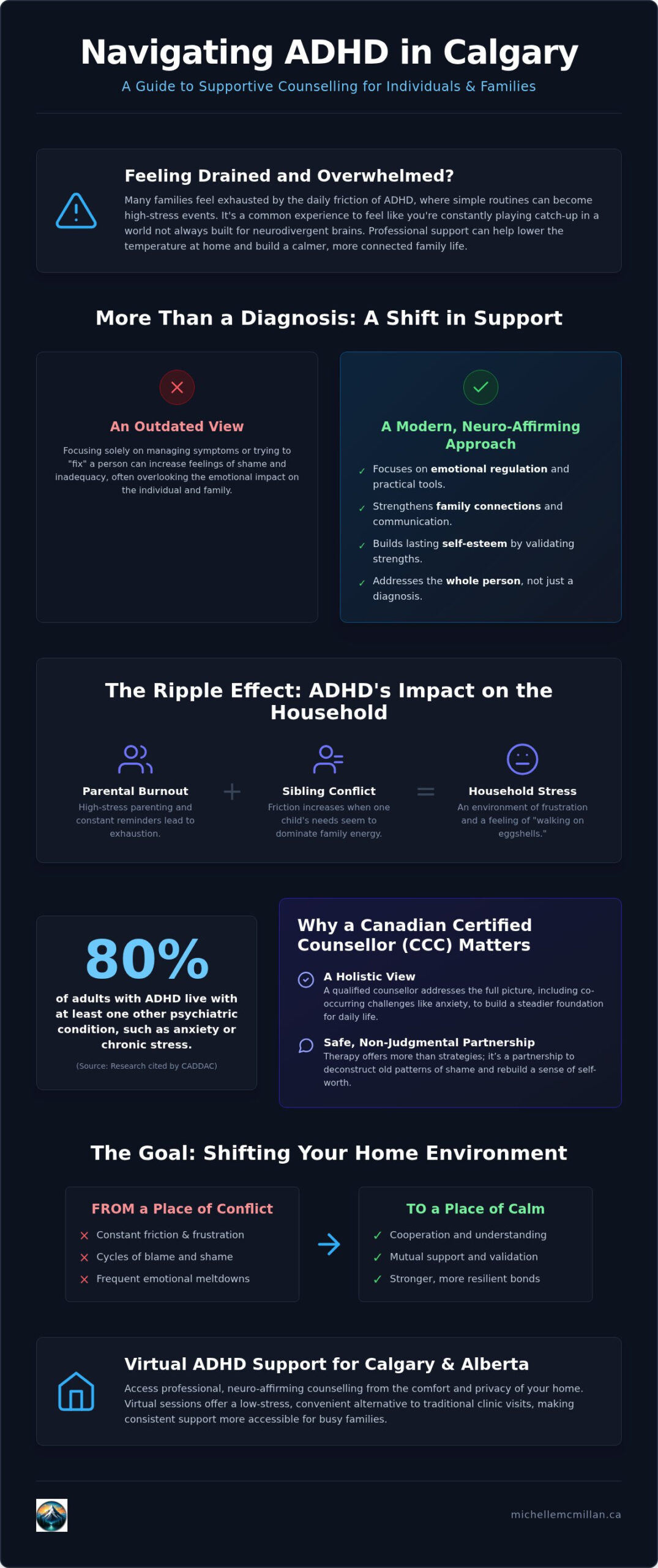
In a busy city like Calgary, the pressure to keep up can feel overwhelming for anyone. For those living with Attention deficit hyperactivity disorder, that pressure is often amplified. Effective ADHD support Calgary residents seek out isn’t just about getting a formal diagnosis or managing symptoms through medication. It’s a multifaceted approach. It involves education for the whole family, practical tools for daily life, and a concept called emotional holding. This means having a professional space where your struggles are held with care while you learn to navigate a world that isn’t always built for neurodivergent brains.
While medical management focuses on the biological aspects, therapeutic support addresses the human experience. Many families find value in neuro-affirming care. This approach validates your unique way of processing information rather than trying to “fix” a part of you. It’s about finding a balance between your natural strengths and the demands of life in Alberta. Professional support helps bridge the gap between knowing what to do and actually feeling capable of doing it.
The Emotional Impact of ADHD on Calgary Families
ADHD doesn’t just affect the individual; it ripples through the entire household. Parents often find themselves stuck in a cycle of high-stress parenting and constant reminders, which can lead to significant burnout. Sibling conflict frequently increases when one child’s needs seem to dominate the family’s energy. This often creates an environment where everyone feels a sense of inadequacy or frustration. You might feel like you’re constantly walking on eggshells, waiting for the next outburst or forgotten task.
Emotional regulation is a cornerstone of this process. Without it, daily transitions like school drop-offs or finishing homework can lead to frequent meltdowns. Learning to understand these emotional waves helps families move away from blame and toward cooperation. It’s about creating a home environment where everyone feels seen and supported.
Why a Professional Counsellor Makes a Difference
There’s a distinct difference between informal advice from friends and the expertise of a Canadian Certified Counsellor (CCC). A professional guide provides a safe, non-judgmental space to explore the complexities of neurodivergence. When looking for ADHD support Calgary, it’s vital to find someone who understands that every child, teen, and adult requires an individualized approach. This isn’t a one-size-fits-all situation.
Therapy offers more than just strategies; it offers a partnership. A counsellor walks alongside you, helping you deconstruct old patterns of shame. This professional support is especially crucial for children and youth who are still forming their sense of self-worth. By working with someone trained in specialized counselling, families can begin to rebuild their bonds and find a path forward that feels sustainable and gentle.
The Role of Counselling in Managing ADHD and Neurodivergence
Counselling moves beyond the external symptoms of focus or organization to address the internal world of the individual. For many people, years of struggling with neurodivergence can lead to a deeply rooted sense of shame or low self-esteem. You might feel like you’re constantly failing to meet expectations that seem easy for others. Professional therapy helps reframe this experience. It shifts the focus from managing a disorder to supporting a whole person who has unique strengths and valid challenges. Resources from national organizations like CADDAC highlight that education is a vital part of this journey, helping individuals understand the biological roots of their experiences to reduce self-blame.
When seeking ADHD support Calgary families often find that co-occurring challenges, such as anxiety or chronic stress, are just as impactful as the ADHD itself. Research suggests that up to 80% of adults with ADHD live with at least one other psychiatric condition. A compassionate counsellor looks at this full picture. By addressing the anxiety that often hitches a ride with neurodivergence, therapy creates a steadier foundation for daily life. This holistic view allows you to move at a pace that feels safe and sustainable.
Supporting Children and Teens with ADHD
Youth face unique hurdles, especially during big transitions like moving into junior high or starting high school. These stages demand higher levels of independence and social nuance, which can be taxing for a neurodivergent brain. Counselling for children and teens focuses on building resilience and self-advocacy. It’s about helping them find the words to explain what they need to teachers and peers. Family involvement is a key part of this process. When parents and children work together in the therapeutic space, it reduces the “fix-it” dynamic and replaces it with a partnership of mutual understanding. If you feel your family could benefit from this collaborative approach, exploring therapy for families with ADHD child Calgary can be a gentle way to start.
Emotional Regulation as a Key Tool
For many parents, “emotional regulation” can sound like clinical jargon. Simply put, it’s the mind’s ability to act as a thermostat. Instead of swinging between emotional extremes, it helps a person stay within a manageable range. Emotional regulation is the ability to monitor and manage emotional states for better daily functioning. A counsellor helps you or your child identify specific triggers, such as sensory overload or the frustration of a difficult task. Once these triggers are known, you can develop calming strategies that actually work in the heat of the moment. This proactive work helps turn down the volume on daily conflicts and makes the home feel like a sanctuary again.
Virtual ADHD Counselling: Modern Support for Calgary Residents
For many families, the thought of adding one more appointment to a busy week feels daunting. In a city where a simple trip across the Deerfoot Trail can take twice as long as expected, logistical hurdles often become barriers to care. Virtual ADHD support Calgary residents can access from the comfort of home removes these stressors entirely. It allows you to prioritize your mental health without the added pressure of commute times or parking. This modern approach ensures that therapy fits into your life; it doesn’t force you to rearrange your entire world to find help.
Some people wonder if online sessions are as effective as meeting in an office. Clinical experience suggests that for ADHD counselling, the virtual format is often just as impactful. It provides a consistent, reliable point of contact that can be easier to maintain over the long term. Resources like MyHealth Alberta emphasize the importance of consistent care, and virtual sessions make that consistency much more achievable for busy individuals and parents alike. By removing the friction of travel, you can focus your energy on the actual work of healing and growth.
Why Virtual Therapy Fits the Neurodivergent Brain
Neurodivergent individuals often experience what is known as transition stress. This is the mental and emotional tax of moving from one environment or activity to another. By attending sessions from a familiar space, this stress is significantly reduced. When you are in your own home, your nervous system is more likely to remain in a state of calm. This allows you to lower your defenses and engage more deeply with the therapeutic process from the very first minute. The flexibility of online support also benefits families with complex schedules, making it easier to coordinate sessions for children and teens without disrupting their entire afternoon.
Being in a known environment can also help improve engagement. For a child or teen, showing their counsellor a favourite book or a fidget tool from their room can build rapport more quickly than sitting in a clinical office. This sense of safety is essential for effective emotional work.
Accessing Support Across Alberta
While this resource focuses on Calgary, virtual counselling opens doors for people living anywhere in Alberta. Whether you are in a rural area or simply prefer the privacy of your own home, professional support is within reach. Michelle McMillan is a Canadian Certified Counsellor (CCC) eligible to practise in multiple provinces, ensuring that high-quality care is accessible regardless of your specific location. This wide reach ensures that families in smaller communities have access to the same specialized support found in larger urban centres. If you are ready to see how this flexible model could work for your family, you can find more details on the services page. Finding the right fit is about more than just geography; it’s about finding a partner who understands your unique journey.
How to Choose the Right ADHD Counsellor in Calgary
Selecting a therapist is a deeply personal decision. When you’re looking for ADHD support Calgary professionals provide, you want more than just a list of names; you need a partner who understands the nuances of your daily life. It’s about finding a safe space where you don’t have to explain why simple tasks feel like mountains. You can start by looking for specific markers of quality and emotional connection. A systematic approach helps ensure you find someone who can truly walk alongside you or your child.
- Verify professional designations like the Canadian Certified Counsellor (CCC) status to ensure high standards of care.
- Look for specialized experience specifically with ADHD and neurodivergent populations rather than general practice.
- Assess the tone of their communication. Does the practitioner feel warm, approachable, and non-judgmental?
- Confirm the format works for your lifestyle. For many, virtual counselling provides the consistency needed for long-term progress.
- Check focus areas to ensure they support your specific group, whether that involves youth, individuals, or complex family dynamics.
By following these steps, you can move from feeling overwhelmed by choices to feeling confident in your partnership. The right professional won’t just offer advice; they will provide a grounded presence that helps your whole family feel more capable.
Understanding the CCC Designation
Not all support is created equal. A Canadian Certified Counsellor (CCC) is a professional who has met rigorous national standards for education and clinical practice. This designation requires a Master of Arts in Counselling Psychology (MACP) or a related field, alongside a commitment to ongoing ethical standards. This matters because it ensures your counsellor has the academic foundation to understand the complexities of neurodivergence. It provides peace of mind that you’re working with someone who is professionally accountable. You can learn more about these specific credentials and professional background by visiting the about page.
The Importance of a Compassionate Fit
The relationship between a client and their counsellor is the strongest predictor of success in therapy. This is often called the therapeutic alliance. For children and teens, this “vibe” is even more critical. They need to feel that they aren’t being judged for their meltdowns or their difficulty staying on task. As a parent, it’s okay to trust your intuition. If a practitioner feels like a steady partner who truly hears your concerns, they’re likely a good fit. This emotional resonance creates the psychological safety needed for real change to happen. When a professional walks alongside your family with patience, they help lower the shame that often accompanies an ADHD support Calgary search.
If you’re ready to find a supportive, non-judgmental space for your family, reach out to connect and see if this approach feels right for you.
Next Steps: Integrating ADHD Support into Your Family Life
Integrating professional support is about more than just managing a schedule or checking off daily tasks. It’s about fundamentally changing the emotional climate of your home. When you have access to the right ADHD support Calgary families often find that the constant, underlying tension begins to lift. You move from a state of constant crisis management to a place of intentional, heart-led connection. This shift allows for a more harmonious life where every family member feels seen and understood rather than just corrected or managed. It’s a journey from survival to a place of genuine understanding.
Adopting a proactive approach is one of the most effective ways to break the cycle of daily frustration. Instead of waiting for the next school meltdown or workplace setback, you can build the internal tools needed to navigate these hurdles before they escalate. This is especially vital for children and teens. Early intervention doesn’t just address current behaviours; it helps them build a resilient self-image. They learn that their brain is different, not broken. Families navigating this journey can also benefit from reviewing a dedicated guide to therapy for families with ADHD child Calgary to better understand what to prioritize when choosing the right support. You can explore more specific insights and educational resources in the area of focus section of this website.
A Collaborative Path Forward
Every individual brings inherent strengths to the table, even when those strengths are currently clouded by stress. The goal of therapy is to build on those foundations. Seeking help is a profound sign of resilience. It shows a deep commitment to your family’s health and a belief that things can get better. You don’t need to have all the answers before you reach out. A compassionate guide can help you sort through the noise and find a path that feels authentic to your family’s values. This collaborative process ensures that the strategies you develop are sustainable for your unique lifestyle.
Connecting with Michelle McMillan Counselling
Taking the first step doesn’t have to feel overwhelming. The virtual format offers a low-pressure way to begin your therapeutic journey from a space where you already feel safe. This accessibility ensures that support is always within reach, whether you’re in the heart of the city or a surrounding Alberta community. By removing the logistical barriers of travel, you can focus entirely on the emotional work that matters most. If you’re ready to explore how specialized support can help your family find more calm, visit the contact page to reach out. You don’t have to navigate these complexities alone. There is a steady, professional partner ready to walk this path with you.
Finding a Path Toward Calm and Connection
Navigating neurodivergence doesn’t have to be a journey defined by constant frustration or feeling behind. By prioritizing emotional regulation and seeking a supportive professional partnership, you can transform your home from a place of conflict into one of mutual understanding. The shift from managing symptoms to supporting a whole person allows every family member to feel seen and valued. Virtual sessions provide a modern, accessible way to integrate this compassionate care into your life without the added stress of travel or rigid schedules.
If you’re ready to find reliable ADHD support Calgary families can trust, Michelle McMillan offers a grounded approach as a Canadian Certified Counsellor (CCC). With specialized experience in neurodivergence and family dynamics, she provides convenient virtual sessions for all Alberta residents. You are invited to connect with Michelle McMillan to discuss ADHD support for your family and begin building a more harmonious future together. You’ve already taken a brave first step by seeking information; now, let a steady partner help you navigate the rest of the way with patience and care.
Frequently Asked Questions
Is virtual ADHD counselling as effective as in-person therapy?
Virtual counselling is highly effective for managing ADHD and neurodivergence. Many clients find that attending sessions from their own home reduces the “transition stress” often associated with moving between different environments. This familiar setting helps lower defenses and encourages deeper engagement from the start. Research suggests that the therapeutic alliance, which is the bond between you and your counsellor, is the strongest predictor of success; this bond remains just as strong through a secure virtual platform.
How do I know if my child needs professional ADHD support?
You might notice your child struggling with persistent emotional dysregulation, frequent meltdowns, or a significant decline in self-esteem. If they often feel “behind” their peers or experience high levels of conflict at home and school, professional ADHD support Calgary families utilize can provide a path forward. Counselling helps children understand their unique brain while giving parents practical tools to move from a reactive “fix-it” approach to a supportive, collaborative partnership that prioritizes connection.
What is the difference between an ADHD coach and a Canadian Certified Counsellor?
The primary difference lies in professional regulation, education, and accountability. A Canadian Certified Counsellor (CCC) must hold a Master’s degree, such as a Master of Arts in Counselling Psychology (MACP), and adhere to strict national ethical standards. While coaching is often unregulated, a CCC is trained to address the complex internal experiences of ADHD, including co-occurring anxiety or self-esteem issues. This ensures a higher level of professional care and psychological safety for your entire family.
Can counselling help with emotional regulation for neurodivergent kids?
Counselling is an excellent tool for improving emotional regulation in neurodivergent children. It helps kids and their parents identify specific triggers, such as sensory overload or the frustration of a difficult task. By working together, families develop personalized calming strategies that act like an internal thermostat. This proactive work reduces daily friction and helps children feel more capable of managing their big emotions, leading to a more harmonious and peaceful home environment where everyone can finally breathe easier.
Do you provide ADHD support for adults in Calgary as well?
Yes, professional support is available for adults navigating the complexities of ADHD in their personal and professional lives. Many adults seek counselling to address the “internal” toll of neurodivergence, such as chronic stress, relationship difficulties, or persistent feelings of inadequacy. Whether you’re looking for individual therapy or ADHD couples therapy Calgary to improve communication, virtual support provides a safe space to explore these challenges. This flexible format fits easily into a busy lifestyle without the need for a commute.
How can I support my teen who was recently diagnosed with ADHD?
Supporting a teen begins with validating their experience and moving away from a place of blame. Encourage them to lead the conversation about what they need, which fosters resilience and vital self-advocacy skills. Involving them in the therapeutic process helps them understand that their brain is different, not broken. By working with a counsellor, you can learn to navigate school transitions and social dynamics together, strengthening your bond during these often difficult and high-pressure developmental years.
What should I look for in a Calgary therapist for my neurodivergent child?
It’s essential to look for a practitioner with the Canadian Certified Counsellor (CCC) designation and specialized experience in neurodivergence. Beyond credentials, ensure the therapist feels warm, non-judgmental, and approachable. The relationship between the counsellor and your child is the biggest predictor of therapeutic success. You want a steady partner who walks alongside your family, providing a safe space where your child feels truly understood rather than just managed or corrected through transactional, one-size-fits-all skills.
Is virtual therapy available for families living outside of Calgary but in Alberta?
Virtual therapy is available to families throughout Alberta, including those living in rural areas or smaller communities outside of Calgary. This format ensures that high-quality, professional support is accessible regardless of your geographic location. Michelle McMillan also provides services to clients in British Columbia, Saskatchewan, and Manitoba. By choosing virtual counselling Alberta residents can access from home, you gain the flexibility to prioritize your family’s mental health without the barriers of travel or limited local resources.

Article by
Michelle McMillan, MACP, CCC
Michelle McMillan is a Canadian Certified Counsellor (CCC) with a Master of Arts in Counselling Psychology (MACP). She has extensive experience working with children and supporting clients with ADHD, neurodivergence, anxiety, emotional regulation, relationships and family challenges. Michelle provides virtual counselling for adults throughout Alberta, British Columbia, Saskatchewan and Manitoba and primarily in-person counselling for children and families in Calgary.
Important Information
This article is provided for general educational and informational purposes only and is not a substitute for professional counselling, psychological, medical or emergency services. Information shared here should not be considered a diagnosis or individualized treatment advice. If you are experiencing a mental health emergency or are in immediate danger, please contact appropriate emergency services in your area.