
Understanding the Need for Teen Counselling in Calgary
Adolescence is a time of profound change, and for teenagers in Calgary, this period comes with its own unique set of pressures. From navigating the demanding academic landscape of Alberta’s schools to managing complex social dynamics in an increasingly digital world, the path through high school can be challenging. As a parent, it can be difficult to watch your teen struggle and wonder what the best way to offer support is.
Professional teen counselling provides a confidential, non-judgmental space where adolescents can explore their thoughts and feelings without fear of criticism. It’s not about “fixing” a problem but about equipping your teen with the tools and self-awareness to navigate life’s hurdles with greater confidence. A skilled counsellor acts as a neutral guide, helping teens develop crucial skills like emotional regulation, which is foundational for managing stress, building healthy relationships, and making a successful transition into adulthood.
Common Challenges for Calgary Youth
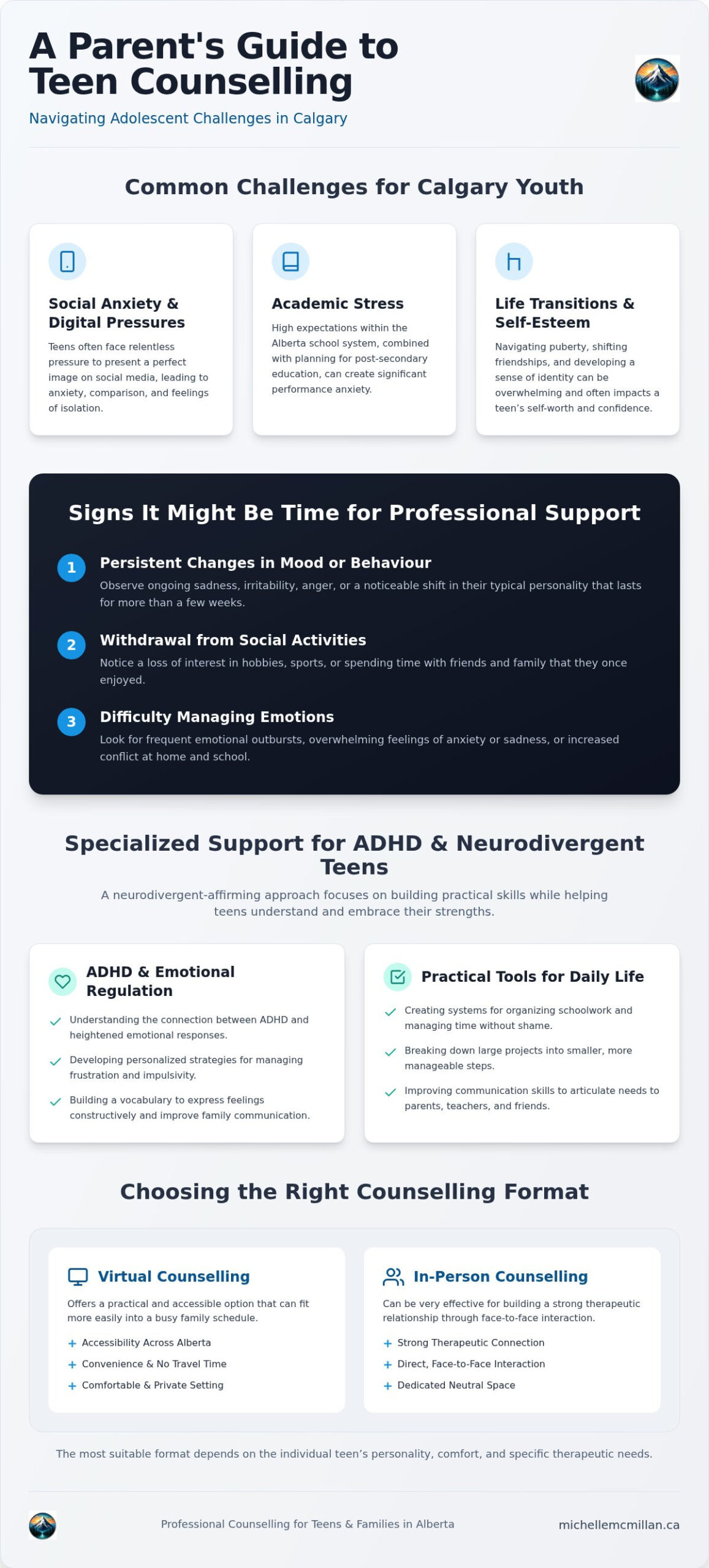
While every teenager’s experience is unique, many face similar obstacles. Recognizing these common challenges can be the first step in understanding that your teen is not alone in their struggles.
- Social Anxiety and Digital Pressures: In a world dominated by social media, teens often face relentless pressure to present a perfect image, leading to anxiety, comparison, and feelings of isolation.
- Academic Stress: The expectations within the Alberta school system, combined with planning for post-secondary education, can create significant stress and performance anxiety.
- Life Transitions and Self-Esteem: Navigating puberty, shifting friendships, and developing a sense of identity can be overwhelming, often impacting a teen’s self-worth and confidence.
When to Seek Professional Support
It’s normal for teens to have occasional bad days or moments of frustration. However, certain patterns may indicate that professional support could be beneficial. Trust your intuition as a parent; you know your child best. Consider seeking teen counselling in Calgary if you notice:
- Persistent Changes in Mood or Behaviour: This could include ongoing sadness, irritability, anger, or a noticeable shift in their typical personality that lasts for more than a few weeks.
- Withdrawal from Social Activities: A loss of interest in hobbies, sports, or spending time with friends and family that they once enjoyed.
- Difficulty Managing Emotions: Frequent emotional outbursts, overwhelming feelings of anxiety or sadness, or increased conflict at home and school.
Specialized Support for ADHD and Neurodivergent Teens
For neurodivergent teens, particularly those with ADHD, the standard challenges of adolescence can feel amplified. Their brains process information, emotions, and social cues differently, which means they often benefit from a therapeutic approach that is tailored to their unique wiring. Traditional talk therapy may need adjustments to be effective for a teen who struggles with focus or executive functioning.
A neurodivergent-affirming approach to counselling focuses on building practical skills while also addressing the emotional side of being different. This involves moving beyond simply managing “symptoms” and toward helping teens understand and embrace their strengths. The goal is to collaborate with both the teen and their parents to create a supportive environment where they can truly thrive.
ADHD and Emotional Regulation
Many neurodivergent teens experience emotions with greater intensity, which can lead to frustration and conflict. A key aspect of counselling is developing emotional regulation skills. In the context of ADHD, emotional regulation involves learning to recognize, understand, and manage intense feelings before they become overwhelming.
- Understanding the connection between ADHD and heightened emotional responses.
- Developing personalized strategies for managing frustration, impulsivity, and moments of emotional overwhelm.
- Building a vocabulary to express feelings constructively, improving communication within the family.
Practical Tools for Daily Life
Effective support for teens with ADHD extends beyond emotional strategies and into the practicalities of everyday life. Counselling can help bridge the gap between knowing what needs to be done and having the executive function skills to do it.
- Creating systems for organizing schoolwork, managing time, and breaking down large projects into manageable steps, all without shame or judgment.
- Improving communication skills to help teens articulate their needs and perspectives to parents, teachers, and friends.
- For families seeking broader information, this guide to ADHD support in Calgary offers a helpful starting point.
Considering Virtual Counselling for Your Calgary Teen
In a busy city like Calgary, logistics can be a significant barrier to accessing consistent support. Virtual counselling offers a practical alternative that can fit more easily into a family’s packed schedule. By eliminating travel time, online sessions can reduce the stress of navigating traffic and coordinating appointments around school and extracurricular activities.
For some adolescents, the idea of meeting a counsellor from the comfort and privacy of their own space can feel more approachable than a traditional office setting. However, it’s important for families to consider what environment will best support their teen. Face-to-face interaction in an in-person setting can be very effective for building a strong therapeutic relationship and may be the preferred choice for many teens and families. The most suitable format—virtual or in-person—depends entirely on the individual teen’s personality, comfort level, and specific therapeutic needs.
Accessibility and Convenience
Virtual therapy provides a consistent and accessible option for families throughout Calgary and across the province. This format can be particularly helpful for maintaining regular sessions without disrupting a teen’s routine.
- Michelle McMillan provides virtual counselling to clients throughout Alberta, as well as in other Canadian provinces where she is eligible to practise, including British Columbia, Saskatchewan, and Manitoba.
- Online sessions can be integrated into a modern teen’s schedule, offering flexibility that supports long-term engagement with the therapeutic process.
Creating a Professional and Confidential Digital Space
A primary focus of any form of counselling is creating a safe, non-judgmental, and professional environment where a teen feels respected. In a virtual setting, this involves upholding standards of confidentiality and professionalism to build trust. While no digital platform can offer an absolute guarantee of privacy, professional counsellors take steps to use secure platforms and establish clear guidelines for sessions to protect client information. You can learn more about this approach in this comprehensive guide to virtual therapy in Calgary.
What to Look for in a Calgary Teen Counsellor
Finding the right counsellor is one of the most important factors in a successful therapeutic experience. Beyond qualifications, the “fit” between the counsellor and your teen is crucial. Adolescents are more likely to engage with someone they feel understands them, respects their perspective, and communicates in a way that is clear and relatable, not filled with clinical jargon.
When searching for teen counselling in Calgary, look for a professional with experience in the specific areas your child is struggling with, such as anxiety, emotional regulation, or ADHD-related challenges. A good counsellor will be transparent about their approach and happy to answer your questions.
Designations and Education
Understanding a counsellor’s credentials can help you feel confident in their level of expertise. In Canada, the counselling profession is regulated, and designations indicate a standard of education and ethical practice.
- Master of Arts in Counselling Psychology (MACP): This graduate-level degree provides comprehensive training in therapeutic theories, ethical practice, and clinical skills.
- Canadian Certified Counsellor (CCC): The CCC designation is a national certification provided by the Canadian Counselling and Psychotherapy Association (CCPA). It signifies that a counsellor has met specific educational and professional standards and is accountable to a code of ethics.
Questions to Ask a Potential Counsellor
Before committing to sessions, it’s a good idea to have a brief consultation to ensure the counsellor is a good fit for your family. Consider asking questions like:
- What is your experience working with teenagers?
- How do you approach building rapport with teens who may be hesitant to talk?
- What is your approach to working with neurodivergent youth?
- How do you involve parents in the counselling process?
To learn more about a counsellor’s background and professional philosophy, you can often review their professional biography, like this one for Michelle McMillan, CCC.
Starting the Journey: Next Steps for Your Family
Introducing the idea of counselling to your teen can feel daunting, but approaching it with empathy and openness can make a significant difference. Frame it as an opportunity for them to have their own space to talk with someone who is there just for them, rather than as a punishment or a sign that something is “wrong.”
The goal of counselling is not to eliminate all of life’s challenges but to build resilience, self-awareness, and coping skills. It is a collaborative process involving the counsellor, the teen, and, when appropriate, the parents, all working toward the shared goal of supporting the teen’s long-term emotional health and well-being.
Preparing for the First Session
A little preparation can help the first session feel less intimidating for everyone. Focus on creating a positive and low-pressure foundation for the work ahead.
- Set Up the Space: For a virtual session, help your teen find a private, quiet space where they will not be interrupted. Test the technology beforehand to ensure everything works smoothly.
- Encourage Openness: Let your teen know that it’s okay if they don’t know what to say at first. The counsellor’s job is to guide the conversation at a pace that feels comfortable for them.
- Focus on Goals: Encourage your teen to think about what they might want to get out of the experience, even if it’s just feeling a little less stressed or having someone to talk to.
A Collaborative Path Forward
Taking the first step to find professional support is an act of care that can lead to lasting positive change for your teen and your entire family. By providing your teen with a space to develop emotional skills and self-understanding, you are investing in their future well-being.
If you believe your teen could benefit from professional support, the next step is to reach out. To learn more about teen counselling in Calgary, you can contact Michelle McMillan’s practice to inquire about her services.
Frequently Asked Questions About Teen Counselling
Is virtual teen counselling an effective option?
Virtual counselling can be a very effective option for many teenagers and families, offering significant benefits in convenience and accessibility. For some teens, communicating from a familiar environment can make it easier to open up. However, the best format depends on the individual. Some adolescents thrive with the face-to-face connection of in-person therapy, which can be highly beneficial for building rapport. The choice between virtual and in-person sessions should be based on your teen’s personality, comfort level, and therapeutic goals.
How long does a typical teen counselling session last?
Session lengths can vary depending on the counsellor and the specific needs of the client. It is best to discuss session duration, frequency, and other logistical details directly with the counselling professional you are considering.
What if my teen refuses to talk during the virtual session?
It is very common for teenagers to be hesitant or quiet during the first few sessions. A skilled teen counsellor understands this and will not pressure them to talk. The initial focus is on building trust and creating a safe, comfortable environment. The counsellor will often use different engagement strategies and let the teen lead the conversation at their own pace, allowing a therapeutic relationship to develop naturally over time.
Do you provide ADHD assessments or medication recommendations?
As a Canadian Certified Counsellor, Michelle McMillan provides therapeutic support for challenges related to ADHD, such as emotional regulation and executive functioning, but she does not conduct formal assessments, provide diagnoses, or make medication recommendations. These services are provided by medical doctors, psychiatrists, or registered psychologists with the appropriate scope of practice.
Can you help with parenting challenges related to my teen?
Yes, supporting parents is an integral part of teen counselling. Therapy can provide a space for parents to explore strategies for communication, boundary-setting, and understanding their teen’s behaviour, fostering a more positive and connected family dynamic.
Is virtual counselling available to families outside of Calgary?
Yes. Michelle McMillan offers virtual counselling to clients throughout Alberta and in other Canadian provinces where she is eligible to practise, including British Columbia, Saskatchewan, and Manitoba. This allows families in rural or remote areas to access specialized support.
How do I know if my teen needs a counsellor or a psychiatrist?
Counsellors and psychiatrists play different but complementary roles. A counsellor, such as a CCC, focuses on talk therapy to help teens develop coping skills, manage emotions, and navigate life challenges. A psychiatrist is a medical doctor who specializes in mental health and can diagnose conditions and prescribe medication. Often, a teen may work with both a counsellor for therapy and a psychiatrist or family doctor for medical management.
What is the difference between a CCC and a wellness coach?
A Canadian Certified Counsellor (CCC) is a mental health professional with a master’s degree in counselling psychology or a related field. They are held to national standards of practice and a code of ethics by the Canadian Counselling and Psychotherapy Association (CCPA). Their work is grounded in established therapeutic theories and practices. A wellness coach is not a regulated profession in Canada, and there are no standardized educational or ethical requirements. While some coaches can be helpful, a CCC provides professional, evidence-informed mental health support.

Article by
Michelle McMillan, MACP, CCC
Michelle McMillan is a Canadian Certified Counsellor (CCC) with a Master of Arts in Counselling Psychology (MACP). She has extensive experience working with children and supporting clients with ADHD, neurodivergence, anxiety, emotional regulation, relationships and family challenges. Michelle provides virtual counselling for adults throughout Alberta, British Columbia, Saskatchewan and Manitoba and primarily in-person counselling for children and families in Calgary.
Important Information
This article is provided for general educational and informational purposes only and is not a substitute for professional counselling, psychological, medical or emergency services. Information shared here should not be considered a diagnosis or individualized treatment advice. If you are experiencing a mental health emergency or are in immediate danger, please contact appropriate emergency services in your area.