
Navigating personal challenges, major life transitions, or persistent stress can feel isolating. When daily responsibilities pile up, finding dedicated space to reflect and gain perspective becomes essential. Individual counselling offers structured, professional dialogue tailored to your unique circumstances, helping you explore personal concerns, clarify your values, and examine everyday challenges.
For Calgary residents, choosing the right professional support involves evaluating practitioner credentials, understanding available delivery formats, and assessing personal fit. Whether you are addressing ongoing workplace stress, exploring neurodivergence, or navigating relationship dynamics, finding a qualified professional who aligns with your needs is a critical first step.
Understanding Individual Counselling in Calgary: Formats and Focus Areas
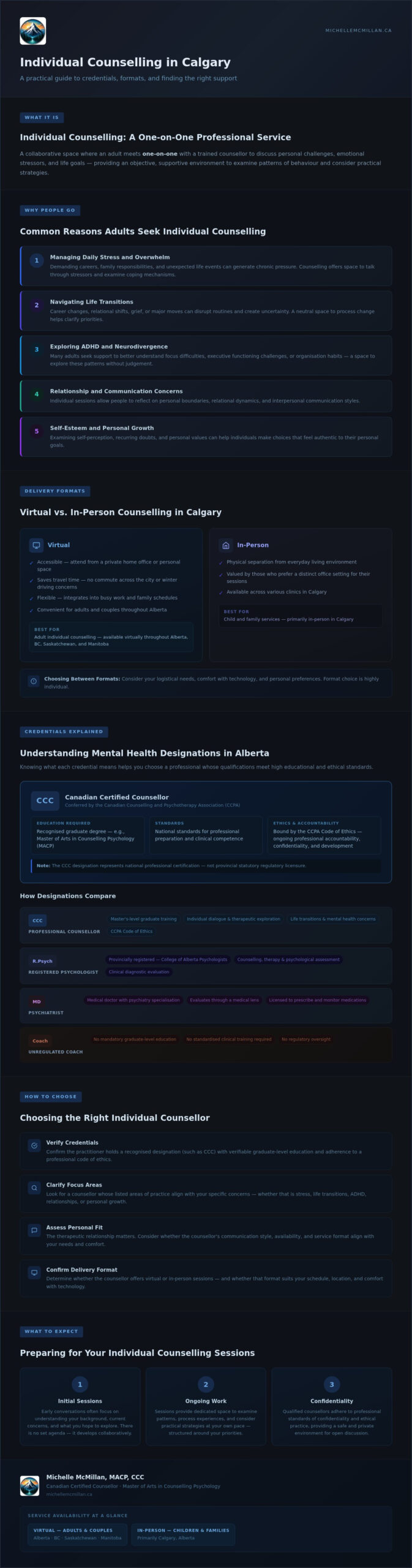
Individual counselling is a collaborative, professional service where an adult meets one-on-one with a trained counsellor to discuss personal challenges, emotional stressors, and life goals. Rather than providing generic advice, counselling provides an objective, supportive environment where you can examine patterns of behaviour, process difficult experiences, and consider practical strategies for your everyday life.
In Calgary, individual counselling addresses a broad spectrum of concerns. Adults seek professional support at various points in their lives, whether they are experiencing acute difficulties or simply want dedicated time to work through ongoing personal questions.
Common Reasons Adults Seek Individual Counselling
People enter individual counselling for many different reasons. Some common areas of focus include:
- Managing Daily Stress and Overwhelm: Demanding careers, family responsibilities, and unexpected life events can generate chronic pressure. Counselling offers an opportunity to talk through stressors and examine coping mechanisms.
- Navigating Life Transitions: Career changes, relational shifts, grief, or major moves can disrupt routines and create uncertainty. Having a neutral space to process these changes helps clarify priorities.
- Exploring ADHD and Neurodivergence: Many adults seek support to better understand focus difficulties, executive functioning challenges, or organisation habits. Individual counselling can serve as a space to explore these patterns without judgment.
- Relationship and Communication Concerns: Individual sessions allow people to reflect on personal boundaries, relational dynamics, and interpersonal communication styles.
- Self-Esteem and Personal Growth: Examining self-perception, recurring doubts, and personal values can help individuals make choices that feel authentic to their personal goals.
Comparing Virtual Counselling and In-Person Formats in Calgary
When seeking individual counselling in Calgary, one of the primary practical considerations is delivery format. Both virtual counselling and traditional in-person office visits offer distinct advantages depending on your lifestyle and preferences.
Virtual counselling has become an accessible option for many Calgary adults. Given local driving conditions during winter months and the time required to commute across the city, meeting online can save significant time. Attending sessions from a private home office or personal space allows clients to integrate support into busy work and family schedules without travel delays.
In-person sessions remain a valued option across various clinics in Calgary, particularly for individuals who prefer a physical separation between their everyday living environment and their therapeutic work. In many practices, service formats are tailored to the type of care provided; for example, adult individual counselling may be offered virtually, while child and family services often take place primarily in-person. Choosing between formats comes down to your logistical needs, comfort with technology, and personal preferences.
Evaluating Professional Credentials: Understanding Counselling Designations in Alberta
Searching for mental health support in Calgary can feel confusing due to the variety of titles and credentials used in the field. Understanding what specific designations signify ensures that you work with a professional whose qualifications meet high educational and ethical standards.
What Does the Canadian Certified Counsellor (CCC) Designation Mean?
The Canadian Certified Counsellor (CCC) designation is a national professional certification conferred by the Canadian Counselling and Psychotherapy Association (CCPA). This credential signifies that a practitioner holds a recognized graduate degree—such as a Master of Arts in Counselling Psychology (MACP)—and has met defined national standards for professional preparation and clinical competence.
It is important to note that the CCC designation represents national professional certification rather than provincial statutory regulatory licensure. CCC practitioners are bound by the CCPA Code of Ethics and Standards of Practice, committing to ongoing professional accountability, confidentiality, and professional development.
Distinguishing Professional Counsellors from Other Practitioners
To help clarify the differences between various mental health designations in Alberta, consider the following general roles:
- Professional Counsellors (e.g., CCC): Hold master’s-level graduate training in counselling psychology or related fields. Counsellors focus on individual dialogue, therapeutic exploration, and emotional support for everyday challenges, life transitions, and mental health concerns.
- Registered Psychologists: Hold provincial registration through the College of Alberta Psychologists. While they provide counselling and therapy, their regulatory scope also includes formal psychological assessment and clinical diagnostic evaluation.
- Psychiatrists: Medical doctors who have completed specialized medical training in psychiatry. They evaluate mental health conditions through a medical lens and are licensed to prescribe and monitor medications.
- Unregulated Coaches: Anyone can use titles such as “life coach” or “wellness coach” without mandatory graduate-level education, standardized clinical training, or regulatory oversight. They generally focus on task-based goal setting rather than clinical mental health dialogue.
How to Choose the Right Individual Counsellor in Calgary
Credentials provide a baseline for ethical practice and competence, but finding the right counsellor also depends on personal alignment. The counselling relationship is collaborative, and feeling understood by your practitioner is an important component of the process.
Assessing Focus Areas and Practice Alignment
Before booking an initial appointment, review the practitioner’s published focus areas. Many counsellors highlight the particular concerns they work with most often, such as stress, life transitions, or neurodivergence.
If you are seeking support for adult ADHD, for instance, consider whether the counsellor has experience discussing executive functioning patterns and neurodivergent experiences. Reviewing practice resources or an areas of focus page can clarify whether the counsellor’s background aligns with your current priorities.
Evaluating Communication Fit and Relational Comfort
The working dynamic between you and your counsellor plays a major role in how comfortable you feel discussing personal topics. During your first conversations or consultation, pay attention to practical indicators of fit:
- Do you feel heard and respected when discussing your concerns?
- Does the counsellor communicate clearly and without unnecessary jargon?
- Does the practitioner respect your perspective and autonomy without attempting to impose unsolicited conclusions?
- Does the overall conversational pace feel thoughtful and comfortable?
Considering Scheduling Flexibility and Delivery Options
Consistency is often an important part of counselling. Evaluate whether the practitioner’s availability fits into your routine without causing undue stress. Consider whether evening or daytime virtual appointments work better alongside your professional commitments and whether scheduling options accommodate your ongoing monthly responsibilities.
Preparing for Your Individual Counselling Sessions: What to Expect
Beginning counselling can sometimes evoke feelings of uncertainty, especially if you have not attended sessions before. Understanding what to expect helps lower apprehension and allows you to approach the experience with clarity.
Identifying Priorities Before Your Sessions
You do not need to arrive with a comprehensive life history prepared. However, taking a few quiet moments to reflect on your current circumstances can provide helpful context. You might consider:
- What specific challenges or stressors prompted you to reach out at this time?
- Are there particular patterns in work, relationships, or daily routines that you want to examine?
- What questions do you have regarding the counselling process itself?
Goals in counselling are rarely static; they can naturally shift as discussions unfold and new insights emerge.
Creating a Private Environment for Virtual Sessions
If you choose virtual counselling, establishing an appropriate environment helps ensure your appointments remain private and uninterrupted:
- Select a Private Space: Choose a room where family members, roommates, or colleagues cannot overhear your conversation.
- Use Headphones: Wearing headphones can improve sound clarity and add an extra layer of privacy for whatever is shared.
- Check Your Connection: A brief check of your internet connection and device audio before the session helps minimize technical interruptions.
Accessing Professional Virtual Counselling with Michelle McMillan
Michelle McMillan Counselling provides professional virtual individual counselling for adults in Calgary and across Alberta. Through secure, convenient online appointments, clients can access dedicated one-on-one support directly from their own homes or private workspaces.
Michelle McMillan holds a Master of Arts in Counselling Psychology (MACP) and is a Canadian Certified Counsellor (CCC). Her practice provides support for adults navigating a range of concerns, including stress, emotional regulation, relationship difficulties, life transitions, and adult ADHD.
Flexible Virtual Services Across Western Canada
While Calgary is a primary focus, virtual individual counselling through Michelle McMillan Counselling is accessible to adults residing throughout Alberta, British Columbia, Saskatchewan, and Manitoba. In contrast to adult individual care delivered virtually, counselling work with children and families is provided primarily in-person in Calgary.
To learn more about the practice, explore the services overview, review background information on the about page, or read more in the detailed guide to finding a Calgary therapist.
Taking the Next Step
Finding the right counsellor is an investment in your personal well-being. When you are ready to explore options for individual counselling, visit the rates and booking page to view details and schedule a session, or submit preliminary questions through the practice contact page.
Frequently Asked Questions About Individual Counselling in Calgary
What is the difference between a Canadian Certified Counsellor and a psychologist in Calgary?
Both Canadian Certified Counsellors (CCC) and Registered Psychologists offer professional mental health counselling. A CCC holds master’s-level graduate training in counselling psychology and is certified nationally through the Canadian Counselling and Psychotherapy Association (CCPA). Registered Psychologists are provincially registered through the College of Alberta Psychologists and are authorized to conduct formal diagnostic assessments and psychological testing alongside therapy.
How does virtual individual counselling work for Calgary residents?
Virtual individual counselling takes place through secure video appointments. Calgary residents attend sessions remotely from a private space at home or work, removing the need to commute across town or coordinate travel around severe winter weather. It offers a practical, flexible way to access professional care.
What should I expect during an initial individual counselling session?
An initial session provides an opportunity to discuss the primary concerns that brought you to counselling. Your counsellor will typically review consent and confidentiality, ask about your current life situation and stressors, and discuss what you hope to focus on in future conversations. It is also an opportunity for you to ask questions about the counselling process.
Can individual counselling help with adult ADHD and executive functioning?
Yes. Counselling provides an objective setting to explore how ADHD patterns affect daily life, organization, stress levels, and interpersonal communication. While counselling does not replace medical evaluation or prescribe medication, it offers practical space to examine habits, explore self-management strategies, and discuss the emotional aspects of living with neurodivergence.
How do I know if an individual counsellor is the right fit for me?
Evaluating fit involves assessing whether the counsellor has relevant experience with your concerns, communicates in a way that resonates with you, and creates a respectful, non-judgmental atmosphere. If you feel heard, comfortable asking questions, and supported in identifying your own priorities, the counsellor is likely a good match.
How is confidentiality handled in virtual counselling?
Professional counsellors adhere to strict professional ethical codes regarding client privacy. Confidentiality is standard practice across both virtual and in-person settings, meaning personal information is not disclosed without your consent, subject to standard legal and ethical exceptions (such as situations involving imminent harm or legal requirements).

Article by
Michelle McMillan, MACP, CCC
Michelle McMillan is a Canadian Certified Counsellor (CCC) with a Master of Arts in Counselling Psychology (MACP). She has extensive experience working with children and supporting clients with ADHD, neurodivergence, anxiety, emotional regulation, relationships and family challenges. Michelle offers both virtual and in-person counselling, with virtual counselling available throughout Alberta, British Columbia, Saskatchewan and Manitoba and in-person appointments available in Calgary.
Important Information
This article is provided for general educational and informational purposes only and is not a substitute for professional counselling, psychological, medical or emergency services. Information shared here should not be considered a diagnosis or individualized treatment advice. If you are experiencing a mental health emergency or are in immediate danger, please contact appropriate emergency services in your area.