
What Does a Calgary Therapist Do? Understanding Professional Support
Beginning the search for a Calgary therapist often starts with a fundamental question: what does a therapist actually do? The term “therapist” is often used as an umbrella for various mental health professionals, including counsellors, who provide dedicated support for emotional and psychological well-being. In Calgary, as elsewhere, the primary role of a therapist or counsellor is to offer a safe, confidential space where your thoughts and feelings are heard and validated without judgment.
A therapist helps individuals, couples, and families develop practical coping strategies to manage life’s challenges. This process is not about receiving a quick fix but about building resilience. Through collaborative conversation, a counsellor can help you understand patterns in your thoughts and behaviours, process difficult emotions, and work toward meaningful personal growth. This support can address both immediate stressors, like anxiety or conflict, and contribute to long-term emotional health.
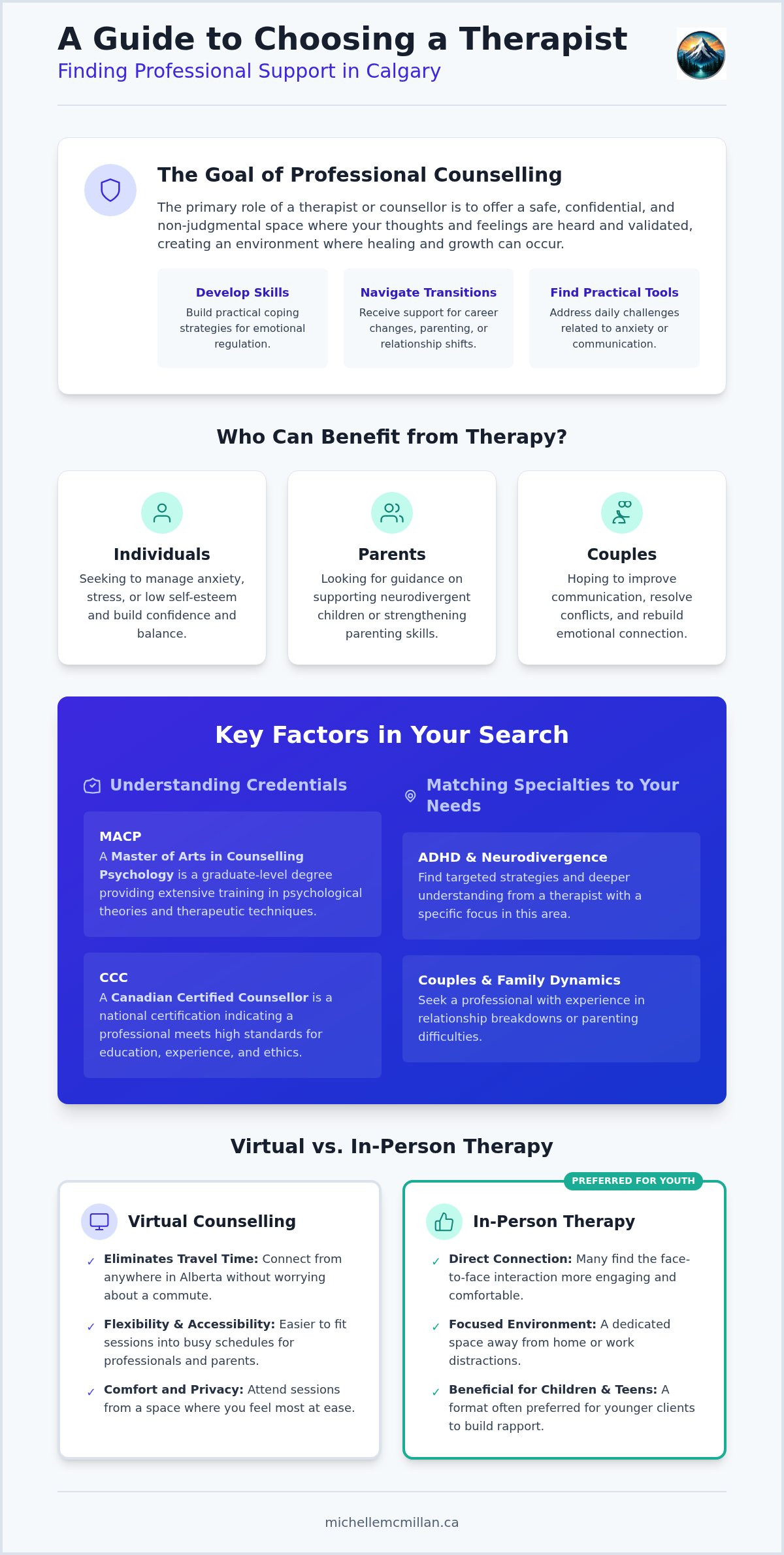
The Goal of Professional Counselling in Calgary
The core goal of professional counselling is to create a non-judgmental environment where healing and growth can occur. It’s a partnership built on trust and empathy. For many Calgary residents, therapy is a space to work on specific objectives, such as:
- Developing skills for emotional regulation to better manage feelings of stress, anger, or sadness.
- Navigating significant life transitions, such as career changes, parenting challenges, or relationship shifts.
- Collaborating on practical tools and strategies to address daily challenges related to anxiety, communication, or self-esteem.
Who Can Benefit from Therapy?
Therapy is a resource for anyone seeking to improve their mental and emotional well-being. There is no issue too small or too large to bring to a counselling session. People from all walks of life in Calgary seek support, including:
- Individuals dealing with anxiety, stress, burnout, or low self-esteem who want to build confidence and find balance.
- Parents looking for guidance on supporting neurodivergent children, managing family conflict, or strengthening their parenting skills.
- Couples hoping to improve communication, resolve ongoing conflicts, and rebuild emotional connection and intimacy.
Key Factors to Consider When Choosing a Counsellor in Alberta
When you decide to find a therapist in Calgary, the number of options can feel overwhelming. Looking at credentials, specialties, and professional approach can help you narrow down your search and find the right fit for your needs. It’s important to find a professional whose qualifications and focus align with your personal situation.
Beyond credentials, the connection you feel with the counsellor is a key part of the process. You should feel that the person you choose is someone you can trust—a professional who listens, understands, and supports you. This therapeutic relationship is foundational to making progress.
Understanding Credentials: MACP and CCC
In Alberta, you will encounter various professional designations. Two important ones in the counselling field are the Master of Arts in Counselling Psychology (MACP) and the Canadian Certified Counsellor (CCC).
- A Master of Arts in Counselling Psychology (MACP) is a graduate-level degree that provides extensive academic and practical training in theories of psychology, ethical practice, and therapeutic techniques. This education equips practitioners with a deep understanding of human behaviour and mental health.
- The Canadian Certified Counsellor (CCC) designation is a national certification provided by the Canadian Counselling and Psychotherapy Association (CCPA). To earn this credential, a counsellor must meet specific standards for education and supervised experience. The CCC designation indicates that a professional adheres to the CCPA’s code of ethics and standards of practice.
Matching Specialties to Your Needs
General counselling can be helpful, but many people find greater success with a therapist who has a specific area of focus relevant to their challenges. When a counsellor specializes, they have dedicated additional training and experience to understanding the nuances of certain issues.
- For neurodivergent families, finding an ADHD therapist in Calgary can provide targeted strategies and a deeper level of understanding.
- If you are facing specific challenges like relationship breakdowns or parenting difficulties, seeking a professional with experience in couples counselling or family dynamics is beneficial.
- Looking at a therapist’s “areas of focus” is often more helpful than relying on generic labels. It gives you a clear picture of their expertise and whether it aligns with what you’re going through.
Virtual vs. In-Person Therapy: Options for Calgary Residents
Today, Calgarians have more choices than ever in how they access therapy. Both virtual and in-person sessions offer distinct benefits, and the best format depends on your personal circumstances, preferences, and needs.
Virtual counselling provides significant flexibility, making it easier for busy professionals and parents to fit sessions into their schedules. It removes geographic barriers within a province, allowing you to connect with a specialist who might be located elsewhere in Alberta. In contrast, many people, particularly children and teens, find the direct connection of in-person therapy to be more engaging and comfortable. The right choice is the one that allows you to feel most at ease.
The Practicality of Virtual Counselling in Alberta
For many adults, virtual therapy has become a convenient and valuable option. It allows individuals to access support without the added stress of commuting or arranging childcare.
- Eliminates travel time: Residents in any Calgary quadrant—or anywhere else in Alberta—can connect with a therapist without worrying about traffic or transit.
- Comfort and accessibility: Attending sessions from the privacy of your own home can create a unique sense of comfort and safety for some individuals.
- Flexible format: Virtual sessions can be adapted for individuals and couples, using professional platforms designed to facilitate counselling.
Choosing the Right Format for Your Family
When it comes to children, teens, and families, the choice between in-person and virtual sessions requires careful consideration. While virtual sessions can work for some, many families prefer the dynamic of meeting in person.
- In-person support for children and teens: For younger clients, being in the same room as a therapist can help build rapport and allow for more interactive, play-based, or activity-focused work that is harder to replicate online.
- Considering family counselling: In-person sessions can often make it easier to manage group dynamics and ensure everyone feels heard and included.
- Provincial eligibility: It is important to confirm that your chosen therapist is licensed or eligible to practise in your specific province, as regulations vary across Canada.
How to Prepare for Your First Counselling Session
It’s completely normal to feel nervous or uncertain before your first therapy session. This is a new experience, and it takes courage to reach out for support. A little preparation can help ease your anxiety and ensure you get the most out of your initial conversation.
Remember, the first session is often about getting to know each other. It’s a two-way conversation to determine if you and the therapist are a good fit. There is no pressure to share more than you are comfortable with. The counsellor’s role is to create a welcoming atmosphere where you can begin to explore your concerns at your own pace.
What to Look for in a First Interaction
During your initial consultation or session, pay attention to how you feel during the conversation. This first interaction is your best indicator of the therapeutic relationship to come. Ask yourself:
- Does the therapist listen attentively and with empathy? Do you feel heard and understood?
- Are they clear about their professional approach and areas of focus?
– Is the environment they describe one that feels non-judgmental and safe?
Setting Realistic Expectations
Therapy is a collaborative process, not a passive one. It requires active participation and a willingness to be open and honest. It’s also important to understand that positive change takes time and effort.
- It’s a process: Lasting change doesn’t happen overnight. Counselling is a gradual process of discovery and skill-building.
- The connection matters: The bond you build with your counsellor is one of the most significant factors in the process. Feeling comfortable and respected is essential.
- Be patient with yourself: The goal is progress, not perfection. Therapy respects your individual needs and moves at a pace that feels right for you.
Professional Counselling with Michelle McMillan, MACP, CCC
For residents seeking a qualified Calgary therapist, Michelle McMillan, MACP, CCC, offers professional and compassionate counselling services. With a Master of Arts in Counselling Psychology and a Canadian Certified Counsellor designation, she provides support grounded in established therapeutic principles.
Michelle has extensive experience working with individuals, youth, and families. Her areas of focus include ADHD and neurodivergence, anxiety, emotional regulation, and relationship dynamics. She works collaboratively with clients to help them navigate life’s complexities and build on their inherent strengths.
A Personalized Approach to Support
Michelle McMillan’s approach is tailored to the specific needs of each individual, couple, or family. She focuses on helping clients develop practical strategies for challenges related to communication, life transitions, and parenting. The goal is to provide individualized support that respects each person’s unique circumstances and goals.
To accommodate the needs of different clients, Michelle offers:
- In-person counselling in Calgary for children, teens, and families.
- Virtual counselling for individuals and couples, available to clients across Alberta, British Columbia, Saskatchewan, and Manitoba.
Next Steps: Connecting for Support
Taking the first step toward finding support is a sign of strength. If you are looking for a therapist in Calgary and feel that Michelle’s areas of focus align with your needs, you can explore her counselling services to learn more. When you are ready, you can reach out to begin the process.
To learn about rates or to book a session with Michelle McMillan, MACP, CCC, please visit her Rates and Booking page.
Frequently Asked Questions About Therapy in Calgary
-
Is there a difference between a Calgary therapist and a counsellor?
In Alberta, the terms “therapist” and “counsellor” are often used interchangeably. Both refer to professionals trained to provide mental health support through talk therapy. The key is to look at their specific education, certifications (like the CCC), and areas of expertise to ensure they are qualified to meet your needs.
-
How much does therapy in Calgary typically cost?
The cost of private counselling in Calgary can vary depending on the therapist’s credentials, experience, and session length. It is best to check directly with a therapist or their clinic for their specific fee schedule.
-
What does the Canadian Certified Counsellor (CCC) designation mean?
The Canadian Certified Counsellor (CCC) designation is a national certification from the Canadian Counselling and Psychotherapy Association (CCPA). It signifies that a counsellor has met specific educational and supervised practice requirements and adheres to a national code of ethics and standards of practice.
-
What happens if I don’t feel a connection with my therapist after the first session?
Finding the right therapist is a very personal process, and a good fit is crucial. If you don’t feel a connection after the first one or two sessions, it is perfectly acceptable to seek a different practitioner. Most therapists understand this and will support you in finding someone who is a better match for you.
-
Does Michelle McMillan offer in-person sessions in Calgary?
Yes, Michelle McMillan provides in-person counselling sessions in Calgary, primarily for children, adolescents, and families who often benefit from face-to-face interaction.
-
How do I know if my child needs professional counselling support?
Some signs that a child might benefit from counselling include significant changes in behaviour or mood, struggles at school or with peers, intense anxiety or sadness, or difficulty coping with a major life event. A consultation with a child therapist can help you determine if professional support is the right next step.
-
Is virtual therapy confidential for Alberta residents?
Professional counsellors are bound by strict ethical codes of confidentiality, regardless of whether a session is in-person or virtual. They use platforms designed for professional use to protect client privacy. It is always a good idea to discuss confidentiality directly with your chosen therapist.
-
Can I use my health insurance for counselling with a CCC?
Many private health insurance plans in Canada cover counselling services provided by a Canadian Certified Counsellor (CCC). However, coverage varies widely between providers. It is important to contact your insurance company directly to confirm the details of your plan and coverage for counselling services.

Article by
Michelle McMillan, MACP, CCC
Michelle McMillan is a Canadian Certified Counsellor (CCC) with a Master of Arts in Counselling Psychology (MACP). She has extensive experience working with children and supporting clients with ADHD, neurodivergence, anxiety, emotional regulation, relationships and family challenges. Michelle provides virtual counselling for adults throughout Alberta, British Columbia, Saskatchewan and Manitoba and primarily in-person counselling for children and families in Calgary.
Important Information
This article is provided for general educational and informational purposes only and is not a substitute for professional counselling, psychological, medical or emergency services. Information shared here should not be considered a diagnosis or individualized treatment advice. If you are experiencing a mental health emergency or are in immediate danger, please contact appropriate emergency services in your area.