
Navigating the complexities of a partnership can be challenging, especially amidst the pressures of work, family, and life in a busy city like Calgary. When communication falters or distance begins to grow, it can feel isolating. You might find yourselves stuck in the same arguments, feeling more like roommates than partners, and wondering how to find your way back to each other. Taking the step to seek professional support is a sign of strength and commitment to the health of your relationship.
Couples counselling provides a structured, supportive space to explore challenges, improve communication, and build a stronger foundation for the future. This guide explains what you can expect from couples counselling in Calgary, how the process works, and how to prepare for your first session.
What is Couples Counselling and Why Do Partners Seek Support?
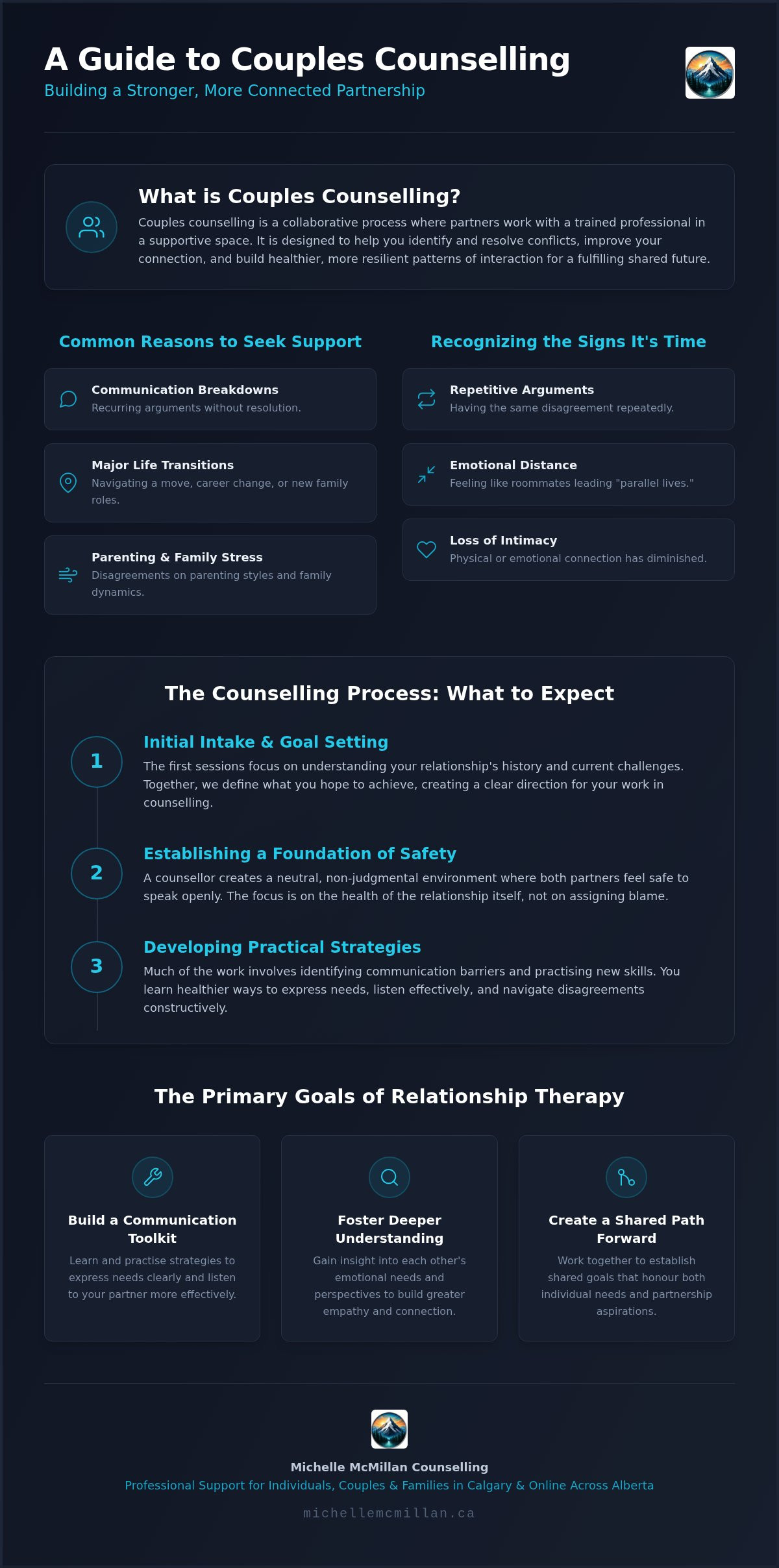
Couples counselling is a collaborative process where partners work with a trained professional to navigate relationship challenges. It is designed to help you and your partner identify and resolve conflicts, improve your connection, and build healthier patterns of interaction. In Calgary, couples seek support for a wide range of reasons, from specific conflicts to a general sense of disconnection.
- Common Reasons for Seeking Support: Many couples seek help for recurring communication breakdowns, difficulties navigating major life transitions like a move or career change, or stress related to parenting and family dynamics.
- The Counsellor’s Role: A counsellor acts as a neutral third party. Their role is not to take sides or decide who is “right” or “wrong,” but to facilitate understanding, guide conversations, and help both partners feel heard and respected.
- Professional vs. Personal Advice: While friends and family mean well, their advice is often biased. A professional counsellor offers an objective perspective grounded in an understanding of relationship dynamics, helping you build skills rather than just providing a temporary solution.
Recognizing the Signs It Is Time for Professional Support
Deciding to start counselling is a personal choice, but certain patterns often indicate that professional guidance could be beneficial. If you recognize any of the following in your relationship, it may be a good time to consider reaching out.
- Repetitive Arguments: You feel like you are having the same disagreement over and over without ever reaching a resolution.
- Emotional Distance: There is a sense of emotional disconnect, and you may feel like you are leading separate or “parallel lives” despite being together.
- External Stressors: You are navigating significant external pressures, such as career changes, financial stress, or family conflict unique to life in Alberta, and it is taking a toll on your partnership.
- Loss of Intimacy: The physical or emotional intimacy in your relationship has diminished, and you are unsure how to reconnect.
The Goal of Relationship Therapy
The ultimate aim of couples counselling is not to eliminate all disagreements but to equip you with the tools to navigate them constructively. It is about building a more resilient and fulfilling partnership where both individuals feel valued.
- Building a Communication Toolkit: Learn and practise communication strategies that help you express your needs and listen to your partner more effectively in your daily life.
- Fostering Deeper Understanding: Gain insight into each other’s emotional needs, triggers, and perspectives, which can foster greater empathy and connection.
- Creating a Shared Path Forward: Work together to establish shared goals and create a future that honours both of your individual needs and aspirations within the partnership.
The Process of Professional Relationship Therapy: What to Expect
Starting therapy can feel intimidating if you do not know what the process involves. While every counsellor’s approach may differ slightly, the core components generally focus on creating a supportive environment where productive conversations can happen. The process is about moving from reactive conflict to more intentional and empathetic communication.
- The Initial Intake: The first few sessions are typically focused on understanding the history of your relationship, discussing your current challenges, and defining what you hope to achieve together through counselling.
- Creating a Foundational Space: A key part of the process is establishing an environment where both partners feel they can speak openly and honestly without fear of judgment.
- Focusing on Communication: Much of the work involves exploring your current communication patterns and developing healthier, more effective ways to interact.
- Working with a Professional: Seeking support from a qualified professional, such as a Canadian Certified Counsellor (CCC), helps ensure you are working with someone who adheres to established ethical and professional standards.
Establishing a Foundation of Trust and Safety
For counselling to be productive, both partners need to feel that the session is a safe space. A counsellor works to build this foundation from the very beginning.
- A Non-Judgmental Environment: Counsellors are trained to remain neutral and create a non-judgmental atmosphere where both partners’ perspectives are validated.
- The Relationship as the “Client”: The focus is on the health of the relationship itself. The goal is not to assign blame to one individual but to understand how your dynamic as a couple contributes to the challenges you face.
- Validating Difficult Emotions: Acknowledging and validating emotions like anger, hurt, or frustration can help lower defensive barriers and pave the way for more open and honest dialogue.
Developing Practical Communication Strategies
Effective communication is more than just talking; it is about listening and understanding. Counselling provides a space to practise new skills with professional guidance.
- Identifying Communication Barriers: A counsellor can help you recognize patterns—like interrupting, making assumptions, or escalating conflicts—that prevent productive dialogue.
- Practising New Skills: Sessions often include opportunities to practise skills like active listening and empathetic responding in real time.
- Applying Skills to Daily Life: The goal is to take what you learn in your sessions and apply it to real-world situations, helping you navigate disagreements more effectively between appointments. For some couples, neurodivergence, such as inattentive or combined-type ADHD, can impact communication styles. Understanding these differences can be a key part of building empathy. For more information, you may find this resource on ADHD support in Calgary helpful.
Considering Virtual Couples Counselling for Alberta Residents
While many couples prefer and benefit from in-person therapy, virtual counselling has become a valuable alternative for many Alberta residents. Online sessions offer a different kind of accessibility that can help couples prioritize their relationship, even with demanding schedules or geographical constraints.
In-person counselling provides a unique, dedicated space away from home and allows for direct interaction that some couples find essential for deep, focused work. However, when in-person appointments are not feasible, virtual sessions can provide important continuity of care.
- Flexibility for Busy Schedules: For busy Calgary professionals and parents, online sessions can be easier to fit into a packed week.
- Accessibility Across Alberta: Virtual counselling removes geographical barriers, making professional support accessible to couples in rural or remote areas of the province.
- Reduced Logistical Stress: Attending sessions from home eliminates travel time and the need to arrange childcare, which can be significant hurdles for some families.
- Consistency of Care: Online sessions allow you to continue your appointments consistently, even during inclement weather, when travelling within the province, or if one partner is away from home.
Convenience for the Modern Calgary Lifestyle
For many living in and around Calgary, the practical benefits of virtual therapy are a significant consideration. It offers a way to engage in meaningful therapeutic work without adding extra logistical stress to an already full plate.
- Scheduling Flexibility: The ability to schedule a session during a lunch break or after the kids are in bed can make counselling more manageable.
- Comfort and Privacy: Some couples find that being in their own familiar environment helps them feel more relaxed and open during sessions.
How Online Relationship Support Works
Modern virtual counselling uses secure video platforms designed to facilitate clear and confidential communication. A stable internet connection is important for ensuring the session runs smoothly.
- Observing Non-Verbal Cues: Video platforms allow the counsellor to observe body language and non-verbal cues, which are an important part of communication.
- A Professional Connection: Counsellors who offer virtual services use secure platforms to help maintain privacy and create a professional therapeutic environment.
How to Prepare for Your First Joint Counselling Session
A little preparation can help you make the most of your first couples counselling session. Going in with a cooperative mindset and a shared understanding of your goals can set a positive tone for the work ahead. Here are a few steps you can take together.
- Discuss Your Hopes and Goals: Before your first meeting, talk to your partner about what you each hope to achieve. Asking, “What would a successful outcome look like for you?” can help align your expectations.
- Reflect on Key Challenges: Think about the specific areas of your relationship that feel the most difficult right now. It can be helpful to have a few examples in mind, but try to avoid coming with a list of grievances against your partner.
- Gather Relevant Information: Be prepared to share some history about your relationship, including how you met, what brought you together, and when the current challenges began.
- Create a Private Space: If you are attending a virtual session, ensure you have a quiet, private space where you will not be interrupted. This is crucial for creating a focused and confidential environment.
Aligning Your Goals as a Couple
Approaching counselling as a team is one of the most important factors for progress. Even if you disagree on the problems, agreeing on the goal of improving your relationship is a powerful starting point.
- Adopt a Spirit of Cooperation: Try to enter the process with an open mind and a willingness to work together, rather than a desire to prove your point or win an argument.
- Understand It Is a Process: Meaningful change takes time and consistent effort from both partners. Be patient with yourselves, your partner, and the therapeutic process.
Practical Logistics for Virtual Sessions
A few simple technical checks can ensure your first virtual session goes smoothly, allowing you to focus on the conversation instead of the technology.
- Test Your Setup: Before your appointment, test your internet connection, camera, and microphone to make sure everything is working properly.
- Ensure Comfort for Both Partners: Set up your space so that both you and your partner are comfortably in the frame and can clearly see and hear the counsellor.
- Clarify Your Needs: If you have questions about the process or what to expect, you can always discuss your needs when you first reach out. To learn more or ask questions, you can contact Michelle McMillan Counselling.
Finding the Right Fit with Michelle McMillan Counselling
Choosing a counsellor is a significant decision. It is important to find a professional with whom both you and your partner feel comfortable. Michelle McMillan is a Canadian Certified Counsellor (CCC) with a Master of Arts in Counselling Psychology (MACP), offering professional, empathetic support to couples in Calgary and across Alberta.
- A Grounded, Professional Approach: Michelle provides a supportive space for couples to explore relationship difficulties, improve communication, and navigate family dynamics.
- The Value of Professional Credentials: The CCC designation signifies that a counsellor has met specific national standards for education, supervision, and ethical practice.
- Focus on Key Relationship Areas: The practice focuses on helping couples with communication challenges, parenting disagreements, life transitions, and other family dynamics.
- Virtual Support for Alberta Couples: By offering virtual therapy, Michelle provides an accessible option for couples throughout Alberta to engage in counselling.
A Compassionate Approach to Relationship Growth
A non-judgmental and empathetic perspective is central to creating a space where couples feel safe enough to be vulnerable and work toward growth.
- Prioritizing Emotional Resonance: The focus is on understanding the emotional experience of both partners and fostering a sense of being seen and heard.
- Supporting Couples Through Challenges: Support is available for couples navigating various challenges, including parenting stress and major life changes. You can learn more about Michelle’s areas of focus here.
Next Steps for Your Relationship
If you and your partner are ready to take a step toward strengthening your relationship, reaching out for professional support is a positive and proactive choice.
- An Invitation to Connect: You are welcome to reach out to discuss your needs and determine if this counselling approach is the right fit for you.
- Booking a Virtual Session: Virtual sessions are available for clients in Calgary and across Alberta, offering a convenient way to access support. You can explore the full range of services to learn more.
Frequently Asked Questions About Couples Counselling
Is virtual couples counselling as effective as in-person therapy?
Both in-person and virtual counselling can be effective, but the best format depends on a couple’s specific needs, circumstances, and preferences. In-person therapy offers a dedicated, neutral space away from home that many find crucial for focused work. Virtual therapy provides an accessible and convenient alternative for those who face barriers to attending in-person sessions, such as busy schedules, mobility issues, or living in a remote area. The right choice is the one that allows you and your partner to attend consistently and feel comfortable.
How do we know if we need couples counselling or individual therapy?
This is a common question. If your primary challenges are rooted in your relationship dynamics, communication patterns, or shared conflicts, couples counselling is often a good starting point. If one or both partners are struggling with personal issues like anxiety, depression, or past trauma that impact the relationship, individual therapy may be beneficial. Sometimes, a combination of both is helpful. A consultation with a counsellor can help you clarify the best path forward.
What should we do if my partner is hesitant to attend counselling?
It is normal for one partner to be more hesitant than the other. Start by having an open, non-blaming conversation about your concerns and why you feel counselling could help. Frame it as an opportunity to strengthen your team rather than a sign that something is “broken.” You could suggest simply trying one session to see how it feels, without any long-term commitment. A counsellor will not force participation and understands the importance of creating a space where both partners feel respected.
How many sessions of couples counselling are typically needed to see progress?
There is no set number of sessions, as every couple’s situation is unique. The duration of counselling depends on your specific goals, the complexity of the issues you are facing, and the pace at which you and your partner are comfortable working. Some couples may find a few sessions are enough to get back on track, while others may benefit from longer-term support. Progress is a gradual process that relies on consistent effort both in and out of sessions.
Can couples counselling help with parenting disagreements or family conflict?
Yes, absolutely. Parenting is a common source of conflict for couples, as partners often have different styles, values, and expectations. Couples counselling can provide a structured space to discuss these differences respectfully, develop a united parenting approach, and reduce conflict. It can also help couples navigate broader family dynamics and conflicts involving extended family members.
What are the credentials of a Canadian Certified Counsellor (CCC)?
A Canadian Certified Counsellor (CCC) is a professional who holds a designation from the Canadian Counselling and Psychotherapy Association (CCPA). To achieve this, a counsellor must typically hold a master’s degree in counselling or a related field, complete a supervised clinical internship, and adhere to the CCPA’s code of ethics and standards of practice. This designation indicates a commitment to professional accountability and development.
Is couples counselling covered by insurance in Alberta?
Coverage for counselling services varies widely among insurance plans in Alberta. Many extended health benefit plans cover services provided by a registered or certified counsellor, but the amount of coverage and the specific professional designations required can differ. It is important to check directly with your insurance provider to understand the details of your plan, including which credentials they recognize (e.g., CCC) and what your coverage limits are.
How do we get started with virtual sessions in Calgary?
Getting started usually begins with an initial inquiry or booking a consultation. This gives you an opportunity to ask questions, discuss what you are looking for, and ensure the counsellor is a good fit for your needs. To take the next step, you can reach out through the contact page to book a virtual session and begin the process of strengthening your partnership.

Article by
Michelle McMillan, MACP, CCC
Michelle McMillan is a Canadian Certified Counsellor (CCC) with a Master of Arts in Counselling Psychology (MACP). She has extensive experience working with children and supporting clients with ADHD, neurodivergence, anxiety, emotional regulation, relationships and family challenges. Michelle provides virtual counselling for adults throughout Alberta, British Columbia, Saskatchewan and Manitoba and primarily in-person counselling for children and families in Calgary.
Important Information
This article is provided for general educational and informational purposes only and is not a substitute for professional counselling, psychological, medical or emergency services. Information shared here should not be considered a diagnosis or individualized treatment advice. If you are experiencing a mental health emergency or are in immediate danger, please contact appropriate emergency services in your area.