
Watching your child struggle with big feelings, school pressures, or social challenges can be one of the most difficult parts of being a parent. You want to help, but it’s not always clear how. Child counselling in Calgary offers a dedicated space for your child to explore their emotions, develop new skills, and build confidence in a supportive, professional environment. It’s a collaborative process that involves not just your child, but your whole family, providing tools and understanding to foster connection and resilience.
Whether you’re noticing changes in your child’s behaviour, navigating the complexities of an ADHD diagnosis, or simply feeling that your family could use extra support, finding the right professional is a crucial first step. This guide explores what child counselling involves, how to know when it might be time to seek help, and how to find a qualified child counsellor in Calgary who can support your family’s unique needs.
What is Child Counselling and How Can it Help Your Family?
Child counselling is a specialized form of therapy designed to help children and youth understand their feelings, process difficult experiences, and develop healthy coping skills. Unlike therapy for adults, it is tailored to a child’s specific developmental stage, using age-appropriate ways to communicate and connect. The primary goal is to create a safe, non-judgmental atmosphere where a child feels comfortable expressing themselves.
For many Calgary families, counselling provides essential support by:
- Creating a Safe Space: It offers a confidential environment where children can talk about things that might be hard to discuss with parents or friends.
- Building Emotional Skills: A counsellor helps children identify and name their feelings, understand what triggers them, and learn practical strategies for managing emotions like anger, sadness, and anxiety.
- Improving Communication: Therapy can improve the way family members communicate with each other, helping to reduce conflict and strengthen relationships.
- Addressing Specific Challenges: It provides targeted support for issues like school-related stress, social anxiety, behavioural difficulties, or adjusting to major life transitions such as a move or divorce.
The Role of a Canadian Certified Counsellor
When seeking support for your child, it’s important to understand a professional’s qualifications. In Canada, the Canadian Certified Counsellor (CCC) designation is a national service and credential recognized by the Canadian Counselling and Psychotherapy Association (CCPA). Counsellors with a CCC designation and a Master of Arts in Counselling Psychology (MACP) have met specific standards for education and professional development.
Working with a certified professional means they are accountable to a set of ethical standards and a professional code of conduct. This commitment to professional accountability is fundamental in child therapy, where trust and safety are paramount. A child counsellor acts as a guide, working not only with the child but also with the parents to create a supportive network that fosters growth.
Common Goals of Counselling for Kids
While every child’s situation is unique, the goals of child counselling often centre on empowerment and skill-building. A counsellor works with your child and family to:
- Build an Emotional Vocabulary: Helping children find the words for complex feelings they may not understand, reducing the frustration that can lead to behavioural outbursts.
- Develop Practical Tools: Introducing techniques for managing stress, navigating social situations, and solving problems in a constructive way.
- Foster Self-Esteem: Encouraging a child’s sense of self-worth and agency, helping them recognize their strengths and build resilience.
Recognizing When Your Child Might Benefit from Professional Support
It can be challenging for parents to distinguish between typical childhood phases and signs that a child might need more support. While every child experiences ups and downs, certain persistent patterns may indicate that professional child counselling could be beneficial.
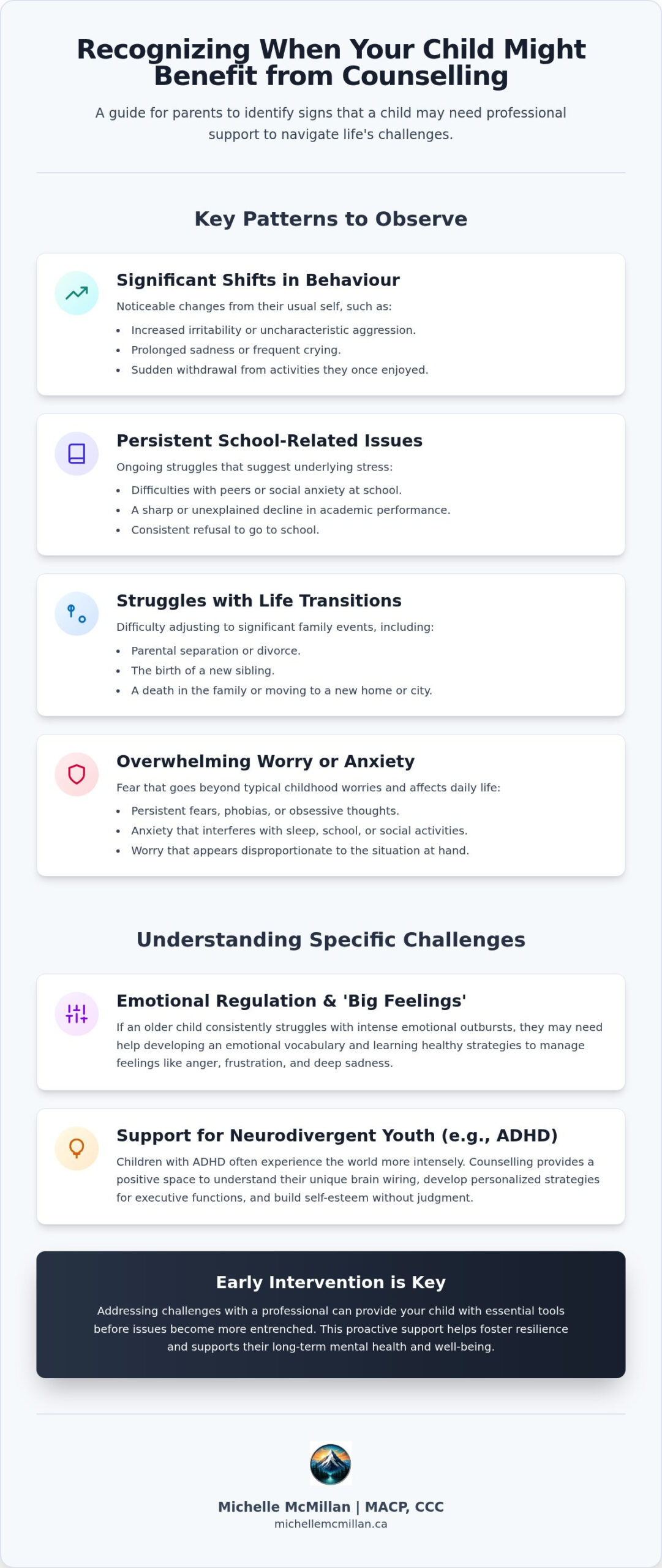
Consider seeking support if you notice:
- Significant Shifts in Behaviour: This could include increased irritability, uncharacteristic aggression, prolonged sadness, or a sudden withdrawal from activities they once enjoyed.
- Persistent School-Related Issues: Ongoing difficulties with peers, a sharp decline in academic performance, or consistent refusal to go to school can be signs of underlying anxiety or stress.
- Struggles with Life Transitions: Children may have a hard time adjusting to significant events like a parental separation, the birth of a sibling, a death in the family, or moving to a new city.
- Overwhelming Worry or Anxiety: While some worry is normal, persistent fears, phobias, or anxiety that interferes with daily life at home or school may require professional guidance.
Early intervention is key. Addressing these challenges with a professional can provide your child with the tools they need before these issues become more entrenched, supporting their long-term mental health.
Emotional Regulation and ‘Big Feelings’
Young children are still developing the capacity to manage “big feelings” like anger, frustration, and deep sadness. A tantrum in a toddler is developmentally appropriate, but if an older child consistently struggles with emotional outbursts that are intense and difficult to soothe, it may be a sign they need help with emotional regulation. A child counsellor can help distinguish between typical developmental stages and more persistent emotional struggles, offering strategies to help children process feelings they cannot yet name or control on their own.
Supporting Neurodivergent Youth
Children with ADHD and other forms of neurodivergence often experience the world more intensely. This can lead to significant stress, overwhelm, and challenges with executive functions like planning and emotional control. Traditional discipline methods may not be effective for neurodivergent kids because their brains are wired differently. Counselling provides a space to understand these differences in a positive light.
Professional support focuses on helping children and their parents understand the neurodivergent brain, develop personalized strategies, and build self-esteem. For families in Calgary looking for more information, this guide to ADHD support in Calgary offers additional resources.
The Value of In-Person Child Counselling in Calgary
When choosing a therapeutic path for your child, the format of the sessions is an important consideration. For many children and families in Calgary, in-person counselling is a preferred and highly beneficial approach. A face-to-face setting offers unique advantages for building a strong therapeutic connection and observing the nuances of a child’s communication style.
Benefits of in-person child counselling include:
- Building Natural Rapport: Meeting in person allows a counsellor and child to build trust and rapport organically. The physical presence of a calm, attentive adult can be deeply reassuring for a child.
- Observing Non-Verbal Cues: So much of a child’s communication is non-verbal. In an office setting, a counsellor can more easily observe body language, play patterns, and other subtle cues that provide insight into a child’s inner world.
- A Dedicated, Neutral Space: A counsellor’s office is a neutral environment, separate from the potential distractions and dynamics of home or school. This can help a child feel more open and focused during their sessions.
- Structured and Focused Environment: The routine of travelling to a specific location for an appointment helps create a clear boundary between “therapy time” and the rest of the day, which can be helpful for many children.
Flexible Support with Virtual Counselling
While in-person sessions are often the primary approach for children, virtual counselling remains a valuable and flexible option for some families. For parents with demanding schedules, those living in rural areas outside Calgary, or for older teens who are comfortable with digital platforms, virtual therapy provides accessible support.
When appropriate, virtual sessions can be adapted to be engaging and effective. The key is finding the right fit for your child’s personality, developmental stage, and specific needs. A consultation with a counsellor can help you determine which format might work best for your family.
Specialized Support for ADHD and Emotional Regulation
For children with ADHD and other neurodivergent traits, the world can often feel overwhelming. Their emotional landscape is unique, and they may experience frustration, anxiety, and low self-esteem related to their challenges with focus, impulsivity, and social interactions. Effective child counselling for neurodivergent kids goes beyond simply managing behaviours; it focuses on fostering self-understanding and building confidence.
This specialized support involves collaborating closely with parents to create consistent and supportive environments at home and school. It’s about equipping the entire family with the knowledge and tools to help the child succeed. To learn more about the different areas of focus in counselling, you can explore these counselling services.
Tools for ADHD-Related Challenges
Counselling for a child with ADHD is not about “fixing” them but empowering them. The focus is on helping them understand their brain in a positive, strengths-based way. Goals often include:
- Developing Strategies: Finding practical ways to manage executive functioning challenges related to organization, time management, and impulsivity.
- Building Self-Awareness: Helping children recognize their emotional triggers and develop healthy ways to respond to them.
- Fostering Resilience: Supporting children in navigating the social difficulties that can sometimes accompany ADHD, helping them build strong friendships and advocate for themselves.
Parenting Support and Family Dynamics
Parenting a neurodivergent child comes with its own set of challenges and rewards. Counselling often includes a significant component of parent support, empowering you with effective communication strategies and a deeper understanding of your child’s needs. This collaborative approach helps reduce family conflict and ensures everyone is working together as a team to support the child’s growth.
Finding the Right Path with Michelle McMillan Counselling
Choosing a child counsellor in Calgary is a significant decision. The connection between the counsellor, your child, and your family is the foundation for meaningful progress. Working with a solo practitioner like Michelle McMillan offers the benefit of consistent, personalized care. From the first consultation onward, you and your child are building a relationship with one dedicated professional.
Michelle McMillan’s approach is warm, professional, and empathetic, creating an environment where children and parents feel seen, heard, and respected. The focus is on understanding your child’s unique world and working collaboratively toward a more balanced and resilient family life.
A Steady Partner for Your Child
A strong therapeutic relationship is built on a foundation of non-judgmental validation. It’s a partnership where your child feels safe enough to be vulnerable and you feel supported enough to navigate difficult parenting moments. As a Canadian Certified Counsellor with a Master of Arts in Counselling Psychology, Michelle McMillan supports Calgary families with a deep commitment to their well-being. You can learn more about her background and professional approach here.
Next Steps for Your Family
Starting counselling begins with a simple conversation. The initial consultation is an opportunity to discuss your concerns, ask questions, and determine if the fit feels right. Preparing your child for their first session can be as simple as explaining that you’re all going to meet someone who is good at helping families work together and helping kids with their feelings.
If you feel your child and family could benefit from professional support, taking the next step is a powerful act of care.
To learn more about child counselling in Calgary and discuss your family’s needs, you are invited to connect with Michelle McMillan, MACP, CCC.
Frequently Asked Questions About Child Counselling
- How do I know if my child is ready for counselling?
A child doesn’t need to be “ready” in the way an adult might be. If you, as a parent, have concerns about their emotional well-being or behaviour, that is enough of a reason to seek a consultation. A skilled child counsellor is experienced in engaging with children who may be hesitant or shy. The most important factor is your willingness to support the process. - Does Michelle McMillan offer in-person sessions in Calgary?
Yes. The primary approach for counselling with children and families is in-person in Calgary. This format is often ideal for building rapport and creating a dedicated therapeutic space for a child. Virtual sessions may be available as a flexible alternative in certain circumstances. - What is the difference between a Canadian Certified Counsellor and a Psychologist?
Both are mental health professionals, but their training and regulatory bodies differ. Psychologists often have training in formal assessment and diagnosis and are regulated at the provincial level. Canadian Certified Counsellors (CCCs) hold a master’s degree in counselling and are certified by the Canadian Counselling and Psychotherapy Association (CCPA), adhering to a national standard of practice and code of ethics. - Can virtual counselling be effective for a child with ADHD?
While the primary approach for children is often in-person, the success of virtual counselling depends on many factors, including the child’s age, temperament, and ability to engage with a screen. For some older children and teens, particularly those comfortable with technology, it can be a convenient and effective option. A consultation can help determine the best format for your child’s specific situation. - How long does child counselling typically last?
The duration of counselling varies widely depending on the child’s needs and the goals of the therapy. Some families may seek short-term support to navigate a specific challenge, while others may engage in longer-term therapy to address more complex issues. This is something you would discuss with the counsellor. - Will I be involved in my child’s counselling sessions?
Yes, parental involvement is a critical part of successful child counselling. The level and nature of your involvement will depend on your child’s age and the issues being addressed. It typically involves regular check-ins, parent-only sessions, and collaborative goal-setting to ensure strategies used in therapy are supported at home. - How do I explain the idea of a ‘counsellor’ to my young child?
You can explain it in simple, positive terms. For example: “We’re going to meet someone named Michelle. Her job is to help kids with their feelings, like when you feel really mad or sad. She’s like a feelings helper, and she’s really good at listening.” Frame it as a supportive, normal activity, not a punishment. - Is virtual counselling covered by my insurance in Alberta?
Coverage for counselling services varies significantly between insurance providers and individual plans. It is recommended that you contact your insurance company directly to inquire about their coverage for services provided by a Canadian Certified Counsellor (CCC).

Article by
Michelle McMillan, MACP, CCC
Michelle McMillan is a Canadian Certified Counsellor (CCC) with a Master of Arts in Counselling Psychology (MACP). She has extensive experience working with children and supporting clients with ADHD, neurodivergence, anxiety, emotional regulation, relationships and family challenges. Michelle provides virtual counselling for adults throughout Alberta, British Columbia, Saskatchewan and Manitoba and primarily in-person counselling for children and families in Calgary.
Important Information
This article is provided for general educational and informational purposes only and is not a substitute for professional counselling, psychological, medical or emergency services. Information shared here should not be considered a diagnosis or individualized treatment advice. If you are experiencing a mental health emergency or are in immediate danger, please contact appropriate emergency services in your area.