
Families across Alberta are increasingly exploring online options for professional support, and virtual family therapy is a significant part of that conversation. The idea of accessing counselling from home can be appealing, especially for busy households or those in remote areas. However, it’s natural to have questions about how it works, its potential benefits, and whether it’s the right fit for your family’s unique situation.
This guide provides answers to common questions about virtual family therapy in Alberta. It is designed to help you understand the format, weigh the considerations, and make an informed decision about the best path forward for your family, whether that involves online or in-person support.
What is Virtual Family Therapy and How Does it Work in Alberta?
Virtual family therapy, also known as online family counselling, is professional support provided by a qualified counsellor or therapist through video conferencing. It allows multiple family members to connect with a therapist from one or more locations, using a computer, tablet, or smartphone. This format has become a key service for many Albertans, from those in major centres like Calgary to residents in smaller communities.
The fundamental goal remains the same as in-person sessions: to improve communication, resolve conflicts, and strengthen family relationships. Counsellors providing virtual services in Alberta are expected to adhere to the same professional and ethical standards that guide in-person practice, including standards for confidentiality and professional conduct.
The Role of a Family Counsellor in a Virtual Setting
In an online environment, a family counsellor’s role adapts to the digital format. Their work often involves:
- Facilitating Communication: A primary task is to ensure every family member has an opportunity to speak and be heard, managing the conversation flow so that one person does not dominate the screen.
- Creating a Neutral Space: The counsellor works to establish the video session as a neutral ground where difficult topics can be discussed respectfully, even when family members are in different physical locations.
- Observing Dynamics: While the format is different, a trained therapist can still observe communication patterns, non-verbal cues, and family dynamics as they unfold during the session.
Regulatory Standards for Alberta Therapists
When seeking any form of therapy in Alberta, it is important to understand the credentials of the provider. Here are a few key considerations:
- Professional Designation: In Alberta, the titles “counsellor” and “therapist” are not protected, meaning anyone can use them. However, designations like Canadian Certified Counsellor (CCC), held by members of the Canadian Counselling and Psychotherapy Association (CCPA), indicate that the professional has met specific national standards for education and supervised experience.
- Confidentiality: Professional counsellors are bound by ethical codes that require them to protect client confidentiality. When working online, this principle still applies, and conversations about how privacy is managed are a key part of starting therapy.
- Provincial Practice: A therapist must be licensed or eligible to practise in the province where the client is located. A counsellor based in Calgary, for example, can typically provide virtual services to anyone residing in Alberta.
Potential Advantages of Choosing Online Family Counselling
For some families, the online format offers practical advantages that can make accessing support more feasible. It’s important to view these as potential benefits, as each family’s experience will differ.
- Reduced Travel Time: Eliminating the need to commute to an office can be a significant benefit, especially for those navigating city traffic or challenging winter road conditions across Alberta.
- Scheduling Flexibility: Coordinating schedules for multiple family members can be complex. Virtual appointments can sometimes offer more flexibility, fitting more easily around work, school, and extracurricular activities.
- Accessibility: For families living in rural or remote parts of Alberta, online counselling provides access to specialized support that might not be available locally.
- Familiar Environment: Some individuals, particularly teens or children, may feel more at ease participating in therapy from the comfort and familiarity of their own home.
Convenience for Modern Alberta Families
The primary appeal of virtual therapy for many is convenience. Consider these factors:
- Saving Time: Less time spent on travel and preparation can reduce the overall time commitment required for an appointment.
- Comfort: Joining a session from a familiar space like a living room can remove some of the formality that may feel intimidating in a clinical setting.
- Reduced Logistics: For parents, managing one less appointment to drive to can help lighten the “mental load” of coordinating family schedules.
Considerations for Youth Engagement
When children and teens are involved, the virtual format presents its own set of considerations:
- Screen Familiarity: Many young people are highly comfortable with digital interaction, and for some, this can make it easier to engage with a therapist online.
- Home Environment: The home setting provides a real-world context for discussing family dynamics and practising new communication skills where they are most needed.
- Building Rapport: A skilled counsellor will focus on building a strong therapeutic relationship with each family member, including children and teens, to create a sense of trust and partnership, regardless of the format.
Overcoming Practical Challenges of Virtual Family Sessions
While convenient, virtual family therapy also comes with practical challenges that families should anticipate and plan for.
- Technical Issues: Unstable internet connections or technology glitches can disrupt the flow of a session and cause frustration.
- Privacy at Home: Finding a truly private space can be difficult when multiple people are in the same house. Family members may need to use separate rooms and headphones.
- Screen Fatigue: Many people experience fatigue from long hours of screen time for work and school, which can make it challenging to stay focused during a virtual therapy session.
- Engaging Younger Children: It can be more difficult to engage young children without the hands-on tools often used in in-person play therapy.
Setting Up Your Home for a Session
To create a better virtual therapy experience, families can take a few preparatory steps:
- Choose a Quiet Space: Select a room where interruptions are unlikely. Ensure there is adequate lighting and that each person can be clearly seen and heard.
- Consider Camera Placement: Position the camera so the therapist can see as many family members as possible. This helps them observe body language and interactions.
- Check Your Connection: Test your internet connection beforehand. Closing other applications and browser tabs can help improve the quality of the video stream.
Handling Distractions and Engagement
Managing the session itself requires cooperation from everyone involved.
- Establish Ground Rules: It can be helpful for the family to agree on rules before the session begins, such as putting away phones and other devices to minimize distractions.
- Structured Turn-Taking: A counsellor will often structure the conversation to ensure everyone gets a chance to contribute, which is especially important in a virtual format where non-verbal cues to speak can be missed.
- Active Participation: All family members should be encouraged to participate actively. This may involve the counsellor using specific prompts or exercises designed for an online setting.
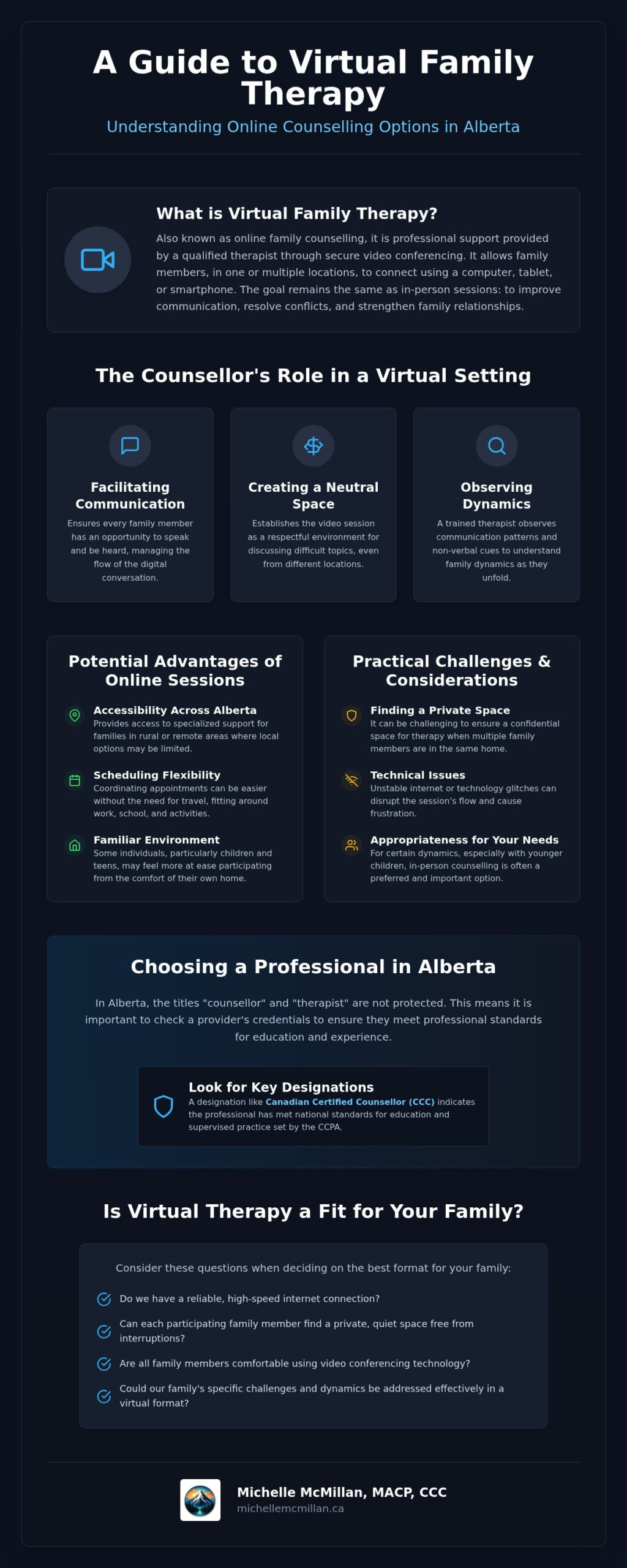
Is Virtual Therapy the Right Choice for Your Family’s Needs?
Deciding between virtual and in-person family therapy is a personal choice that depends on your family’s specific circumstances, needs, and preferences. There is no one-size-fits-all answer, and what works for one family may not be suitable for another.
Virtual therapy may be a good option for families with older children who are comfortable with technology, for those who face significant logistical barriers to attending in-person appointments, or for families where members need to join from different locations. In-person therapy is often preferred for families with young children who benefit from play-based approaches, or for situations involving intense conflict where the physical presence of a neutral therapist is helpful for de-escalation and creating a sense of safety.
Ultimately, the most important factor is finding a qualified counsellor with whom your family feels comfortable and who has experience relevant to your challenges, such as navigating ADHD support in Calgary or improving family communication.
Considering In-Person and Virtual Options with Michelle McMillan Counselling
It is important for families to find a service model that fits their needs. At Michelle McMillan Counselling, the approach to family therapy services is tailored to the specific clients.
For children and families, counselling is primarily offered in-person in Calgary. This allows for direct interaction and the use of therapeutic approaches best suited to younger clients and complex family dynamics. For families in or near Calgary, in-person sessions provide a dedicated, confidential space away from the distractions of home.
Virtual counselling is available for individual adults across Alberta, British Columbia, Saskatchewan, and Manitoba. This provides a flexible and accessible option for adults seeking individual support for challenges related to parenting, anxiety, emotional regulation, and more.
Preparing for Your First Family Counselling Session
Whether you choose a virtual or in-person format, preparing for the first session can help your family get the most out of the experience. Here are some general steps to consider:
- Discuss Therapy Openly: Talk with your family about why you are considering counselling. Frame it as a positive step toward working together as a team to improve communication and solve problems.
- Find the Right Fit: Most therapists offer an initial consultation. This is an opportunity to ask questions and determine if the counsellor’s approach and personality are a good fit for your family.
- Think About Your Goals: It can be helpful to spend some time thinking about what you hope to achieve through therapy. What are the key issues you want to address? What would a better future look like for your family?
Next Steps for Your Family
If you are exploring counselling options, it is important to gather all the necessary information to make a confident choice. This often includes reviewing a counsellor’s credentials, areas of focus, and approach. Preparing a few questions to ask a potential therapist can help you assess whether they are the right professional to support your family.
Frequently Asked Questions About Virtual Family Therapy
Is virtual family therapy as effective as meeting in person?
The effectiveness of therapy depends on many factors, including the family’s specific issues, the engagement of each member, and the strength of the therapeutic relationship. Virtual and in-person therapy are different formats, each with potential advantages and disadvantages. Some families find virtual counselling highly effective and convenient, while others may find the structure and focus of in-person sessions more beneficial. It is not accurate to say one is universally better than the other; the best format depends on the family’s unique needs.
What equipment do we need for a virtual family counselling session?
At a minimum, you will need a computer, tablet, or smartphone with a camera, microphone, and a stable internet connection. Using headphones can improve audio quality and enhance privacy, especially if other people are in the house.
Can family members join from different locations in Alberta?
Yes, one of the primary advantages of virtual family therapy is the ability for members to join a session from different physical locations. This can be particularly helpful for families with co-parenting arrangements, a child away at university, or members living in different cities within Alberta.
How do we ensure privacy during an online therapy session?
Ensuring privacy from your end involves choosing a location where you will not be overheard or interrupted. Each participating family member should be in a private space. Using headphones is also a key step. You should always feel comfortable asking a potential therapist about the measures they take to maintain confidentiality.
What if my child or teen refuses to participate on camera?
This is a common concern. It is important not to force participation, as this can be counterproductive. Instead, it can be helpful to discuss their concerns with them and with the counsellor. A therapist experienced in working with youth can often help navigate this resistance and find ways to make the experience feel safer and more engaging for them.
How long are virtual family therapy sessions typically?
Session lengths can vary, but family counselling sessions often range from 50 to 90 minutes to allow enough time for each member to participate. The specific duration should be confirmed directly with the chosen counselling provider.
Is virtual therapy covered by insurance in Alberta?
Many insurance plans in Alberta cover counselling services provided by a Canadian Certified Counsellor (CCC) or other qualified professionals. However, coverage varies widely between providers and plans. It is essential to check directly with your insurance company to confirm what services and designations are covered under your specific plan.
How do I know if Michelle McMillan is the right counsellor for my family?
Michelle McMillan, MACP, CCC, has extensive experience supporting families with challenges related to communication, emotional regulation, and neurodivergence, including ADHD. The best way to determine if she is the right fit is to consider your family’s needs and preferred format. Michelle’s counselling services for children and families are primarily offered in-person in Calgary. For families in the Calgary area seeking hands-on, in-person support, she may be a great choice. Individual adults seeking virtual counselling can access her services from anywhere in Alberta, BC, SK, or MB.
Find the Right Support for Your Family in Calgary and Alberta
Choosing to begin family counselling is a significant step toward building stronger, healthier relationships. Whether you are considering virtual family therapy in Alberta or in-person sessions in Calgary, the goal is to find a supportive, professional space where your family can learn and grow together.
If your family is in Calgary and you believe in-person support is the best fit, or if you are an adult in Alberta seeking individual virtual counselling, you are invited to learn more. For information on services and to explore your options, please view the rates and booking page.
Learn more about counselling services and book a session with Michelle McMillan, MACP, CCC.

Article by
Michelle McMillan, MACP, CCC
Michelle McMillan is a Canadian Certified Counsellor (CCC) with a Master of Arts in Counselling Psychology (MACP). She has extensive experience working with children and supporting clients with ADHD, neurodivergence, anxiety, emotional regulation, relationships and family challenges. Michelle provides virtual counselling for adults throughout Alberta, British Columbia, Saskatchewan and Manitoba and primarily in-person counselling for children and families in Calgary.
Important Information
This article is provided for general educational and informational purposes only and is not a substitute for professional counselling, psychological, medical or emergency services. Information shared here should not be considered a diagnosis or individualized treatment advice. If you are experiencing a mental health emergency or are in immediate danger, please contact appropriate emergency services in your area.