
Understanding Virtual Counselling in Alberta: How Remote Therapy Works
Accessing mental health support has evolved significantly across Canada over recent years. Virtual counselling connects clients directly with qualified mental health professionals using secure, real-time video or audio platforms. For individuals and couples residing across Alberta, remote counselling provides an accessible way to engage in professional therapy without the logistical constraints of visiting a physical clinic.
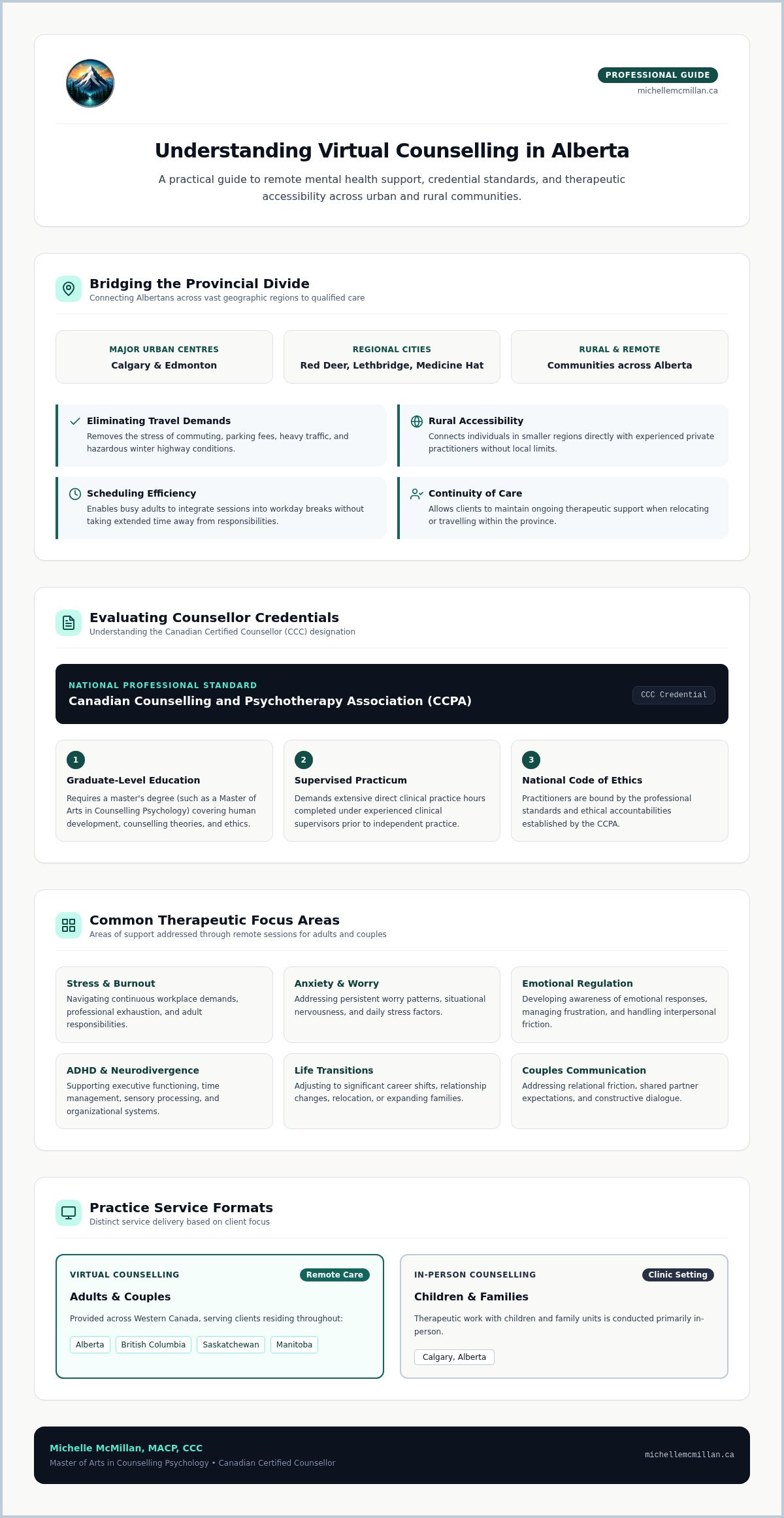
Alberta covers an expansive geographic area, ranging from densely populated urban centres like Calgary and Edmonton to smaller cities such as Red Deer, Lethbridge, and Medicine Hat, as well as numerous rural and remote communities. In many parts of the province, finding local mental health professionals whose experience matches your personal concerns can be difficult. Virtual therapy bridges this geographic divide, allowing Albertans to work with qualified counsellors regardless of where they live in the province.
Remote sessions follow the same standard professional framework as traditional clinic visits. Appointments are scheduled in advance, conducted in a one-on-one or couples format, and dedicated to addressing personal challenges, relationship dynamics, or emotional concerns. Engaging in therapy through an online platform provides a dedicated, professional space where clients can speak openly, explore practical tools, and address personal goals from their everyday environment.
Key Practical Benefits of Accessing Therapy Online
The primary advantage of choosing virtual counselling in Alberta centres on practical convenience and accessibility. Rather than arranging transportation, taking extended time away from work, or organizing family schedules around office appointments, remote therapy integrates seamlessly into existing routines.
- Eliminating Travel and Commuting Demands: Attending in-person appointments requires travel time, parking fees, and navigating traffic. For Albertans, winter weather conditions, icy highways, and heavy snowfall can make regular travel stressful or hazardous. Meeting online removes travel barriers entirely.
- Accessibility for Rural and Remote Communities: Smaller communities and rural regions often have limited access to private mental health practitioners. Virtual care allows individuals in any part of Alberta to connect with experienced professionals.
- Scheduling Efficiency for Busy Adults: Balancing professional responsibilities, household management, and personal commitments leaves little room for additional travel. Scheduling an online session during a work break or between daily obligations provides a manageable way to maintain consistent support.
- Continuity of Care: If you travel within the province or relocate between communities, virtual sessions allow you to maintain your therapeutic relationship without disruption.
For those seeking broader perspectives on remote support within the province, reviewing our guide on online therapy in Alberta provides additional context on accessing virtual care.
Common Focus Areas Addressed in Virtual Sessions
Virtual counselling can address a wide variety of personal, emotional, and relational concerns. Adults and couples seek remote therapy to work through ongoing stressors, adapt to major changes, and develop practical strategies for everyday life. Common areas of support include:
- Stress and Burnout: Managing continuous workplace stress, professional exhaustion, and the demands of balancing multiple adult responsibilities.
- Anxiety and Worry: Exploring patterns associated with persistent worry, situational nervousness, social apprehension, and overwhelming daily stress.
- Emotional Regulation: Developing greater awareness of emotional responses and practical approaches to navigate frustration, mood changes, and interpersonal friction.
- ADHD and Neurodivergence: Supporting neurodivergent adults as they navigate executive functioning demands, time management, sensory processing, and organizational systems. You can read more about comprehensive strategies in our resource on ADHD support for families and individuals.
- Life Transitions: Adjusting to career shifts, relationship changes, moving, or expanding a family.
- Relationship and Couples Communication: Addressing relational friction, communication barriers, and shared expectations within committed partnerships.
Evaluating Credentials: How to Choose a Qualified Counsellor in Alberta
Selecting a mental health professional is an important decision. In Alberta, various practitioners offer counselling, therapy, and mental health services, each operating under specific designations, educational frameworks, and professional associations. Understanding these credentials ensures you select an ethical, appropriately trained professional whose background aligns with your needs.
What the Canadian Certified Counsellor (CCC) Designation Signifies
The Canadian Certified Counsellor (CCC) credential is a national professional certification conferred by the Canadian Counselling and Psychotherapy Association (CCPA). It identifies practitioners who have met rigorous national standards of education, practical training, and ethical accountability.
To obtain and maintain the CCC designation, a practitioner must satisfy several core requirements:
- Graduate-Level Education: Candidates must hold a master’s degree in counselling psychology or a closely related field from an accredited institution. This academic foundation encompasses counselling theories, human development, ethics, assessment, and psychological interventions.
- Supervised Clinical Practicum: Applicants must complete extensive hours of supervised clinical practice during their graduate studies, ensuring practical experience under experienced clinical supervisors before independent practice.
- Adherence to a National Code of Ethics: Canadian Certified Counsellors are bound by the CCPA Code of Ethics, which governs professional boundaries, client confidentiality, informed consent, and non-discriminatory practice.
- Continuing Professional Development: Maintaining certification requires regular professional development, ensuring that practitioners stay current with evolving research, ethical practices, and counselling methodologies.
It is important to note that the CCC designation is a national professional certification through a professional association rather than statutory provincial licensure. It provides clients with objective verification that a counsellor has met defined national standards for graduate education and clinical competence.
Comparing Counsellors, Psychologists, and Medical Professionals
When searching for mental health care in Alberta, you will encounter various professional titles. While these professionals often collaborate or address similar concerns, their training, scope of work, and regulatory frameworks differ.
| Professional Title | Primary Education | Scope and Practice Focus |
|---|---|---|
| Counsellor (e.g., CCC) | Master’s Degree in Counselling Psychology or equivalent (e.g., MACP) | Provides structured dialogue, supportive counselling, and practical strategies for emotional, relational, and life challenges. Does not prescribe medication or provide formal diagnostic psychological testing. |
| Registered Psychologist | Master’s or Doctoral Degree in Psychology | Provides psychological assessments, formal diagnostic evaluations (e.g., psychoeducational testing), and therapy. Regulated at the provincial level by a college of psychologists. Does not prescribe medication in Alberta. |
| Psychiatrist / Physician | Doctor of Medicine (MD) with psychiatric residency | Medical doctors who evaluate biological factors, diagnose psychiatric disorders, and prescribe pharmacological medications. Practice is regulated under provincial medical colleges. |
Michelle McMillan is a Canadian Certified Counsellor (CCC) who holds a Master of Arts in Counselling Psychology (MACP). She is a counsellor rather than a psychologist, psychiatrist, or medical physician. Her practice focuses on providing structured counselling, professional dialogue, and support for individuals and couples rather than formal psychological testing, psychiatric diagnoses, or medication management.
Essential Questions to Ask Before Scheduling a Session
Before booking an initial appointment with any mental health professional, asking targeted questions can clarify whether their services fit your needs:
- What are your formal credentials and education? Verify that the practitioner holds recognized graduate training and an active professional membership or certification, such as the CCC designation.
- What are your primary areas of focus? Ensure the counsellor regularly works with clients addressing your specific concerns, such as ADHD, stress management, anxiety, or relationship communication.
- What service format do you provide? Clarify whether sessions are conducted virtually or in person, and verify how appointments are scheduled.
- How do you handle confidentiality and informed consent? Ask how your personal information is protected and how the counsellor manages communications outside of scheduled sessions.
Practical Preparation: Setting Up Your Space and Technology for Online Care
Preparing your physical space and technology before a virtual session helps create a calm, focused environment, allowing you to participate fully in the conversation without preventable distractions.
Creating a Private and Comfortable Home Environment
Because counselling sessions involve personal and sensitive topics, establishing privacy in your home or office is essential.
- Select a Dedicated, Closed Room: Choose a room with a closing door away from household traffic. Bedrooms, private home offices, or quiet spare rooms generally work best. If complete isolation is challenging, placing a white noise machine or fan outside your closed door can help mask conversations from household members or roommates.
- Use Headphones or Earbuds: Using wired or wireless headphones ensures that your counsellor’s voice cannot be overheard by others nearby. Headphones also reduce audio feedback, echo, and background room noise, improving overall sound clarity.
- Ensure Comfortable Seating: Pick a chair or couch where you can sit comfortably for the duration of the appointment with adequate physical support.
- Optimize Lighting: Position lighting in front of you (such as facing a window or lamp) rather than directly behind your back. Backlighting can cast shadows across your face, making non-verbal cues harder to see on screen.
- Minimize Digital Distractions: Set your smartphone, tablet, and computer notifications to silent or “Do Not Disturb” mode to prevent interruptions during your session.
Addressing Connectivity and Technical Considerations
You do not need specialized technical expertise to attend virtual appointments, but taking a few basic steps can prevent unnecessary delays:
- Check Device Battery and Power: Ensure your laptop, tablet, or phone is fully charged before the session begins, or keep your charging cable plugged in nearby.
- Verify Your Internet Connection: A reliable high-speed internet connection ensures clear audio and video feeds. If your connection tends to fluctuate, consider sitting closer to your Wi-Fi router or connecting your computer directly via an ethernet cable.
- Close Extra Tabs and Applications: Background downloads, streaming services, and numerous open browser tabs can consume bandwidth and slow down your device. Closing unnecessary software before your appointment helps your computer run smoothly.
- Position Your Camera at Eye Level: Resting your device on a desk, table, or laptop stand at eye level creates a steady picture and keeps your hands free to take notes or relax naturally.
Comparing Formats: When Virtual Counselling Fits Your Needs
Deciding between virtual and in-person counselling depends on individual schedules, geographical location, personal comfort, and the specific nature of the concerns being addressed. Both delivery formats serve distinct purposes.
Circumstances Where Virtual Therapy Excels for Albertans
Virtual therapy is well-suited for many adult clients and couples who need professional support that accommodates demanding schedules and geographic realities:
- Demanding Work and Family Schedules: Working professionals, parents, and caregivers often struggle to fit two hours of clinic travel and appointment time into a single day. Virtual care allows appointments to fit neatly into lunch breaks, quiet mornings, or early evenings.
- Couples Balancing Busy Routines: Couples often face complicated scheduling logistics when coordinating their daily responsibilities. Virtual counselling offers practical flexibility that helps partners attend sessions together consistently.
- Living in Rural or Northern Alberta: For residents living outside major urban centres, driving to an office may require hours on the highway. Virtual sessions provide equal access to experienced practitioners regardless of postal code.
- Mobility or Transportation Restrictions: Individuals without regular access to a vehicle or those with temporary or chronic mobility limitations can access support directly from home.
When In-Person Appointments or Specialized Care May Be Preferred
While virtual counselling provides significant convenience, there are situations where in-person appointments or alternative care models are more appropriate:
- Therapy for Young Children: Young children frequently benefit most from direct, in-person therapeutic interactions. While older adolescents often engage comfortably online, younger kids typically require an in-person clinic setting to maintain engagement.
- Lack of Home Privacy: If your living arrangement does not allow for private conversations—such as living in a small, shared apartment with multiple roommates or thin walls—attending an in-person clinic may offer a more secure environment.
- Acute Psychological Distress and Crises: Virtual counselling is intended for non-urgent psychological support. Individuals experiencing severe acute crises, active suicidal ideation, or medical emergencies require immediate assessment through emergency departments, crisis hotlines, or hospital-based psychiatric services.
Virtual Counselling Support with Michelle McMillan, MACP, CCC
Michelle McMillan is a Canadian Certified Counsellor (CCC) who holds a Master of Arts in Counselling Psychology (MACP). Her practice offers professional counselling support tailored to the real-world demands of adults, couples, and families.
Accessible Remote Support for Adults and Couples Across Alberta
Michelle provides virtual counselling for individual adults and couples living throughout Alberta, as well as in British Columbia, Saskatchewan, and Manitoba. Whether you are situated in Calgary, Edmonton, or smaller provincial communities, remote sessions offer a reliable way to access dedicated professional support.
Her counselling practice covers several core areas of focus, including:
- ADHD and Neurodivergence: Supporting neurodivergent adults with practical strategies for daily routines, emotional regulation, and organizational challenges.
- Anxiety and Stress Management: Providing grounded frameworks to explore everyday stressors, chronic worry, and workplace pressures.
- Relationship Dynamics and Communication: Supporting couples seeking to address communication difficulties, resolve recurring friction, and navigate relational transitions.
- Parenting Challenges: Assisting parents with practical strategies for managing challenging family dynamics and behavioural concerns.
- Life Transitions and Self-Esteem: Offering guidance as individuals adjust to changing career, family, or personal circumstances.
Please note that Michelle’s counselling work with children and families is primarily provided in-person in Calgary, while services for individual adults and couples are offered virtually across Alberta and eligible provinces.
Connecting and Scheduling Your First Virtual Session
Taking the first step toward counselling is a thoughtful process. To learn more about available counselling services, professional background, and session arrangements, consider the following practical resources:
- Learn more about the full range of practice support on the services overview page.
- Read detailed background information regarding education, qualifications, and philosophy on the about page.
- View transparent fee schedules and appointment details on the Rates and Booking page.
Frequently Asked Questions
Is virtual counselling as effective as in-person therapy for adults?
For many adults and couples, virtual counselling provides a highly practical, focused, and accessible alternative to office visits. Rather than requiring travel, parking, and clinic check-ins, online sessions allow you to address personal goals directly from your home or office. While virtual therapy offers substantial logistical convenience, the overall suitability of the format depends on your individual preferences, access to a quiet private space, and the specific nature of the concerns you wish to explore.
Who is eligible to receive virtual counselling services from Alberta?
Michelle McMillan provides virtual counselling services to adult individuals and couples living in Alberta, as well as those located in British Columbia, Saskatchewan, and Manitoba. Sessions are conducted remotely via secure video links.
What is the difference between a Canadian Certified Counsellor and a psychologist?
A Canadian Certified Counsellor (CCC) holds a graduate degree (master’s level) in counselling psychology or a related field and is certified through the Canadian Counselling and Psychotherapy Association (CCPA). CCCs focus on structured dialogue, supportive counselling, and practical strategies for emotional, life, and relational challenges. Psychologists complete provincial registration and often provide specialized diagnostic psychological testing and assessments. Psychiatrists are medical doctors who diagnose psychiatric disorders and prescribe medications. Michelle McMillan is a counsellor holding an MACP degree and CCC certification, not a psychologist or medical physician.
How do I ensure my online counselling sessions remain completely private at home?
To ensure personal privacy during your appointments, select a quiet room with a door you can close securely. Many clients use headphones or earbuds, which prevents others from hearing the counsellor’s voice while enhancing audio clarity. If you live with roommates or family members, scheduling appointments during periods when others are out, or placing a white noise machine or small fan outside your door, helps mask conversation.
What should I do if my internet connection drops during a virtual session?
Occasional technical hiccups can happen. If a video call freezes or disconnects, refreshing your browser window or restarting the video link is usually the first step. Practitioners typically establish a direct contact plan—such as following up via telephone—if technical difficulties prevent an online connection from reconnecting promptly.
Does Michelle McMillan provide virtual counselling for children and families?
Michelle McMillan’s counselling work with children and families is primarily provided in-person within Calgary. Virtual counselling services are designated for individual adults and couples throughout Alberta and eligible Canadian provinces.
Can couples attend virtual counselling sessions together?
Yes, Michelle McMillan provides virtual couples counselling for partners residing in Alberta. Couples attend remote sessions together to explore shared communication dynamics, relationship challenges, and practical strategies in a structured, supportive setting.
If you are interested in exploring online therapy for yourself or your relationship, learn more about appointment options and scheduling directly on the Rates and Booking page.

Article by
Michelle McMillan, MACP, CCC
Michelle McMillan is a Canadian Certified Counsellor (CCC) with a Master of Arts in Counselling Psychology (MACP). She has extensive experience working with children and supporting clients with ADHD, neurodivergence, anxiety, emotional regulation, relationships and family challenges. Michelle offers both virtual and in-person counselling, with virtual counselling available throughout Alberta, British Columbia, Saskatchewan and Manitoba and in-person appointments available in Calgary.
Important Information
This article is provided for general educational and informational purposes only and is not a substitute for professional counselling, psychological, medical or emergency services. Information shared here should not be considered a diagnosis or individualized treatment advice. If you are experiencing a mental health emergency or are in immediate danger, please contact appropriate emergency services in your area.