
What is Individual Therapy and How Can it Help You?
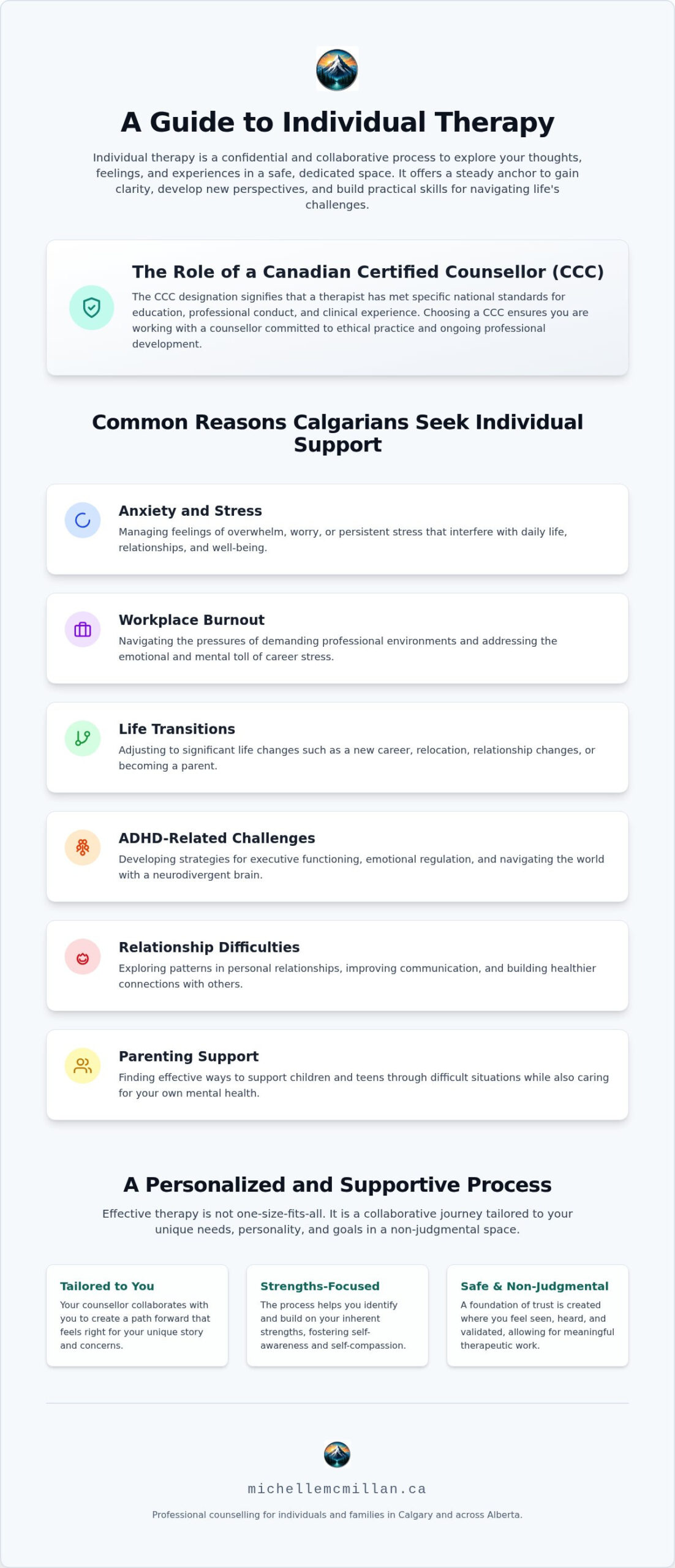
Individual therapy is a confidential and collaborative process where you can explore your thoughts, feelings, and experiences in a safe space with a trained professional. It’s a dedicated time for you—away from the demands of work, family, and daily life—to gain clarity, develop new perspectives, and build practical skills for navigating challenges. For many people in Calgary, life moves at a demanding pace, and individual counselling offers a steady anchor in the midst of it all.
This process isn’t just for moments of crisis; it’s also a powerful tool for personal growth. It can help you move from a state of just getting by to one where you feel more connected to yourself and your life. Whether you’re dealing with the pressures of a high-stakes career, the complexities of parenting, or the quiet weight of anxiety, therapy provides a supportive environment to understand your inner world and make intentional changes.
The Role of a Canadian Certified Counsellor (CCC)
When seeking individual therapy in Calgary, you may come across different professional designations. A Canadian Certified Counsellor (CCC) is a credential issued by the Canadian Counselling and Psychotherapy Association (CCPA). This designation signifies that a therapist has met specific national standards for education, professional conduct, and clinical experience. For residents of Alberta, choosing a CCC ensures you are working with a counsellor who is committed to ethical practice and ongoing professional development.
The relationship you build with your counsellor is at the heart of the therapeutic process. It’s a partnership built on trust, where your unique experiences are honoured. A qualified counsellor works alongside you, offering guidance and support without judgment, helping you to identify patterns and build on your inherent strengths.
Common Reasons Calgarians Seek Individual Support
Living in a vibrant and fast-paced city like Calgary comes with a unique set of pressures. Many people seek individual counselling to address challenges that feel specific to their environment and lifestyle. Some common reasons for seeking support include:
- Anxiety and Stress: Managing feelings of overwhelm, worry, or persistent stress that interfere with daily life, relationships, and well-being.
- Workplace Burnout: Navigating the pressures of demanding professional environments, finding a healthier work-life balance, and addressing the emotional and mental toll of career stress.
- Life Transitions: Adjusting to significant life changes such as a new career, relocation, relationship changes, or becoming a parent.
- ADHD-Related Challenges: Developing strategies for executive functioning, emotional regulation, and navigating the world with a neurodivergent brain.
- Relationship Difficulties: Exploring patterns in personal relationships, improving communication, and building healthier connections with others.
- Parenting Support: Finding effective ways to support children and teens through difficult situations while also caring for your own mental health.
Ultimately, individual therapy is a partnership aimed at helping you better understand yourself and develop the tools you need to navigate life with greater confidence and ease.
A Personalized Approach to Individual Therapy in Calgary
Effective therapy is not a one-size-fits-all solution. It’s a process tailored to your specific needs, personality, and goals. A personalized approach means your counsellor takes the time to understand your story, listen to your concerns, and collaborate with you on a path forward that feels right for you. This often involves exploring not just the challenges you face, but also your strengths and values.
In this supportive environment, you can feel safe to be vulnerable and explore difficult topics. The focus is on creating a non-judgmental space where you feel seen, heard, and validated. This foundation of trust is essential for meaningful therapeutic work, whether you are an adult seeking support for anxiety, a parent navigating the complexities of neurodiversity, or a teen trying to find your place in the world.
Supporting Neurodiversity and ADHD
For individuals and families living with ADHD, individual therapy can be a transformative resource. Counselling provides a space to move beyond simply managing symptoms and toward a deeper understanding of the ADHD brain. A therapist experienced in neurodiversity can help you or your child develop practical tools for challenges related to executive functioning, such as organization, time management, and emotional regulation.
The goal is to foster self-awareness and self-compassion, empowering you to work with your unique strengths rather than against them. This kind of specialized support can make a significant difference in school, work, and relationships, helping to reduce frustration and build confidence. For parents, it can also provide valuable guidance on how to best support a neurodivergent child or teen.
Learn more about specialized support for ADHD and other areas of focus.
Counselling for Life Transitions and Personal Growth
Adults often seek counselling when facing significant life transitions or feeling stuck in unhelpful patterns. Whether it’s navigating a career change, adjusting to an empty nest, or dealing with the cumulative effects of burnout, therapy offers a space to process these experiences and redefine your path forward.
Individual counselling can help you identify the core issues contributing to feelings of stress or dissatisfaction. It’s an opportunity to explore your identity outside of the various roles you play—as a professional, a partner, or a parent—and reconnect with what is truly important to you. The work often involves building self-awareness, setting healthy boundaries, and developing coping strategies that support your long-term mental health and personal growth.
The Benefits of Virtual Therapy for Alberta Residents
In recent years, virtual therapy has become a vital and effective way for people to access mental health support. For those seeking individual therapy in Calgary and across Alberta, online counselling offers a level of convenience and accessibility that removes many traditional barriers to care.
One of the most significant advantages is the elimination of travel time. You can attend your session from the comfort of your home or office, without worrying about traffic, parking, or navigating unpredictable weather. This convenience makes it easier for busy professionals and parents to fit therapy into their demanding schedules consistently. Furthermore, many people find that being in their own familiar environment helps them feel more relaxed and open, which can deepen the therapeutic process. Professional counsellors use secure and confidential platforms designed to protect your privacy, ensuring the integrity of your sessions.
Accessibility Across Calgary and Beyond
Virtual counselling expands access to specialized care beyond the city limits of Calgary. Michelle McMillan Counselling provides online support to individuals and families throughout Alberta, as well as in other Canadian provinces where she is eligible to practise, including British Columbia, Saskatchewan, and Manitoba. This model is particularly beneficial for those living in smaller communities or rural areas where local mental health resources may be limited.
It also removes barriers for individuals with mobility challenges, chronic illness, or childcare constraints that might otherwise make attending in-person appointments difficult. Virtual therapy ensures that high-quality, professional support is accessible to more people, regardless of their location or circumstances. You can explore a full range of virtual counselling services to see what options are available.
Is Virtual Counselling Right for You?
Many people wonder if a virtual connection can be as strong as one formed in person. Experience has shown that a deep and effective therapeutic relationship can absolutely be built through a screen. For some, the screen can even act as a comfortable buffer, making it easier to open up about sensitive topics.
To ensure a successful virtual session, it’s helpful to prepare a few things:
- A private space: Find a quiet, confidential room where you will not be interrupted.
- A stable internet connection: A reliable connection ensures your session runs smoothly without technical disruptions.
- Time for yourself: Try to schedule a few minutes before and after your session to transition, just as you would with an in-person appointment.
If you are comfortable using video calls for work or personal conversations, you will likely adapt to virtual therapy with ease. It offers a modern, flexible, and effective way to prioritize your mental health.
How to Prepare for Your First Counselling Session
Taking the step to book your first counselling session is a significant one. It’s normal to feel a mix of hope and nervousness. A little preparation can help you feel more grounded and ready to make the most of your initial meeting. The primary goal of the first session is not to find immediate fixes, but to begin building a trusting relationship and determine if the counsellor is the right fit for you.
- Reflect on Your Goals: Take some time to think about what prompted you to seek therapy. What are the main challenges you’re facing? What do you hope to change or feel differently about? You don’t need to have all the answers, but having a general idea can provide a helpful starting point.
- Prepare Your Space: For a virtual session, ensure your physical environment is comfortable and private. Turn off notifications, get a glass of water, and do whatever you need to feel settled and present.
- Jot Down Questions: It’s a good idea to have a few questions ready for the counsellor. This is your opportunity to learn about their approach and see if it aligns with your needs.
- Be Open and Honest: Remember that your counsellor is there to support you, not to judge you. The more open you can be about your experiences and feelings, the more they will be able to help.
Setting Goals for Therapy
Your first session is a chance to start a conversation about what you want to achieve. A good therapist will work with you to clarify your goals and establish a focus for your sessions. You might be asked questions like, “What would be different in your life if therapy were successful?” or “What are some of the biggest sources of stress for you right now?”
This initial conversation is about “finding the fit.” It’s crucial that you feel comfortable and understood by your counsellor. This is a collaborative relationship, and you are an active partner in your own therapeutic journey. Trust your instincts—a strong therapeutic alliance is one of the most important predictors of positive outcomes in therapy.
What to Ask a Potential Calgary Therapist
Feeling prepared with a few questions can help you gauge whether a therapist is the right choice for you. This is an important professional relationship, and you have the right to ensure it feels like a good match. Consider asking:
- What is your experience working with people who are dealing with [your specific concern, e.g., anxiety, ADHD, parenting challenges]?
- How would you describe your general approach to counselling?
- What does a typical session with you look like?
- How do you work with clients to set and track progress toward their goals?
Listen not only to their answers but also to how you feel during the conversation. Do you feel a sense of warmth and professionalism? Do you feel heard and respected? This initial connection is a key indicator of your future work together.
Taking the First Step with a Calgary Therapist
Investing in your mental health through individual therapy is a powerful act of self-care. It’s a commitment to understanding yourself more deeply and building a more fulfilling life. In a city as dynamic as Calgary, taking the time to pause and reflect with a professional guide can provide the clarity and support needed to navigate life’s complexities with greater resilience.
Remember, seeking help is a sign of strength. It shows a willingness to face challenges head-on and a commitment to your own well-being. A compassionate and qualified counsellor can walk alongside you, offering new perspectives and practical tools to help you move forward. You don’t have to figure it all out on your own.
Connecting with Michelle McMillan
Michelle McMillan, a Canadian Certified Counsellor (CCC) with a Master of Arts in Counselling Psychology, offers virtual therapy for youth, individuals, couples, and families. Her practice is focused on providing a supportive, non-judgmental space for clients in Calgary and across Alberta. With the convenience of virtual counselling, getting started is straightforward and fits into your real life without the added stress of logistics. If you are ready to explore how individual therapy might benefit you, you are invited to reach out.
To inquire about services or book a consultation, please visit the contact page.
Your Path Forward Starts Here
Change is possible, and you have the capacity to grow and heal. With the right support, you can develop a deeper understanding of yourself, improve your relationships, and build a life that feels more aligned with your values. Taking the first step is often the hardest part, but it opens the door to a more intentional and peaceful future.
Book a consultation today to begin your journey with compassionate virtual therapy in Calgary.
Frequently Asked Questions About Individual Therapy in Calgary
Here are answers to some common questions people have when considering counselling.
Is individual therapy in Calgary covered by my insurance?
Many extended health benefit plans in Canada cover counselling services provided by a Canadian Certified Counsellor (CCC). However, coverage varies significantly between providers and plans. It is essential to check directly with your insurance company to confirm the details of your coverage, including the amount covered per session and any annual maximums.
How long does a typical counselling session last?
The length of a counselling session can vary depending on the therapist and the needs of the client. It’s a good practice to discuss session length, frequency, and scheduling with a potential counsellor during your initial consultation so you know what to expect.
What is the difference between a counsellor and a psychologist in Alberta?
In Alberta, both counsellors and psychologists are mental health professionals, but they have different educational backgrounds and regulatory bodies. Psychologists typically have a doctoral degree (Ph.D. or Psy.D.) and are regulated by the College of Alberta Psychologists. Counsellors and therapists often have master’s degrees and may be members of professional associations like the CCPA, which grants the CCC designation. Both can provide effective therapy, but their scope of practice can differ. For example, only psychologists can provide a formal mental health diagnosis.
Can individual therapy help with my child’s ADHD diagnosis?
Yes, counselling can be very beneficial for children and youth with ADHD, as well as for their parents. A therapist can help a child develop skills for emotional regulation, social interaction, and managing executive function challenges. Therapy also provides a safe space for them to talk about their frustrations and build self-esteem. For parents, counselling can offer strategies and support for navigating the unique challenges of raising a neurodivergent child.
How many sessions will I need before I start feeling better?
The duration of therapy is highly individual and depends on your unique circumstances, goals, and the complexity of the issues you’re addressing. Some people find benefit from short-term, solution-focused therapy, while others engage in longer-term work for deeper exploration. This is a topic you and your counsellor will discuss together as your work progresses.
What happens if I don’t feel a connection with my therapist after the first session?
The therapeutic relationship, or “fit,” is one of the most important factors in successful therapy. It is perfectly okay if you don’t feel a connection with the first therapist you meet. A professional counsellor will understand this and should support you in finding someone who is a better fit for your needs and personality. Don’t be discouraged—it can sometimes take a few tries to find the right person.
Is virtual therapy secure and private for Calgary residents?
Professional counsellors are bound by strict ethical and legal standards of confidentiality. They use virtual health platforms that are designed to be secure and comply with Canadian privacy legislation (like PIPA in Alberta) to protect your personal health information. It is always a good idea to ask a potential therapist about the specific platform they use and the privacy measures they have in place.

Article by
Michelle McMillan, MACP, CCC
Michelle McMillan is a Canadian Certified Counsellor (CCC) with a Master of Arts in Counselling Psychology (MACP). She has extensive experience working with children and supporting clients with ADHD, neurodivergence, anxiety, emotional regulation, relationships and family challenges. Michelle provides virtual counselling for adults throughout Alberta, British Columbia, Saskatchewan and Manitoba and primarily in-person counselling for children and families in Calgary.
Important Information
This article is provided for general educational and informational purposes only and is not a substitute for professional counselling, psychological, medical or emergency services. Information shared here should not be considered a diagnosis or individualized treatment advice. If you are experiencing a mental health emergency or are in immediate danger, please contact appropriate emergency services in your area.