
Understanding Family-Focused ADHD Therapy in Calgary
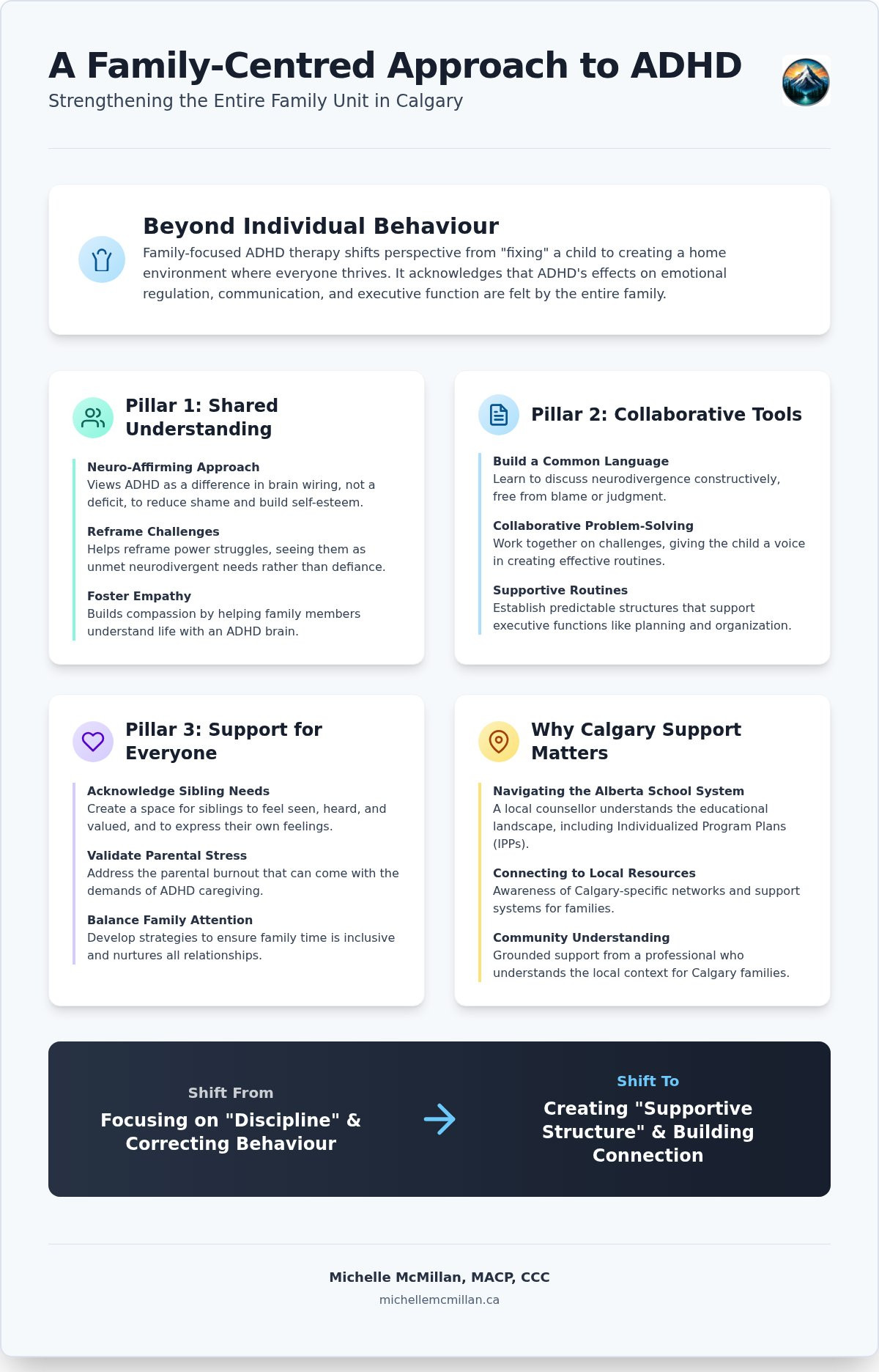
When a child has ADHD, the effects are felt by the entire family. While individual therapy for the child can be beneficial, family-focused ADHD therapy in Calgary takes a broader view. It acknowledges that challenges with emotional regulation, executive function, and communication don’t happen in a vacuum. This approach shifts the focus from “fixing” a child’s behaviours to strengthening the family unit as a whole.
Family counselling provides a space to understand how ADHD influences daily interactions, helping parents and siblings develop shared strategies and a common language. It centres on building empathy, improving communication, and creating a home environment that supports every member.
- Defining family-focused support: Moving beyond child-only sessions to include parents and siblings in the therapeutic process.
- The role of emotional regulation: Learning strategies as a family to co-regulate and manage the intense emotions that can arise in a neurodivergent household.
- The value of a neuro-affirming approach: Viewing ADHD as a difference in brain wiring, not a deficit, which helps reduce shame and build self-esteem.
- Validating parental stress: Acknowledging and addressing the “parental burnout” often associated with the demands of ADHD caregiving.
Identifying the Impact of ADHD on Family Dynamics
The characteristics of ADHD, such as impulsivity, inattention, and hyperactivity, can create persistent friction within a family. What may look like defiance or a lack of discipline is often a manifestation of a neurodevelopmental difference. Family therapy helps to reframe these challenges.
- Repetitive power struggles: ADHD can make it difficult for children to follow multi-step directions, transition between tasks, or manage frustration, often leading to recurring conflicts over homework, chores, and routines.
- The impact on parental relationships: Differing views on parenting strategies, discipline, and how to best support a child with ADHD can cause significant strain between partners.
- Unmet neurodivergent needs: Conflict often arises when a child’s needs for structure, sensory input, or emotional support are not fully understood or met, leading to meltdowns or withdrawal.
Why Local Support Matters for Calgary Families
Choosing a therapist in Calgary offers distinct advantages for families navigating ADHD. A local professional is familiar with the regional context, which can be a significant asset when developing practical support strategies for your family.
- Navigating the Alberta school system: A counsellor with local experience will have a general understanding of the educational landscape, including common challenges families face with Individualized Program Plans (IPPs).
- Connecting with Calgary-specific resources: Calgary has a network of support systems, and a local therapist is often aware of these resources. For more information, you can explore this guide to ADHD support in Calgary.
- The value of community understanding: Working with a professional who understands the unique pressures and opportunities for families in Calgary adds a layer of relevant, grounded support.
Key Pillars of Support for Families with ADHD
Effective family counselling for ADHD moves beyond simple behaviour charts. It aims to equip the entire family with tools for communication, collaboration, and mutual understanding. The goal is to create a supportive structure where every member can thrive.
- Building a common language: Learning to talk about neurodivergence in a positive and constructive way, free from blame or judgment.
- Developing collaborative problem-solving: Working together to find solutions for common challenges, giving the child a voice in creating routines that work for their brain.
- Addressing the unique needs of siblings: Ensuring that siblings of a child with ADHD feel seen, heard, and valued, and providing them with a space to express their own feelings.
– Establishing supportive routines: Creating predictable structures that support executive function (like planning and organization) without becoming a source of constant conflict.
Beyond Behaviour Management
Many traditional approaches to ADHD focus heavily on managing or correcting behaviour. A family-systems approach, however, seeks to understand the “why” behind the behaviour. This shift in perspective is fundamental to building connection and reducing conflict.
- Shifting from “discipline” to “supportive structure”: Instead of focusing on punishment for mistakes, the emphasis is on creating scaffolds and supports that help the child succeed.
- Understanding the “why”: Exploring the reasons behind impulsive or hyperactive behaviours, such as sensory seeking, emotional dysregulation, or executive function challenges.
- Fostering empathy: Helping parents and siblings understand what it feels like to navigate the world with an ADHD brain, which reduces frustration and builds compassion.
Supporting the Sibling Experience
In a household where one child has high support needs, siblings can sometimes feel overlooked or burdened. Their experience is a crucial part of the family dynamic, and addressing it directly is a key component of comprehensive family counselling in Calgary.
- Acknowledging feelings: Creating a safe space for siblings to voice feelings of frustration, jealousy, or resentment without guilt.
- Ensuring every family member feels heard: Dedicating time and attention to each child’s individual needs and interests.
- Strategies for balanced family attention: Developing practical ways to ensure family time is inclusive and that sibling relationships are nurtured.
Choosing the Right ADHD Therapist in Calgary
Finding a therapist who is a good fit for your family is one of the most important steps. It’s about more than just qualifications; it’s about finding a professional whose approach resonates with your family’s values and needs. When searching for therapy for a family with an ADHD child in Calgary, consider the following factors.
- Understanding professional designations: Knowing the difference between titles like Canadian Certified Counsellor (CCC) and Psychologist can help you make an informed choice.
- Evaluating a counsellor’s experience: Look for a therapist with specific experience working with neurodivergence, children, and family systems.
- The importance of a good therapeutic fit: The relationship you build with your counsellor is key. Look for someone who is non-judgmental, validating, and makes your family feel comfortable.
- Comparing service formats: Consider whether in-person sessions in Calgary or virtual appointments are a better fit for your family’s schedule and needs.
Qualifications to Look For: MACP and CCC
In Alberta, the terms “therapist” and “counsellor” are often used interchangeably, but the credentials behind the titles are important. Two common qualifications you will see are a Master of Arts in Counselling Psychology (MACP) and the Canadian Certified Counsellor (CCC) designation.
- Master of Arts in Counselling Psychology (MACP): This is a graduate-level degree that provides extensive training in psychological theories, therapeutic techniques, and ethical practice.
- Canadian Certified Counsellor (CCC): This is a national certification provided by the Canadian Counselling and Psychotherapy Association (CCPA). It indicates that a counsellor has met specific standards for education and professional experience and is accountable to a code of ethics. Many employee benefits plans provide coverage for services provided by a CCC.
- The importance of specialized focus: Beyond general credentials, a therapist’s specific focus and experience in ADHD and family dynamics are often the most significant factors in finding the right support.
In-Person and Virtual Counselling Options
Modern therapy offers more flexibility than ever. For families in Calgary, in-person sessions provide a dedicated space away from home to focus on communication and connection. This can be particularly helpful for children and families who benefit from a structured, face-to-face environment.
Virtual counselling is another option that offers flexibility, especially for parents seeking individual support or for families with complex schedules. It allows access to therapy from home, which can be a convenient choice for adults seeking support across Alberta. When choosing, consider what format would best serve your family’s unique situation and preferences.
Preparing for Your Family’s First Counselling Session
Starting therapy can feel like a big step. A little preparation can help everyone feel more at ease and make the first session more productive. The goal isn’t to have all the answers, but to enter the process with an open mind and a willingness to engage.
- Setting initial family goals: Think about what you hope to achieve. Is it a calmer home, better communication, or fewer morning meltdowns?
- How to talk to your child or teen about starting therapy: Frame it as a positive step for the whole family to learn new skills together.
- Thinking about your family’s main challenges: It can be helpful to reflect on the primary sources of conflict or stress in your household.
- Preparing questions for your counsellor: Don’t hesitate to ask about their approach, their experience with ADHD, and what you can expect from the process.
Communicating with Your Child About Support
How you introduce the idea of therapy can have a big impact on your child’s willingness to participate. It’s important to present it as a collaborative tool, not a punishment or a sign that they are “the problem.” For more guidance, you might find this guide for parents on child counselling useful.
- Frame therapy as a tool for the whole family: Use “we” language. For example, “We are going to meet with someone who will help us learn how to work together better as a family.”
- Normalize asking for help: Explain that just like people go to a doctor for their physical health, families can talk to a counsellor to improve their emotional health and relationships.
- Ensure the child feels involved: Ask for their input and acknowledge their feelings about the process, ensuring they feel their voice is heard.
Establishing Expectations for Growth
Progress in family therapy is rarely a straight line, especially when ADHD is involved. It’s a process of learning, trying new things, and adjusting as you go. Setting realistic expectations can help your family stay motivated and recognize small victories along the way.
- Understand that progress happens in small steps: Change often comes from consistent, small shifts in communication and interaction, not from a single breakthrough moment.
- The role of consistency: Attending sessions regularly and practicing new strategies between appointments is important for building momentum.
- How to measure success: Look for signs of progress beyond just “better behaviour.” Success might look like a quicker recovery after a meltdown, a sibling showing more empathy, or a parent feeling more confident.
Professional ADHD Support for Families with Michelle McMillan
Michelle McMillan, MACP, CCC, offers professional counselling services for children, families, and individuals in Calgary. With extensive experience in supporting those with ADHD and neurodivergence, Michelle provides a compassionate and collaborative space to address family challenges, improve emotional regulation, and build stronger relationships.
Supporting Calgary Parents and Families
Michelle’s work with children and families is primarily offered through in-person sessions in Calgary. This format provides a dedicated environment for families to connect and work through challenges together. She focuses on helping families develop practical strategies for managing the day-to-day realities of ADHD while fostering a sense of connection and understanding.
- A safe space for parents: Offering parents a non-judgmental environment to discuss their own stress, anxieties, and parenting challenges.
- Focusing on the whole family: Working with the entire family unit to improve communication and develop strategies for emotional regulation.
- Guidance through life transitions: Providing professional guidance to help families navigate the challenges that come with growth and change.
Accessing Virtual Counselling in Alberta
In addition to in-person services in Calgary, Michelle McMillan offers virtual counselling for adults. This flexible format provides convenient support for individuals and parents across Alberta and in other eligible provinces. Virtual therapy can be an effective way for adults to access support for parenting, anxiety, and other personal challenges from the comfort of their own home.
Frequently Asked Questions About ADHD Family Therapy
- Is family therapy or individual therapy better for a child with ADHD?
- Neither is inherently “better”; the best approach depends on the family’s specific needs. Individual therapy can help a child build skills and self-esteem. Family therapy is beneficial for addressing how ADHD impacts relationships, communication, and the home environment. Often, a combination of both can be very effective.
- What is the difference between a Calgary psychologist and a Canadian Certified Counsellor?
- Both are mental health professionals, but their regulation and scope of practice differ. Psychologists are regulated at the provincial level and can provide a formal diagnosis. Canadian Certified Counsellors (CCCs) are certified nationally by the CCPA and provide counselling and therapy services. Many, like Michelle McMillan, have master’s-level education in counselling psychology. The best fit depends on your needs—whether you require a formal diagnosis or are seeking therapeutic support for your family.
- How long does it typically take to see progress in ADHD family therapy?
- There is no set timeline for progress, as every family is unique. Some families notice small shifts in communication and understanding within the first few sessions, while others may work toward longer-term goals. Consistency and a willingness to engage in the process are key factors.
- Can virtual counselling be effective for children with high energy or focus issues?
- The effectiveness of virtual counselling for children with ADHD varies greatly. Some children adapt well to the format, while others may find it difficult to engage without the structure of an in-person setting. It’s an important factor to discuss with a potential therapist to determine the best fit for your child’s specific needs.
- Do we need an official ADHD diagnosis before starting family therapy in Calgary?
- No, a formal diagnosis is not required to begin family therapy. Many families seek support based on observed behaviours and challenges. Counselling can help you navigate these issues and develop strategies regardless of whether a formal diagnosis is in place.
- How can I support my other children who do not have ADHD?
- Family therapy is an excellent place to address this. Key strategies include carving out one-on-one time with each child, creating a space where they can express their feelings without judgment, and educating them about ADHD in an age-appropriate way to foster empathy.
- What should I do if my partner and I disagree on ADHD treatment?
- Disagreements between parents are very common. Family counselling provides a neutral, mediated space where both partners can voice their perspectives and concerns. A therapist can help you find common ground and develop a consistent parenting approach you both feel good about.
- How much does family counselling in Calgary typically cost?
- The cost of counselling varies depending on the therapist’s credentials, experience, and session length. It’s best to inquire directly with potential counsellors about their rates. You can also check with your extended health benefits provider to see if services from a Canadian Certified Counsellor (CCC) are covered under your plan.
If you are ready to explore how professional support can help your family navigate the challenges of ADHD, you can view rates and book a session with Michelle McMillan, MACP, CCC.

Article by
Michelle McMillan, MACP, CCC
Michelle McMillan is a Canadian Certified Counsellor (CCC) with a Master of Arts in Counselling Psychology (MACP). She has extensive experience working with children and supporting clients with ADHD, neurodivergence, anxiety, emotional regulation, relationships and family challenges. Michelle provides virtual counselling for adults throughout Alberta, British Columbia, Saskatchewan and Manitoba and primarily in-person counselling for children and families in Calgary.
Important Information
This article is provided for general educational and informational purposes only and is not a substitute for professional counselling, psychological, medical or emergency services. Information shared here should not be considered a diagnosis or individualized treatment advice. If you are experiencing a mental health emergency or are in immediate danger, please contact appropriate emergency services in your area.