
Parenting is rarely a predictable endeavour. While books and online resources frequently present family life through tidy frameworks, the day-to-day reality in many households involves navigating persistent communication hurdles, emotional escalations, and the ongoing coordination of busy schedules. When family friction becomes an ongoing pattern rather than an occasional rough afternoon, parents often find themselves searching for grounded, professional perspectives.
Seeking parenting support counselling Calgary families can rely on is not an indication of parental inadequacy. Rather, it represents a constructive, proactive step toward understanding household dynamics, developing clearer communication patterns, and establishing supportive boundaries. Professional counselling provides an objective, confidential setting where parents can explore their unique family circumstances, step back from daily crises, and consider practical strategies tailored to their specific needs.
Understanding Parenting Support Counselling in Calgary: When Daily Routines Feel Overwhelming
Parenting support counselling is a specialized area of professional counselling focused on parental well-being, caregiving strategies, and the relational systems within a household. Unlike casual parenting advice, generic social media tips, or prescriptive parenting classes, counselling is not designed to tell parents how to run their homes through a rigid, one-size-fits-all curriculum. Instead, it offers an evidence-informed, collaborative framework where parents can explore the underlying emotional and relational factors that influence daily family interactions.
For families living in Calgary, everyday pressures can contribute substantially to parental fatigue. Balancing demanding professional schedules in fast-paced work environments, managing complex school commutes, coordinating children’s extracurricular commitments, and enduring long winter months that limit outdoor physical outlets can all increase domestic tension. When routines become disrupted or stress levels remain chronically elevated, small miscommunications between family members can rapidly escalate into recurring arguments or emotional exhaustion.
Professional counselling approaches these challenges with the understanding that a child’s behaviour does not exist in an isolated vacuum. Families operate as interconnected emotional units. When parents receive dedicated professional space to reflect on their own stress responses, processing styles, and communication habits, they are better equipped to respond deliberately rather than reactively to challenging situations at home.
The Distinct Role of Parent-Centred Counselling
A frequent misconception regarding family therapy and parenting support is that the child must always be present in the counselling room. While child and family counselling frequently involves direct observation and collaborative sessions with children, parent-centred counselling focuses specifically on the adult caregivers.
In parent-focused sessions, caregivers have the freedom to speak candidly about their frustrations, fatigue, uncertainties, and disagreements without concern over how their words might affect their children. This space allows parents to:
- Examine Personal Stress Triggers: Understand how their own physiological and emotional states influence their reactions to child defiance, emotional outbursts, or withdrawal.
- Clarify Core Parenting Values: Distinguish between societal expectations, external pressures from extended family, and the foundational values they genuinely wish to prioritize in their own home.
- Align Co-Parenting Approaches: Provide a structured environment for partners or co-parents to discuss differing disciplinary styles, expectations, and household rules to foster greater consistency.
- Process Caregiver Burnout: Acknowledge the emotional weight of caregiving—particularly when supporting children with complex needs—without fear of judgement or blame.
Because caregivers establish the relational climate of the home, prioritizing parental emotional stability often serves as a practical, stabilizing foundation for the entire family system.
Recognizing When Professional Support Is Warranted
Every family experiences periods of friction, developmental shifts, and emotional growing pains. However, there are circumstances where everyday challenges begin to overwhelm a family’s typical coping strategies. Professional counselling support may be beneficial when parents observe:
- Persistent Daily Conflict: Routine interactions—such as morning departures, homework time, screen transitions, or bedtime routines—regularly result in intense arguments, resistance, or distress.
- Caregiver Depletion: Parents feel emotionally drained, hypervigilant, or chronically anxious about being at home, feeling as though they are continually anticipating the next disruption.
- Disciplinary Stalewates: Standard strategies like time-outs, loss of privileges, or reasoning no longer seem effective and instead appear to amplify defiance or emotional disconnection.
- Major Family Adjustments: The household is experiencing significant structural transitions, such as separation, divorce, the integration of a blended family, relocation, or serious illness.
- School and Social Concerns: Ongoing notifications from educators regarding behavioural difficulties, peer conflicts, or academic distress that spill over into home life.
Engaging with professional counselling services early can help families examine emerging patterns before interpersonal habits become deeply entrenched and harder to adjust.
Common Family Challenges Addressed in Parenting and Family Counselling
Modern family life presents a variety of complex challenges that can test even the most deliberate parenting strategies. Professional counselling provides an objective setting to examine these hurdles systematically, helping parents develop clarity around normal developmental stages versus behaviours that may benefit from targeted therapeutic support.
Navigating Neurodivergence and ADHD in the Home
Parenting a neurodivergent child—such as a child diagnosed with Attention Deficit Hyperactivity Disorder (ADHD), autism spectrum differences, or sensory processing variations—requires adjustments to conventional parenting models. Standard disciplinary techniques often rely on linear cause-and-effect reasoning and delayed reinforcement, which may not align with how a neurodivergent nervous system processes information and regulates executive functions.
In homes where neurodivergence is present, parents frequently encounter challenges related to:
- Executive Function Demands: Difficulties with working memory, organization, prioritizing tasks, and managing time, which can manifest as chronic forgetfulness, messiness, or perceived defiance.
- Sensory Sensitivities: Environmental overwhelm caused by auditory, visual, tactile, or social stimuli, frequently leading to sudden meltdowns or deep withdrawal.
- Emotional Dysregulation: Heightened emotional reactivity where transitions, perceived demands, or minor frustrations generate intense emotional responses that take significant time to subside.
- Informal Rejection Sensitivities: Some individuals experience acute emotional responses to perceived criticism, teasing, or disapproval. While often referred to informally as Rejection Sensitive Dysphoria (RSD), it is important to note that RSD is an informal descriptive term rather than a formal psychiatric diagnosis. Understanding this pattern, however, helps caregivers view extreme reactions through a lens of emotional vulnerability rather than intentional opposition.
For families seeking structured guidance in this area, exploring dedicated ADHD support in Calgary can assist parents in designing supportive household routines, visual cues, and realistic expectations that account for neurodivergent profiles.
Emotional Regulation and Co-Regulation Fundamentals
A frequent area of focus in parenting support counselling is the concept of co-regulation. In developmental psychology and family counselling, co-regulation refers to the collaborative process through which a calm, emotionally grounded caregiver provides the external scaffolding necessary to help an emotionally overwhelmed child regain equilibrium.
Children do not possess fully mature neurological structures for self-regulation; they develop these capacities over time largely through repeated experiences of being regulated alongside an adult. However, co-regulation is challenging when the parent is also dysregulated. If a child’s emotional outburst triggers panic, anger, or frustration in the caregiver, the two individuals can enter an escalatory cycle known as reciprocal dysregulation.
In counselling, parents explore the mechanics of this dynamic by examining:
- Physiological Awareness: Learning to detect the subtle physical cues of rising stress (muscle tension, elevated heart rate, shallow breathing) before verbal reactions occur.
- De-escalation Strategies: Developing low-stimulus communication techniques, such as lowering vocal volume, using concise language, and providing safe physical space during peak distress.
- Post-Crisis Repair: Creating predictable routines for reconnection after conflict has passed, reinforcing emotional security without dismissing the boundary that was originally set.
Managing Family Transitions and Relationship Strains
Family configurations and circumstances change over time, and significant adjustments often generate friction as each member adapts to new expectations and roles. Counsellors regularly work with families navigating complex transitional phases, including:
- Co-Parenting Differences: Conflicts between partners regarding boundaries, screen time limitations, academic expectations, and disciplinary consequences. Counselling helps caregivers identify common values and negotiate consistent household agreements.
- Separation and Divorce: Structuring predictable routines across two separate households, managing transitions between homes, and minimizing the exposure of children to parental disputes.
- Blended Family Dynamics: Defining the role of step-parents, addressing feelings of divided loyalty among siblings or children, and establishing new family traditions at an appropriate pace.
- Adolescent Identity and Autonomy: Negotiating the natural developmental shift as teenagers seek greater independence, requiring parents to transition from direct management toward supportive guidance.
Caregivers interested in learning more about how therapeutic discussions address these dynamics can review the practice’s comprehensive areas of focus.
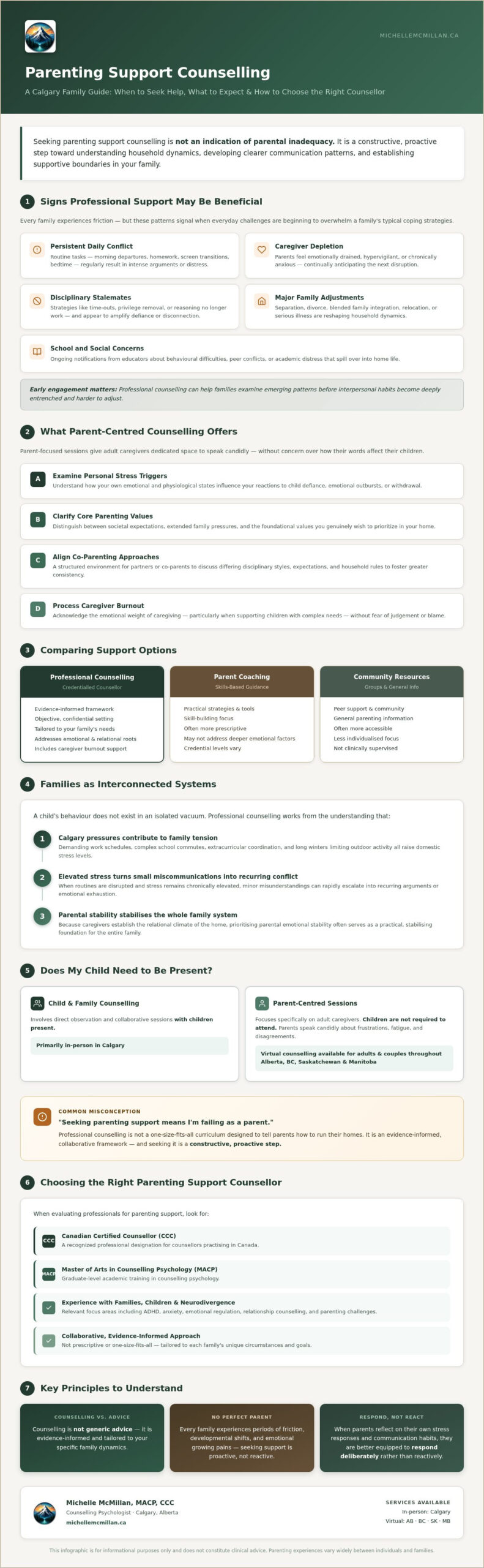
Comparing Support Options: Counselling, Parent Coaching, and Community Resources
When seeking assistance with family challenges, parents in Calgary often encounter a wide range of services, including community workshops, parenting coaches, support groups, and registered mental health professionals. While each resource serves a purpose, understanding their distinctions in training, clinical scope, and regulatory standards helps parents choose the support appropriate for their circumstances.
| Support Type | Typical Education & Credentials | Scope of Practice | Oversight & Accountability |
|---|---|---|---|
| Professional Counselling (e.g., Canadian Certified Counsellor) |
Master’s degree in Counselling Psychology (MACP) or equivalent; supervised clinical practicum. | Addresses relational dynamics, mental health concerns, family systems, trauma, emotional dysregulation, and neurodivergence. | Bound by formal national ethical codes (e.g., Canadian Counselling and Psychotherapy Association) and standards of practice. |
| Parent Coaching | Varies widely; certificate courses, background in education, or self-directed study. Title is unregulated. | Focuses on behavioral strategies, specific parenting philosophies, household organizational habits, and educational tips. | No mandatory provincial or national regulatory body; standards established independently by coaching associations. |
| Community Groups & Peer Support | Facilitated by peer volunteers, community workers, or social service agency coordinators. | Provides shared solidarity, shared experiences, community resource directories, and open discussions. | Governed by host agency operational policies; non-clinical in nature. |
Professional Qualifications and Ethical Oversight
When selecting a mental health provider, evaluating their educational background and professional affiliations is an essential step. In Canada, mental health professions feature distinct scopes of practice and governing bodies:
- Canadian Certified Counsellor (CCC): This designation is granted by the Canadian Counselling and Psychotherapy Association (CCPA). It verifies that a practitioner has completed an accredited master’s degree in counselling or a related field (such as a Master of Arts in Counselling Psychology), completed substantial supervised clinical training, and adheres to the CCPA Code of Ethics. It is a national professional certification rather than provincial regulatory licensure.
- Master of Arts in Counselling Psychology (MACP): A graduate degree focusing on human development, psychotherapeutic theories, family systems, clinical assessment, and ethical practice.
- Registered Psychologists: Regulated provincially by the College of Alberta Psychologists (CAP). Psychologists hold specialized qualifications allowing them to conduct formal psychodiagnostic evaluations, intelligence testing, and psychoeducational assessments.
- Psychiatrists: Medical doctors specializing in psychiatry who are licensed to diagnose mental illnesses, conduct medical evaluations, and prescribe psychiatric medications.
Michelle McMillan holds a Master of Arts in Counselling Psychology (MACP) and is a Canadian Certified Counsellor (CCC). She is not a psychologist or a psychiatrist, does not offer formal diagnostic assessments, and does not prescribe medication. Her practice focuses on providing professional counselling for relational dynamics, emotional regulation, and family challenges.
Evaluating the Depth and Intent of Support
Understanding what each modality provides helps parents select the service that fits their present circumstances. Community parenting groups offer meaningful connection and validation from other parents navigating similar situations, which can reduce isolation. Parenting coaches frequently supply structured advice regarding specific behavioural routines or organization.
However, when family difficulties are intertwined with chronic anxiety, neurodivergence, past relational trauma, or entrenched systemic conflict, professional counselling provides a deeper clinical framework. Counsellors are trained to evaluate how mental health, individual histories, and family dynamics interact, offering a secure space to explore sensitive matters safely.
How to Choose the Right Parenting Support Counsellor in Calgary
Selecting a counsellor for your family is a personal decision. The therapeutic relationship plays a fundamental role in the usefulness of counselling, making it important to find a practitioner whose credentials, communication style, and practice structure match your family’s needs.
Step-by-Step Selection Framework
Parents can follow a structured approach to evaluate prospective therapists in Calgary:
- Define Your Core Needs: Determine whether your primary goal is parent-only reflection, co-parenting alignment, direct child counselling, or comprehensive family counselling in Calgary. Clarifying this focus helps narrow down practitioners with relevant experience.
- Verify Professional Credentials: Check the counsellor’s graduate-level education (such as an MACP) and verify active membership in professional organizations like the CCPA. Confirm that the practitioner is transparent about their credentials and scope of practice.
- Inquire About Relevant Focus Areas: Ask whether the practitioner regularly works with the specific topics your family is facing, such as ADHD, sensory differences, adolescent communication, or blended family transitions.
- Arrange an Initial Consultation: Many counsellors offer an introductory discussion. Use this time to assess their conversational style, openness, and whether you feel comfortable discussing private family matters with them.
During an initial inquiry, parents may find it helpful to ask targeted questions, such as:
- “What is your experience in supporting parents navigating neurodivergence or ADHD?”
- “How do you approach situations where co-parents have different disciplinary philosophies?”
- “What format do you recommend for our situation—parent-only sessions, child sessions, or family meetings?”
- “How are goals established and reviewed over time?”
In-Person Calgary Care vs. Virtual Counselling Formats
Logistics play a significant role in sustaining counselling consistency. Families often balance work hours, school commitments, and extracurricular activities, making session accessibility an important consideration.
At Michelle McMillan Counselling, service formats are organized by client group to accommodate these realities:
- In-Person Calgary Counselling: Counselling services for children and families are provided primarily in-person within Calgary. In-person settings allow for direct interpersonal observation and family engagement in a neutral environment outside the home.
- Virtual Counselling: Virtual counselling sessions are offered to adults and couples located throughout Alberta, as well as in British Columbia, Saskatchewan, and Manitoba. Virtual therapy provides accessible, flexible scheduling for busy parents and working professionals, eliminating commute times across the city.
Neither format is inherently superior; each serves distinct needs depending on the age of the participants, clinical focus, and family scheduling practicalities.
What to Expect in Professional Parenting and Family Support Sessions
Entering counselling for the first time can feel uncertain, particularly for parents who worry their caregiving decisions will be scrutinized. Knowing what happens in typical professional counselling sessions helps clarify the process and lowers hesitation.
The Intake and Initial Discovery Process
The counselling process begins with an intake conversation. This initial phase is focused on gathering context rather than issuing immediate instructions. During this discussion, the counsellor and parents typically review:
- The Presenting Concerns: What specific events, behavioural challenges, or communication breakdowns prompted the decision to seek counselling at this time?
- Family Context and Background: A general review of the family structure, developmental milestones, significant health or educational factors, and previous experiences with support services.
- Routines and Strengths: What systems are currently functioning well in the home, and where do daily friction points occur most predictably?
- Collaborative Goal-Setting: Clarifying what the parents hope to achieve through counselling—whether that involves establishing clearer boundaries, improving co-parenting collaboration, or supporting an emotionally sensitive child.
Parents interested in learning more about the background and professional philosophy supporting these discussions can review the about Michelle background page.
Collaborative Problem-Solving and Ongoing Dialogue
Subsequent counselling sessions balance exploratory conversation with practical reflection. Sessions provide a regular, confidential setting to examine how interactions unfolded over the preceding weeks, discuss what adjustments were attempted, and evaluate what occurred without judgement.
Rather than providing rigid prescriptions, the counsellor helps parents analyze systemic interactions: What happened right before the conflict escalated? How did each person react? What underlying need might have been expressed through that behaviour? Through this ongoing process, parents can cultivate greater clarity regarding their own emotional patterns and test practical adjustments that align with their family’s lifestyle.
Progress in counselling varies from family to family. Meaningful change within relational systems involves consistent practice, honest self-reflection, and realistic expectations regarding childhood development.
Taking the Next Step for Your Family
Seeking support is a measured, responsible decision that prioritizes long-term family stability. If daily family life has become dominated by conflict, exhaustion, or uncertainty, engaging in structured, professional dialogue can provide valuable perspective.
Whether you are seeking parent-focused guidance, support for neurodivergent family dynamics, or collaborative family counselling, you do not have to navigate these complexities in isolation. If you have questions about whether counselling is the appropriate service for your family’s current circumstances, you are invited to reach out through the practice contact page.
Frequently Asked Questions About Parenting Support Counselling in Calgary
What is the primary difference between a parenting coach and a registered counsellor in Calgary?
The primary distinction lies in education, scope of practice, and regulatory oversight. Professional counsellors hold graduate-level degrees (such as a Master of Arts in Counselling Psychology) and belong to professional associations that enforce formal codes of ethics and clinical standards, such as the Canadian Counselling and Psychotherapy Association (CCPA). They are qualified to address complex mental health factors, family systems, trauma, and emotional dysregulation. In contrast, “parent coach” is an unregulated title without mandatory educational requirements or clinical licensing standards, primarily focusing on informational parenting advice and behavioral tips.
Do both parents need to attend parenting support counselling sessions together?
While having both caregivers attend can be helpful for establishing shared strategies and consistent communication, it is not mandatory. Many parents attend sessions individually to explore their personal caregiving approaches, process stress, or clarify their values. In separated or divorced families, co-parents may choose to attend jointly if they share collaborative goals, or attend independent sessions to focus on their respective household environments.
Does Michelle McMillan provide in-person or virtual counselling for Calgary families?
Michelle McMillan provides counselling for children and families primarily in-person in Calgary. Virtual counselling is available for individual adults and couples throughout Alberta, British Columbia, Saskatchewan, and Manitoba. This distinction allows families with young children to benefit from in-person engagement, while offering adult clients the flexibility and convenience of remote sessions.
Can parenting support counselling help if our child has ADHD or sensory differences?
Yes. Counselling provides parents with a dedicated space to examine how ADHD and sensory sensitivities influence daily routines, executive functioning, and emotional regulation. Sessions focus on understanding the neurodivergent profile, establishing predictable household structures, and adapting expectations to reduce daily friction. Michelle McMillan does not provide formal diagnostic assessments or prescribe medication, but offers practical counselling support for neurodivergent challenges.
Is Michelle McMillan a psychologist or psychiatrist?
No. Michelle McMillan is a Canadian Certified Counsellor (CCC) with a Master of Arts in Counselling Psychology (MACP). She is not a registered psychologist, medical doctor, or psychiatrist. She does not perform formal psychological or psychoeducational assessments, provide clinical diagnoses, or prescribe medication.
What should we expect during our first parent counselling consultation?
The initial consultation is a professional, exploratory conversation. You will discuss your family’s current challenges, key concerns, household routines, and what you hope to address through counselling. It offers an opportunity to ask questions regarding the counsellor’s credentials and practice focus, helping you determine whether the service is a suitable fit for your family’s needs.
Can parenting counselling help if our child refuses to participate in therapy?
Yes. Parent-centred counselling does not require the child to attend sessions. Because parents hold significant influence over the relational and emotional environment of the home, modifying parental responses, de-escalation habits, and communication patterns can positively alter family interactions even if the child is not directly involved in therapy.
To review transparent fee structures or schedule an initial appointment, please visit the official rates and booking page.

Article by
Michelle McMillan, MACP, CCC
Michelle McMillan is a Canadian Certified Counsellor (CCC) with a Master of Arts in Counselling Psychology (MACP). She has extensive experience working with children and supporting clients with ADHD, neurodivergence, anxiety, emotional regulation, relationships and family challenges. Michelle offers both virtual and in-person counselling, with virtual counselling available throughout Alberta, British Columbia, Saskatchewan and Manitoba and in-person appointments available in Calgary.
Important Information
This article is provided for general educational and informational purposes only and is not a substitute for professional counselling, psychological, medical or emergency services. Information shared here should not be considered a diagnosis or individualized treatment advice. If you are experiencing a mental health emergency or are in immediate danger, please contact appropriate emergency services in your area.