
What if the constant struggle to “just get started” isn’t a lack of willpower, but a sign that your brain simply processes the world through a different lens? When you’re looking for ADHD counselling Calgary families can rely on, you’re often seeking more than just a list of tips; you’re looking for a way to quiet the noise. You might feel exhausted by the friction at home or the quiet shame that comes when your intentions don’t match your output. It’s draining to feel misunderstood by a world that often demands a linear path you weren’t built to follow.
Finding professional support can be the turning point where frustration finally shifts into genuine understanding. You can discover how virtual counselling provides the practical strategies and emotional regulation tools needed to navigate these hurdles with more ease. This article explores how neurodivergent-informed therapy helps bridge the gap between knowing what to do and actually doing it, while fostering deeper connections and validation within your family. We’ll look at the ways professional support can help you organize your life and your relationships with a sense of calm and steady confidence.
Key Takeaways
- Learn how ADHD impacts emotional regulation and executive function, affecting how individuals navigate school and work in Calgary.
- Discover the benefits of professional ADHD counselling Calgary families can use to move beyond a diagnosis and into practical, day-to-day strategies.
- Explore how virtual therapy reduces the “transition tax” of travel, making it easier to integrate support into a busy neurodivergent schedule.
- Understand how to verify professional designations like Canadian Certified Counsellor (CCC) to ensure your therapist has the right expertise for your needs.
- See how a collaborative approach to family therapy can lower household tension and replace shame with a deeper sense of empathy and validation.
Understanding the Impact of ADHD on Calgary Families
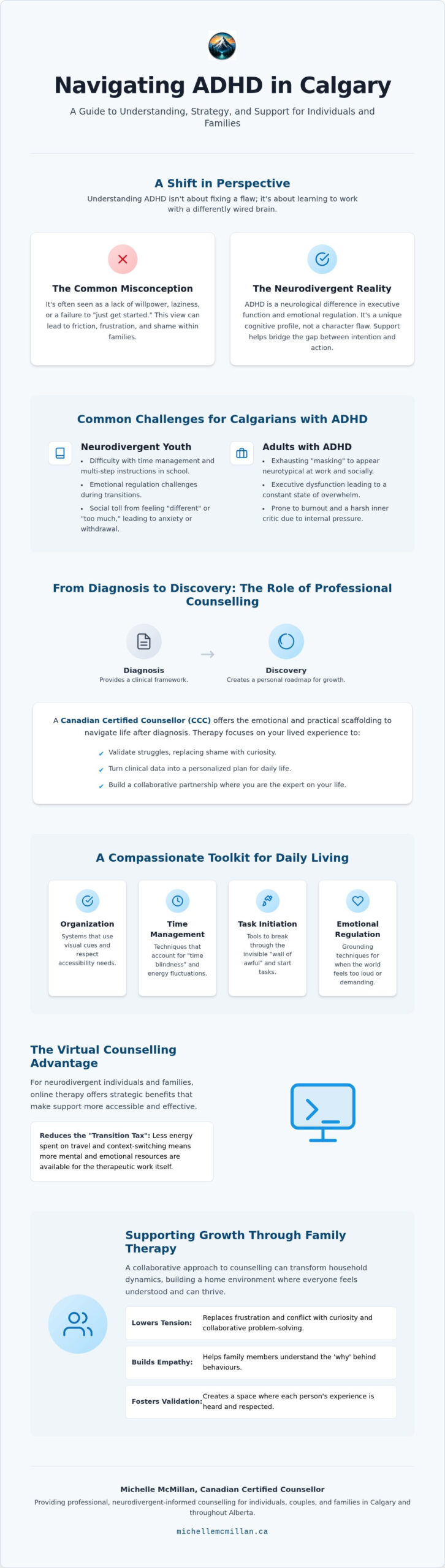
ADHD isn’t just a collection of symptoms; it’s a fundamental neurological difference that shapes how a person experiences the world. In the busy rhythm of Calgary life, these differences often show up as hurdles in executive function and emotional regulation. Whether it’s a student struggling to organize their day or a professional feeling the weight of mounting deadlines, the impact ripples through the entire family unit. Seeking ADHD counselling Calgary services isn’t a sign that you’ve failed as a parent or partner. Instead, it’s a proactive choice to build a home environment where everyone can thrive. Recognizing that your loved one’s brain works differently allows you to replace frustration with curiosity and collaborative problem-solving.
Common Challenges for Neurodivergent Youth in Alberta
Navigating the Alberta education system can feel like an uphill battle for a child whose brain isn’t wired for traditional classroom structures. Students often face significant hurdles with time management, following multi-step instructions, or staying regulated during transitions. Beyond academics, there’s a heavy social toll. Many children and teens in Calgary feel a deep sense of being “different” or “too much,” which can lead to social withdrawal or anxiety. ADHD is a neurological wiring difference that requires tailored strategies to help these young people realize their full potential. When we stop trying to fit a square peg into a round hole, we create space for genuine growth and self-esteem.
Adult ADHD: Beyond Simple Forgetfulness
For adults, the challenges of ADHD often hide behind a veneer of “masking.” This is the exhausting process of trying to appear neurotypical to meet professional and social standards in Calgary’s fast-paced environments. Executive dysfunction might look like a messy desk or missed bills, but for the person living it, it feels like a constant state of overwhelm. This internal pressure often leads to burnout and a harsh inner critic. Individual therapy provides a safe space to dismantle these feelings of inadequacy. Through ADHD counselling Calgary residents can learn to build self-compassion, understanding that their struggles aren’t character flaws but reflections of their unique cognitive profile. It’s about moving toward a life that works with your brain rather than against it.
The Role of Professional Counselling in Managing ADHD
Receiving a diagnosis is often a relief, but it’s only the first chapter of the story. While medical providers offer the clinical framework, a Canadian Certified Counsellor (CCC) provides the emotional and practical scaffolding needed to navigate life after the assessment. ADHD counselling Calgary isn’t about “fixing” a brain; it’s about understanding its unique rhythm. This therapeutic support focuses on your lived experience, helping you manage the emotional regulation that often feels like the most volatile part of neurodivergence. It’s a space where your struggles are validated, not just measured, and where you can begin to see your traits through a lens of curiosity rather than shame.
Moving from Diagnosis to Discovery
The “what now?” phase can feel incredibly lonely. You have the papers and the clinical explanation, but you still face the same daily frustrations at home or work. Therapy helps bridge this gap by turning clinical data into a personal roadmap for growth. We look at how your specific wiring affects your relationships, your self-image, and your peace of mind. This is a deeply collaborative effort. You are the expert on your own life, and a therapist acts as a steady partner, helping you navigate the terrain with more clarity and less self-criticism. It’s about discovering what works for you, rather than what the world says you “should” be doing.
Practical Strategies for Executive Function
Practical tools for daily living are the foundation of this work. We focus on executive function through a lens of compassion. Instead of forcing neurotypical systems that have already failed you in the past, we explore strategies that actually align with how you think. This often includes:
- Organization strategies that respect your need for visual cues and accessibility.
- Time management techniques that account for “time blindness” and energy fluctuations.
- Task initiation tools to help you break through the invisible wall of “not doing.”
Emotional regulation is just as critical as organization. When the world feels too loud or demands feel too heavy, grounding techniques can help you stay present and calm. These aren’t just “coping skills”; they are essential tools for maintaining your well-being and reducing the frequency of burnout. Through ADHD counselling Calgary individuals can find a sense of agency they may have felt was out of reach. For families looking for broader ADHD support Calgary resources, a qualified counsellor can help integrate these strategies into the whole household. If you feel stuck in the cycle of overwhelm, exploring online therapy for emotional regulation can provide the steady support you need to move forward.
Why Virtual ADHD Counselling is a Strategic Choice for Albertans
Transitioning between tasks is one of the most significant challenges for the neurodivergent brain. For many, the “transition tax”, the mental energy required to stop what you’re doing, drive through Calgary traffic, find parking, and settle into a clinical office, can be enough to cause burnout before a session even begins. Choosing ADHD counselling Calgary services through a virtual platform removes these barriers entirely. It allows you to step directly from your daily life into a supportive conversation without the added friction of travel. By staying in a familiar, safe environment, you can focus your energy where it matters most: on your own growth and regulation.
Some worry that a screen might create a distance that makes therapy feel less personal. In reality, virtual sessions often foster a deeper sense of psychological safety. When you’re in your own space, surrounded by your own comforts, your nervous system can settle more quickly. This sense of ease allows for a more authentic connection with your counsellor. It’s not about the physical room; it’s about the presence, empathy, and professional holding provided during the session. It’s a modern way to access traditional care.
Reducing Stress for Neurodivergent Children and Teens
For kids and adolescents, a new office can be sensory-heavy and intimidating. Staying at home allows them to participate from a place where they already feel regulated and secure. They might have a favourite fidget toy or a pet nearby, which helps them stay grounded as they navigate difficult emotions. This format also offers immense relief to parents. You no longer have to juggle the stress of Calgary’s rush hour or coordinate complex schedules just to get to an appointment. For more information on supporting your child, you can explore this child counselling guide for local parents.
Privacy and Convenience in Virtual Care
Virtual care is built on the same rigorous professional standards as in-person therapy. As a Canadian Certified Counsellor (CCC), Michelle McMillan utilizes secure platforms that prioritize your privacy and confidentiality. This modern approach fits seamlessly into the lives of busy Calgary professionals who may only have a specific window of time between meetings. It also ensures that high-quality support is accessible to residents in rural Alberta who might otherwise struggle to find a therapist who understands neurodivergence. Whether you’re in the heart of the city or in a smaller community, professional ADHD counselling Calgary support is available to you wherever you feel most comfortable.
How to Find the Right ADHD Counsellor in Calgary
Starting the search for ADHD counselling Calgary can feel like a daunting task, especially when executive dysfunction makes even small decisions feel heavy. It’s important to remember that you aren’t just looking for a service; you’re looking for a partnership. This process involves more than just checking a list of qualifications. It’s about finding someone who understands the nuances of neurodivergence and can offer a space where you feel truly seen and understood. By following a few clear steps, you can find a professional who aligns with your family’s unique needs and values.
Understanding Professional Designations in Alberta
When researching ADHD counselling Calgary, you’ll likely see various acronyms. A Canadian Certified Counsellor (CCC) is a professional who has met the national standards of the Canadian Counselling and Psychotherapy Association. This designation requires a Master of Arts in Counselling Psychology (MACP), ensuring your therapist has a high level of academic and clinical training. It’s vital to realize that counsellors in this role do not prescribe medication or provide medical diagnoses. Instead, they focus on the therapeutic journey, helping you build practical tools and emotional resilience. You can review the services page to determine if a counsellor’s specific areas of focus, such as individual or family therapy, match what you’re seeking.
Evaluating the Therapeutic Fit
For those living with ADHD, a warm and non-judgmental tone isn’t just a preference; it’s a necessity. Many neurodivergent individuals have spent years feeling “wrong” or “lazy” because their brains process information differently. A therapist who approaches sessions with genuine empathy helps dismantle that shame, creating the psychological safety needed for growth. During your initial inquiry, don’t hesitate to ask questions. You might ask how they support clients with executive dysfunction or what their philosophy is regarding neurodivergent traits. The relationship you build with your counsellor is the most significant predictor of success. If the conversation feels collaborative and supportive from the start, you’re likely on the right path.
Consider how the logistics of virtual care might lower your stress levels and fit into your routine. If a therapist’s style feels like a fit, the next step is a simple reach out. If you’re ready to explore how a steady partner can walk alongside you, connect today to learn more about starting your therapeutic journey.
Supporting Growth Through Individual and Family Therapy
Individual therapy serves as a vital foundation for building personal coping mechanisms and self-understanding. It’s a space where you can explore your neurodivergent traits without the weight of external expectations. While individual work focuses on personal agency, family therapy addresses the broader household dynamic. When every family member understands how ADHD affects their collective rhythm, empathy naturally begins to replace frustration. Emotional regulation is a skill that benefits the entire family unit, not just the individual with the diagnosis. For a deeper look at how these combined approaches support neurodivergent growth, you can explore the area of focus page.
Empowering Youth and Teens with ADHD
For young people, the world often highlights what they struggle to do. Therapy works to shift this narrative, helping youth and teens realize their inherent strengths rather than focusing solely on deficits. It’s about finding what they’re good at and using those traits to navigate the parts of life that feel harder. This is a collaborative process. We work closely with parents to ensure the strategies developed in sessions are supported and understood at home. This partnership is especially important during major life transitions, such as starting high school or preparing for university. These shifts can be particularly taxing for the ADHD brain, but with the right ADHD counselling Calgary families can move through these changes with more ease and less stress.
Strengthening Relationships and Communication
ADHD can deeply impact the way couples and families communicate. Misunderstandings, impulsive reactions, or challenges with executive function often create cycles of conflict that feel impossible to break. Counselling provides a neutral, safe space where these patterns can be untangled without judgment or blame. It’s about learning to speak a shared language and creating systems that respect everyone’s needs. By addressing the emotional undercurrents of your relationships, you can move away from constant reactiveness and toward a state of steady cooperation. Professional ADHD counselling Calgary residents can access provides the tools to build a more harmonious and supportive home life. If you’re ready to explore how this collaborative path can help your family thrive, you’re invited to reach out via the contact page.
Moving Toward a Path of Understanding and Growth
Navigating life with ADHD is about more than just managing symptoms; it’s about realizing your strengths and building an environment where your family can truly thrive. We’ve explored how professional support helps bridge the gap between a clinical diagnosis and daily success. By focusing on emotional regulation and practical executive function tools, you can replace the cycle of frustration with a sense of steady confidence. Choosing ADHD counselling Calgary services through a virtual platform allows you to access this care from the comfort of your own home, removing the added stress of travel and transitions.
As a Canadian Certified Counsellor (CCC) with a Master of Arts in Counselling Psychology, Michelle McMillan provides specialized virtual support that respects the unique rhythm of the neurodivergent brain. You don’t have to navigate these challenges in isolation. Professional guidance can help you and your loved ones foster deeper connections and more effective communication. If you’re ready to take a proactive step toward family harmony, you can book a virtual session with Michelle McMillan today. There is a path forward that feels supportive, manageable, and full of potential.
Frequently Asked Questions
Can a Calgary counsellor provide an official ADHD diagnosis?
A Canadian Certified Counsellor (CCC) focuses on the therapeutic journey and emotional support rather than providing a formal medical diagnosis. In Alberta, official diagnoses are typically provided by medical professionals such as psychiatrists or specialized psychologists. While counselling doesn’t replace a diagnosis, it’s a vital step for managing the daily impact of neurodivergence. You can work with a counsellor to navigate the “what now” phase after receiving your results from a medical provider.
Is virtual ADHD counselling effective for children and teens?
Virtual sessions are often highly effective for young people because they remove the “transition tax” of travelling to an office. Staying in a familiar home environment helps children and teens feel more regulated and secure, making it easier to engage in the therapeutic process. For families seeking ADHD counselling Calgary, this format provides a modern way to build coping skills without the added stress of rush-hour traffic or unfamiliar clinical settings.
What is the difference between a CCC and a psychologist for ADHD support?
A Canadian Certified Counsellor (CCC) holds a Master of Arts in Counselling Psychology and focuses on the therapeutic relationship and practical strategies for growth. While psychologists often perform clinical assessments and provide formal diagnoses, a CCC walks alongside you as a steady partner to address emotional regulation and family dynamics. Both roles provide essential support, but the focus of a counsellor is primarily on the lived experience and day-to-day management of neurodivergent traits.
How long does it typically take to see progress in ADHD therapy?
The timeline for progress varies significantly for every individual and family. Some people notice a sense of relief after just a few sessions as they begin to feel validated and understood. Long-term growth often involves building sustainable habits and improving family communication over time. Therapy is a collaborative process that moves at a pace that feels comfortable for you, focusing on small, meaningful shifts rather than immediate, drastic changes in behaviour or function.
Do I need a referral to see an ADHD counsellor in Calgary?
You don’t need a referral from a doctor to begin working with a counsellor in Alberta. Many people choose to reach out directly when they feel ready to explore ADHD counselling Calgary support for themselves or their children. This direct access allows you to begin the process of finding a therapeutic fit without waiting for a medical recommendation. It’s a proactive way to start addressing family conflict or executive dysfunction on your own terms.
What if I suspect I have ADHD but do not have a formal diagnosis yet?
You can absolutely seek therapeutic support even without a formal diagnosis. Counselling focuses on the challenges you’re currently facing, such as emotional regulation, overwhelm, or relationship difficulties, regardless of whether you have a clinical label. A therapist provides a safe space to explore these traits and develop practical tools for daily living. This support can be incredibly validating as you navigate the process of understanding your unique cognitive wiring and personal history.
How can I support my child with ADHD between counselling sessions?
Supporting your child involves creating a consistent and empathetic home environment where they feel safe to be themselves. You can help by reinforcing the grounding techniques or organizational strategies discussed during their sessions. Focusing on their strengths rather than their deficits helps build their self-esteem and reduces the shame often associated with neurodivergence. Open communication and patience are key as you work together to integrate new tools into your family’s daily rhythm and routines.
Does insurance in Alberta cover virtual counselling with a CCC?
Many private insurance plans in Alberta provide coverage for services provided by a Canadian Certified Counsellor (CCC). However, because every plan is unique, it’s essential to check with your specific provider to confirm your benefits and any requirements for reimbursement. When you inquire about coverage, you can specify that the sessions are conducted virtually by a professional with a Master of Arts in Counselling Psychology. This ensures you have the necessary information for your claims.

Article by
Michelle McMillan, MACP, CCC
Michelle McMillan is a Canadian Certified Counsellor (CCC) with a Master of Arts in Counselling Psychology (MACP). She has extensive experience working with children and supporting clients with ADHD, neurodivergence, anxiety, emotional regulation, relationships and family challenges. Michelle provides virtual counselling for adults throughout Alberta, British Columbia, Saskatchewan and Manitoba and primarily in-person counselling for children and families in Calgary.
Important Information
This article is provided for general educational and informational purposes only and is not a substitute for professional counselling, psychological, medical or emergency services. Information shared here should not be considered a diagnosis or individualized treatment advice. If you are experiencing a mental health emergency or are in immediate danger, please contact appropriate emergency services in your area.